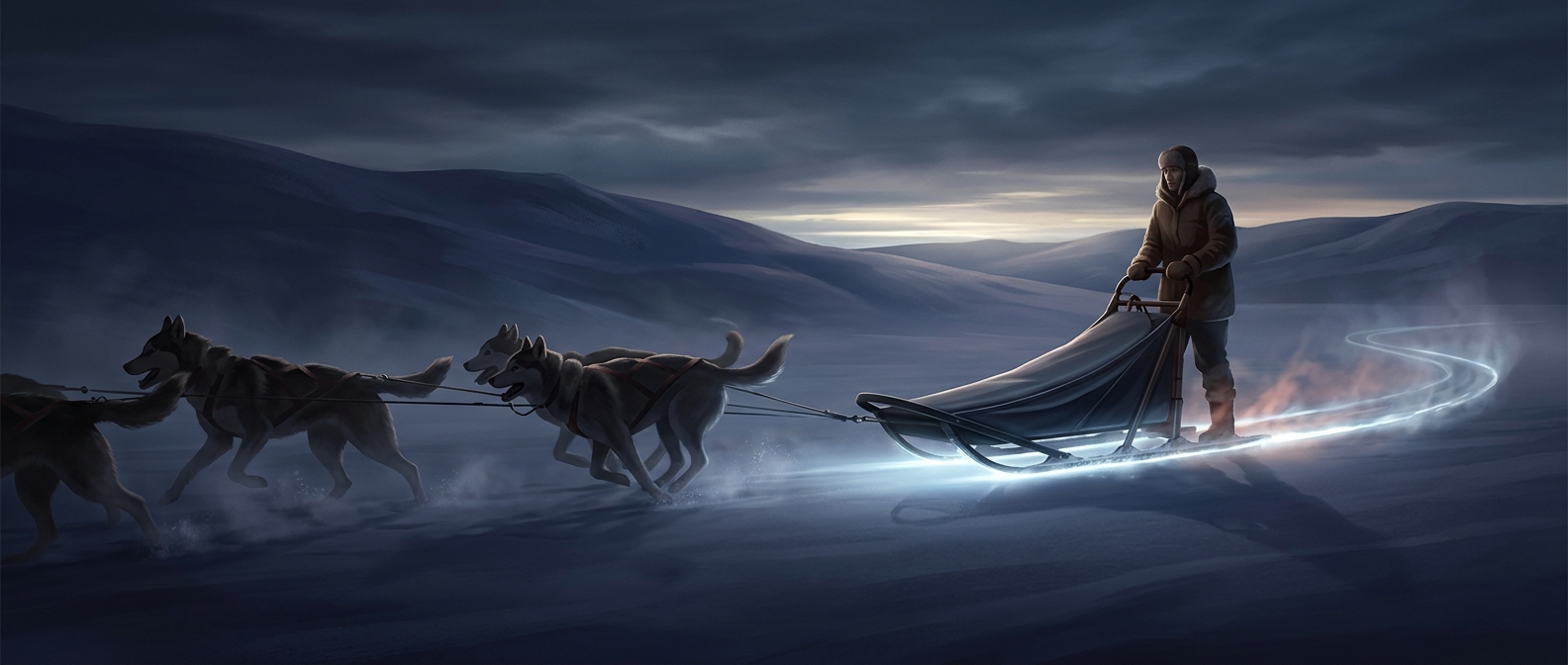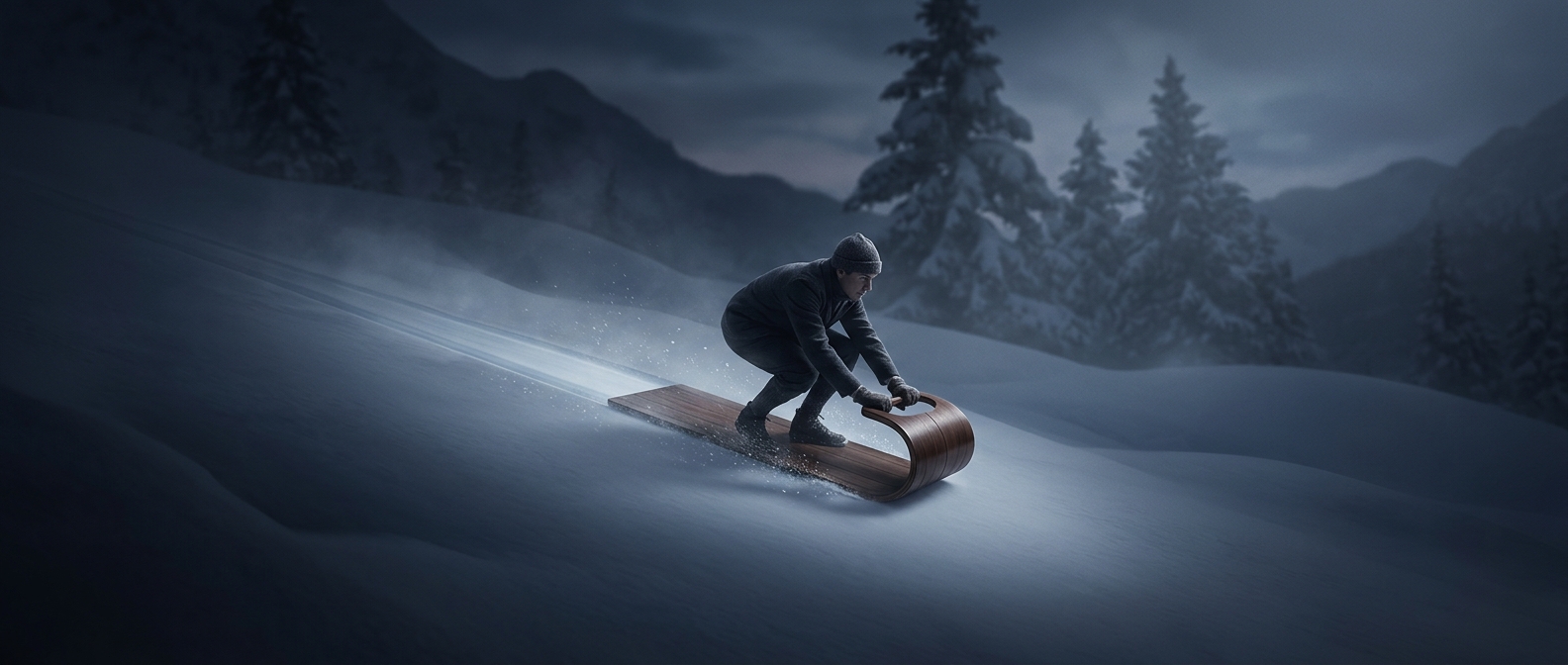
A runner does more than skim the snow
A sleigh’s metal runners meet snow at a small contact area, but the contact is not a clean boundary between two solid surfaces. Snow is a mass of ice grains with air gaps between them. Under a runner, those grains are compressed, crushed, and pushed aside; the runner can also catch on rough patches if its surface is uneven.
Polishing helps by removing scratches and rough edges that would snag or plow through the snow. It does not eliminate resistance. The sleigh still has to deform the snow beneath it and overcome friction along the way.
Where the slippery layer comes from
As the runner moves, friction generates heat at the contact. Under suitable conditions, that heat helps create a very thin layer of liquid water between metal and snow. The layer lets the surfaces move past each other more easily, much as a lubricant does, though it is continually forming and disappearing rather than sitting there as a stable puddle.
The balance changes with the snow. Dry, cold snow may offer little liquid water and can resist motion as grains press against the runner. Nearer the melting point, a lubricating film is easier to form, but too much wetness can also increase drag. There is no single snow condition in which a sleigh always glides best.
Shape is part of the engineering
Runner design has to manage both sliding and steering. A curved front helps the sleigh ride over bumps instead of striking them head-on, while the runners’ length and alignment help keep the load moving in a chosen direction. Polished metal matters, but so do the snow beneath it, the runner’s shape, and the speed that produces frictional heat.
That is why a sleigh can glide smoothly on one stretch and bog down on another: every ride is a negotiation between the runners and the changing surface of the snow.