Why a Freight Sled Rewards a Different Kind of Dog
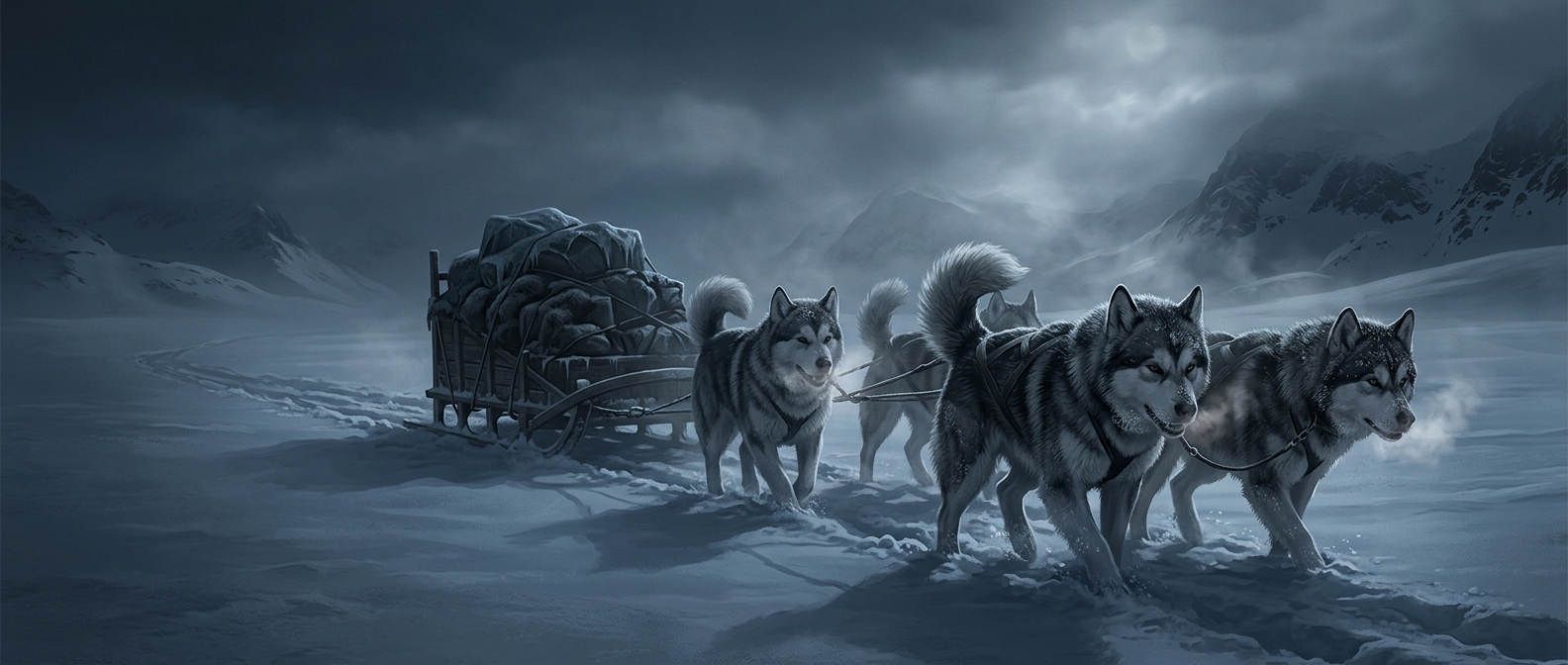
A loaded sled is hard to get moving. Its runners press against the snow, and the team must overcome that resistance before the load can glide. Once underway, the challenge changes: the dogs have to keep applying force without exhausting themselves or letting the team’s pace break down.
That favors a dog capable of sustained, powerful effort. Alaskan Malamutes have a sturdy build suited to leaning into a harness and pulling, rather than the lighter, speed-focused build prized in a sprint. Their value is not a burst of acceleration but the ability to keep contributing over a long haul.
The Team Is Part of the Machine
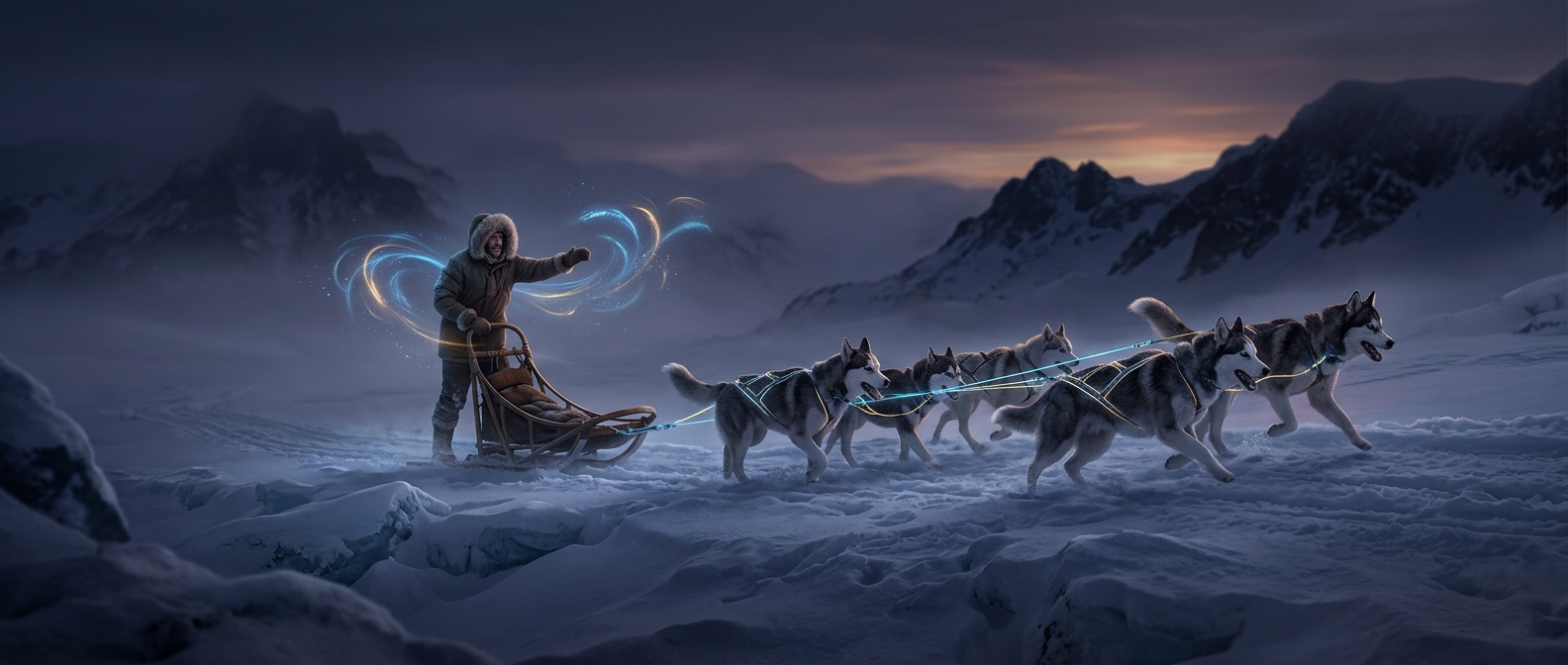
Dogs pull through harnesses connected to a shared line, so their effort combines to move the sled. A steady pace helps the team work together and keeps the load moving; sudden bursts are less useful if they cannot be maintained. The driver also has to account for the freight and trail conditions, which affect how much resistance the sled creates.
This is why “fast” depends on the job. In a short race, reaching high speed quickly matters. On a freight route, a dog that can pull consistently over distance may be more useful—even if it would lose a sprint. The practical payoff is a team that can transport a heavy load without treating every stretch of trail like a dash.