How a voice cue steers a sled team
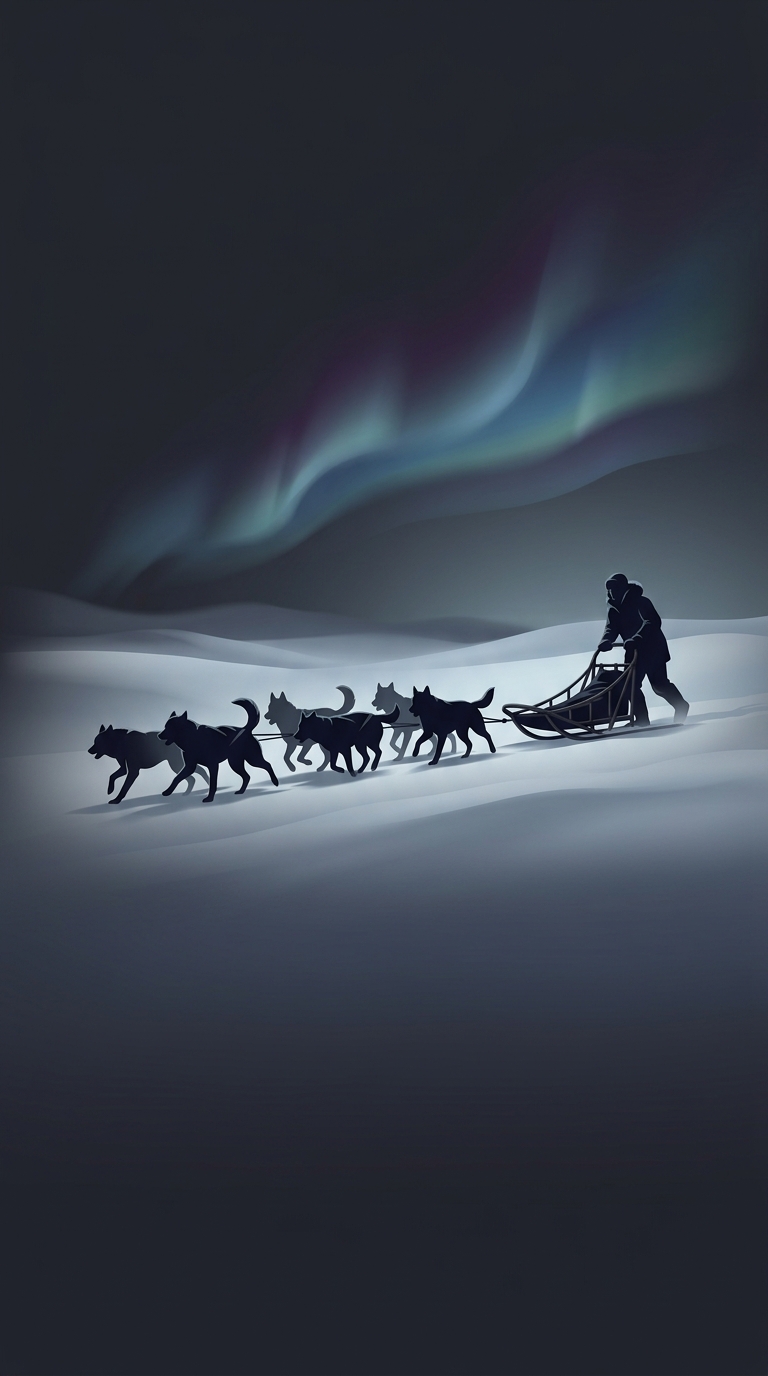
A dog team cannot turn like a car, with every animal responding to a steering wheel. The musher— the person driving the sled—gives a brief directional cue, and the dogs move as a coordinated team. “Gee” means right; “haw” means left. The words work because the dogs learn to associate each sound with a familiar action, not because the syllables have any special physical power.
The lead dogs turn the command into motion
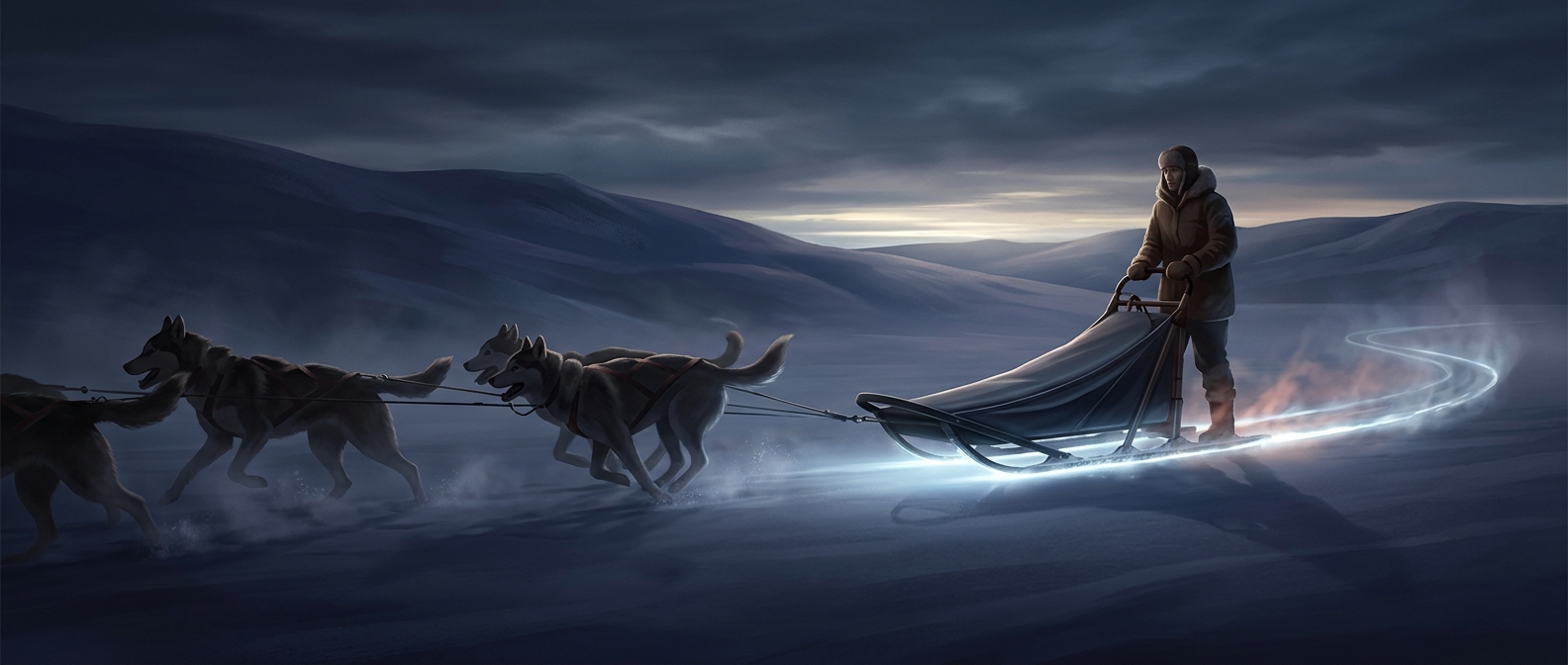
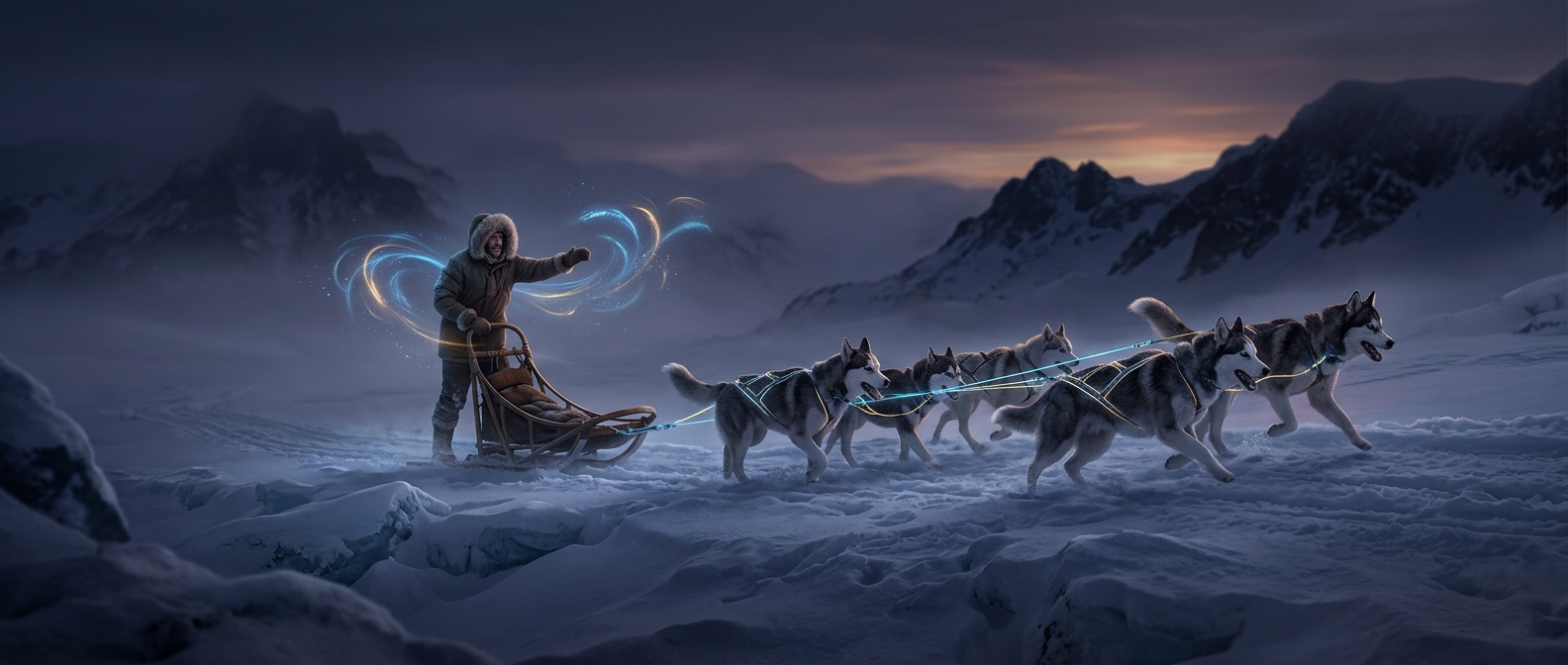
The cue is aimed especially at the lead dogs, who run at the front of the team. They hear it first and begin moving in the requested direction. Dogs behind them follow the turn through the lines connecting the team, so the change travels from the front toward the sled.
That arrangement makes the leaders’ judgment crucial. They must respond to the musher while maintaining the team’s pace and direction. The musher still contributes through the sled’s position and the lines, but a well-timed voice cue can guide the team without a separate steering mechanism for each dog.
Timing matters on the trail
A command has to arrive before a turn, not after the team is already committed to a path. The musher watches the route and gives the cue early enough for the lead dogs to change course and the rest of the team to follow. In that sense, the voice is part of the sled’s steering system: it carries an instruction from the driver to the animals at the front, and their response redirects the whole team.