When a Road Becomes a Trail
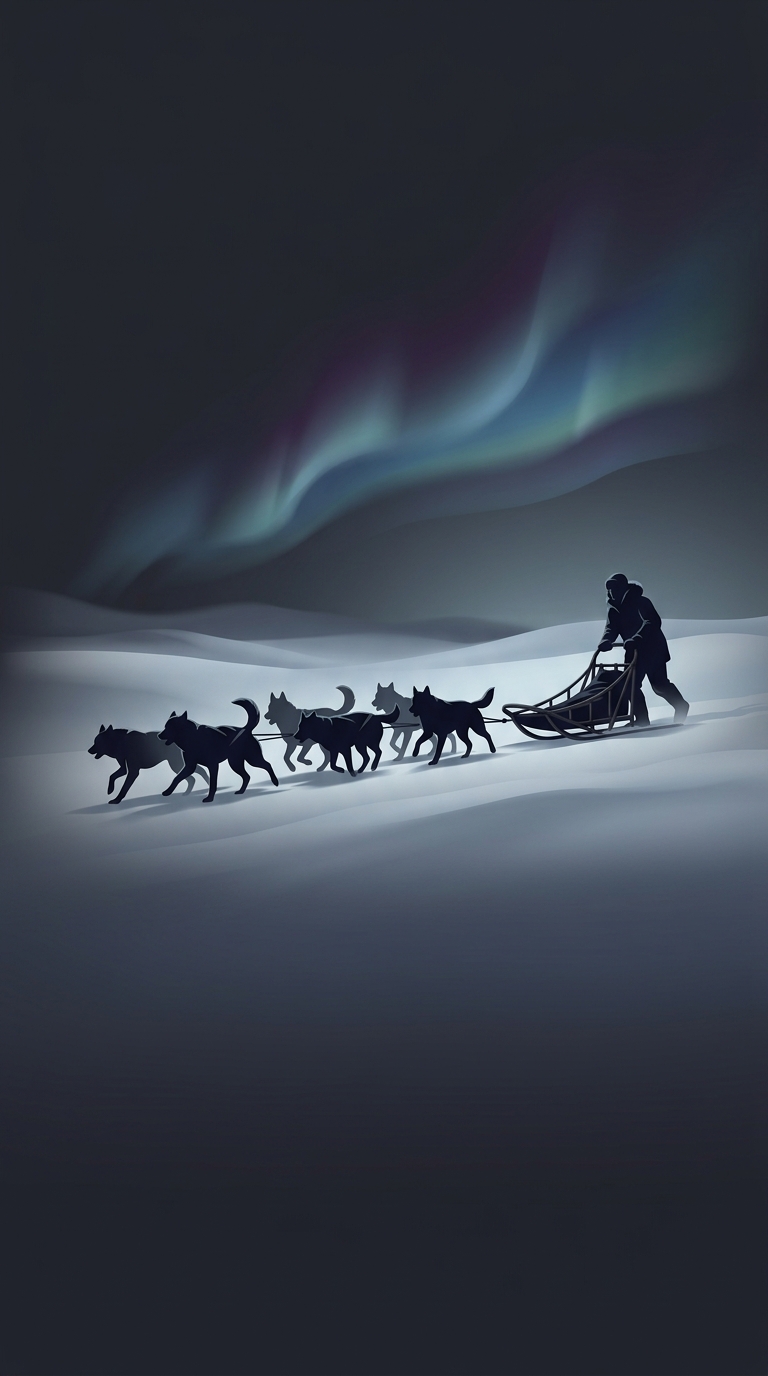
In remote Alaska, snow can erase the distinction between a road and the surrounding landscape. A snowmobile can cover ground quickly, but it depends on an engine, fuel, and a route it can cross. A dog sled offers a different kind of access: the team can travel along established winter trails where ordinary wheeled vehicles cannot go.
That makes the sled useful not as a replacement for every patrol vehicle, but as a way to reach places when distance, snow, and sparse infrastructure rule out a conventional drive.
The Musher Is Part of the Vehicle
A patrol sled travels with a musher—the person who drives the team and reads the trail. The musher manages the dogs, chooses a safe line across changing snow, and adjusts the pace to conditions. The trooper brings the law-enforcement role; the musher brings the specialized knowledge needed to move safely through winter terrain.
The team itself is only one part of the system. Dogs need care and supplies, and the route must be planned around weather, daylight, and the distance between stopping points. A sled can go where there is no plowed road, but it still depends on preparation and local knowledge.
A Different Kind of Patrol Reach
Using a dog team preserves a practical link between remote communities when winter makes other transportation difficult. It also changes what “vehicle” means: the patrol’s mobility comes from living animals, a sled, and a person who knows how to guide them—not from a motor turning wheels or tracks.
Where a road disappears beneath snow, that combination can keep a route open to official travel.