How a yak turns a trail into a supply route
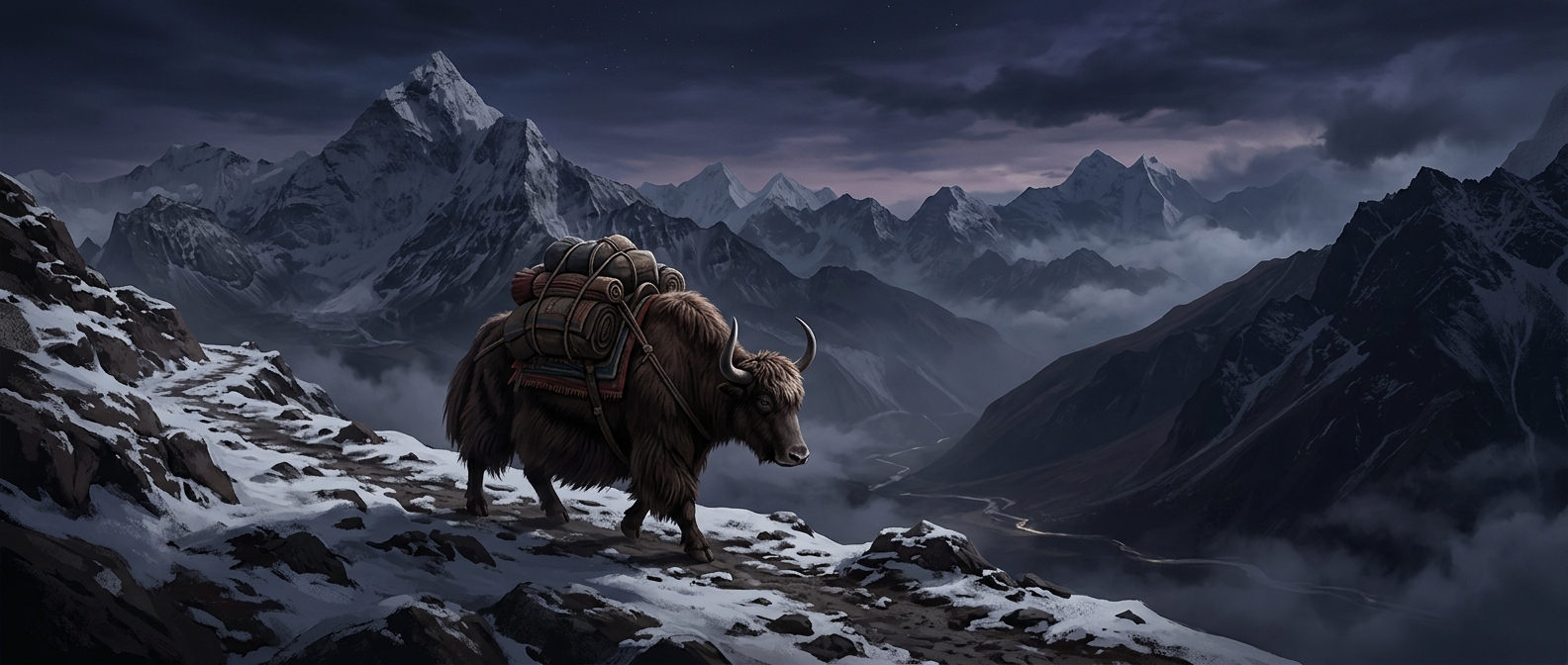
Where a road cannot be built—or a vehicle cannot keep traction—a pack animal can still move cargo one careful step at a time. Yaks make that possible on steep, uneven routes where wheels are especially awkward: a wheel needs a reasonably continuous surface, while a sure-footed animal can place each foot around stones, ruts, and tight turns.
The load has to work with the terrain. A pack saddle spreads weight across the animal’s back, and cargo is secured on both sides so it does not swing and throw off balance. Handlers must keep loads manageable and adjust them for the route; on a narrow incline, a shifting bundle can be more dangerous than a slow climb.
The tradeoff behind animal transport
A yak carries less cargo at a time than a truck, and the journey takes longer. But a truck is useful only if there is a passable track and enough room to maneuver. On paths too rough, steep, or narrow for vehicles, the yak can bring food, fuel, and other supplies directly to people or work sites without first requiring a road.
That makes the animal part of the transport infrastructure, not merely a substitute for a vehicle. Its practical advantage is access: a route that would otherwise need to be crossed on foot can become a route for moving essential gear.