The Arctic’s seasonal food map
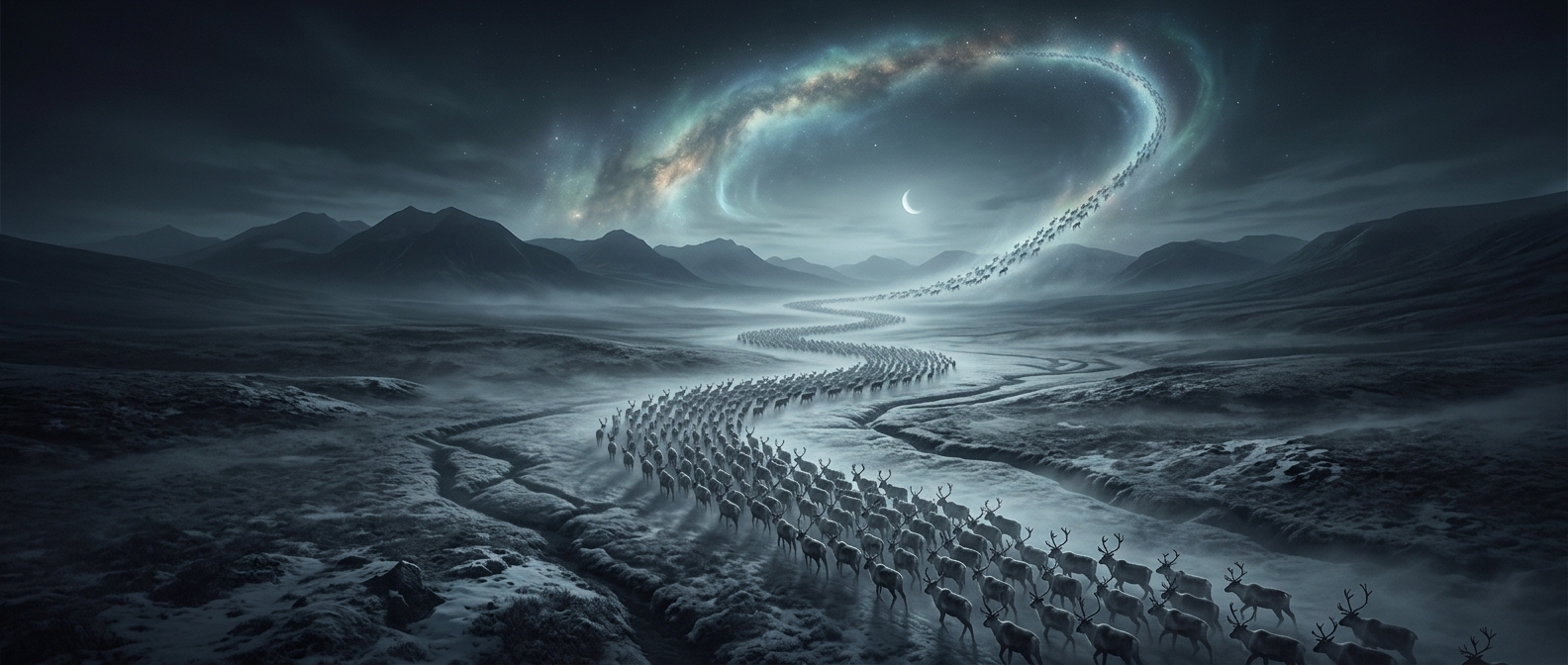
A reindeer’s route is shaped by a landscape that changes dramatically with the seasons. In summer, herds move toward open tundra, where fresh plants are available and females can give birth and raise calves. As winter approaches, they travel toward areas where they can reach food beneath or among snow and vegetation.
The journey is not a straight line from one pasture to another. Rivers, mountains, snow conditions, and the timing of plant growth can all affect where a herd goes. Reindeer often travel in groups, so a route used across generations can become a well-worn response to the same seasonal pressures.
Moving is part of finding food
In winter, reindeer use their broad hooves to scrape away snow and uncover lichens and other forage. But deep or crusted snow can make feeding harder, while summer brings different challenges, including insects and the need to find suitable grazing. No single patch of land provides the best conditions year-round, so moving lets herds exploit resources that appear in different places at different times.
That makes migration less like a daily commute than a shifting network of routes and feeding grounds. The animals’ long-distance movements connect distant parts of the Arctic into one seasonal habitat—and changes along the way can affect access to food across the entire route.