Why the port needed pack animals
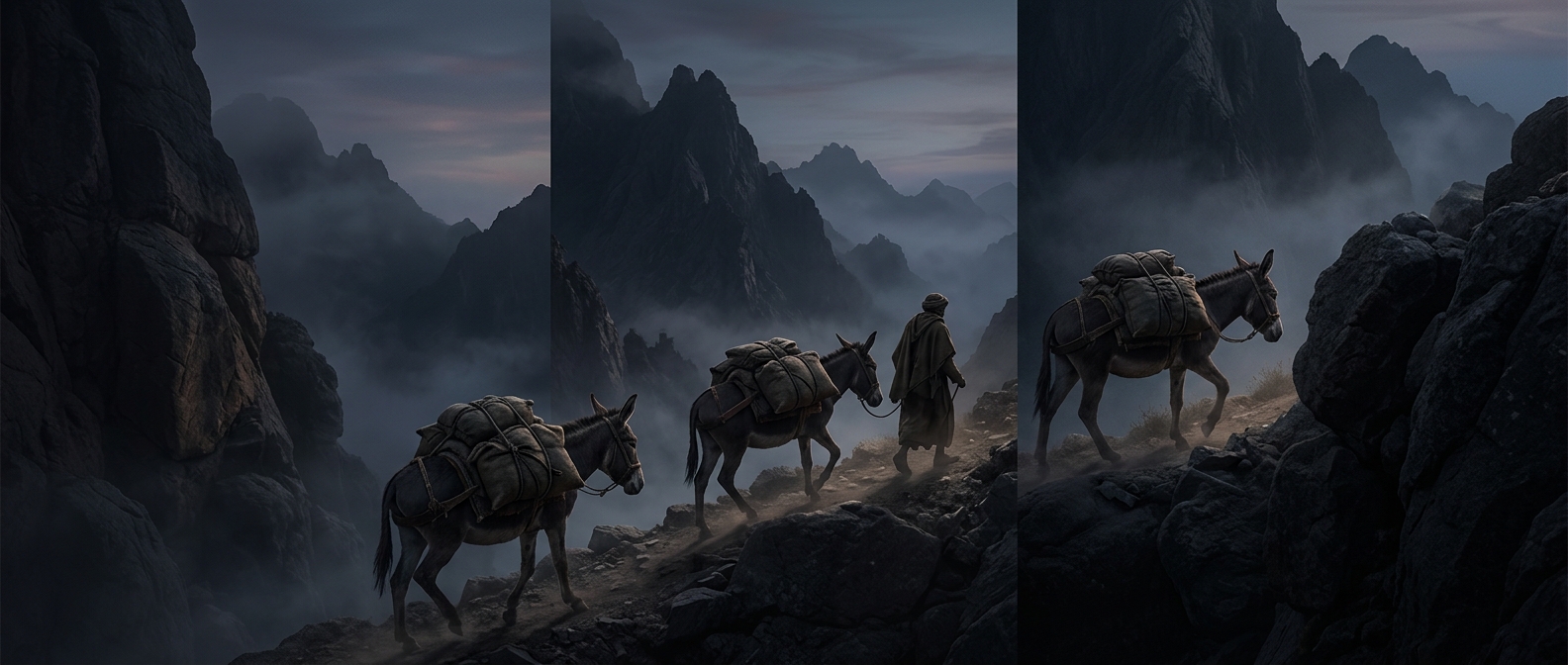
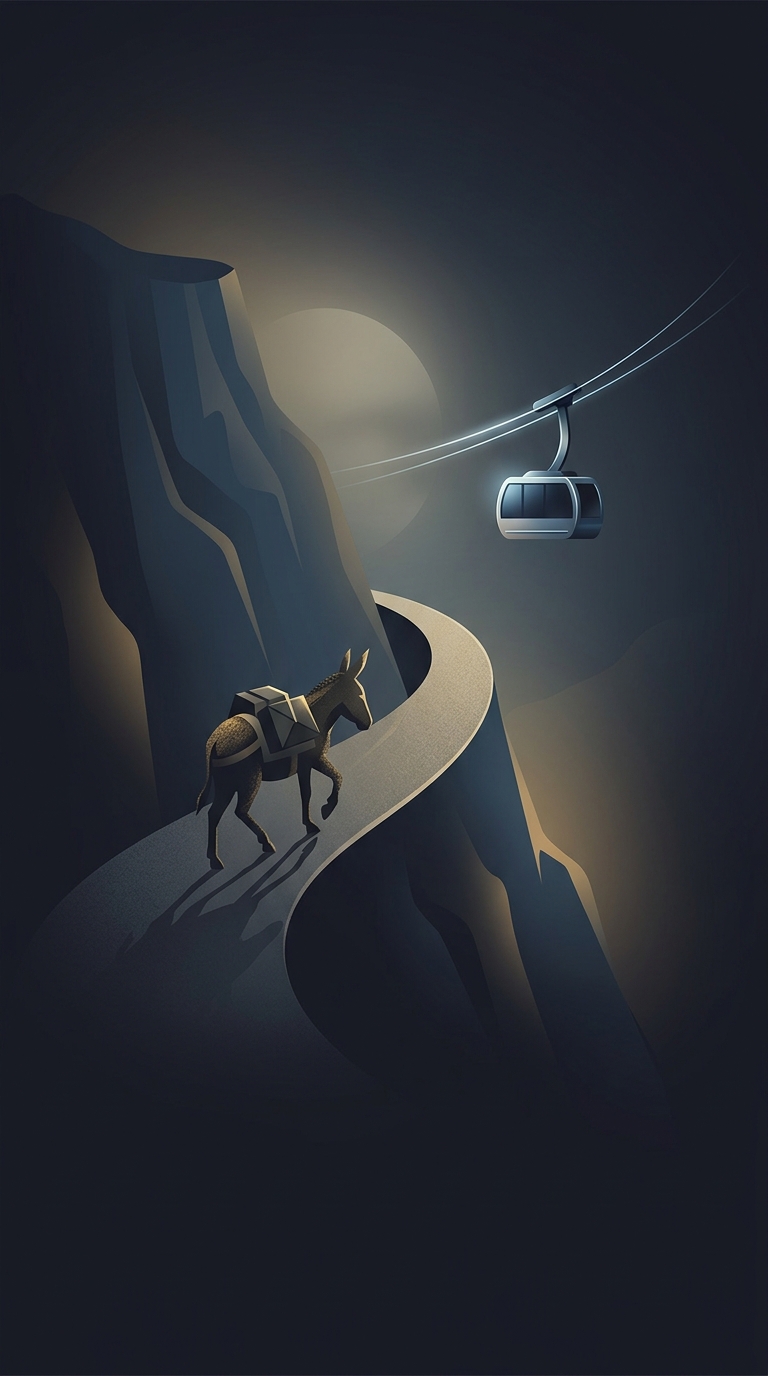
Santorini’s old port sits below Fira, the island’s cliff-top capital. The climb is not simply a steep road: it follows a long staircase cut into the caldera slope, with tight turns and uneven stone underfoot. A wheeled cart needs a continuous, firm surface and room to maneuver; on those steps, it can snag, tip, or become difficult to control. A sure-footed pack animal can place each hoof on the available footing and carry a load without needing a road.
That made donkeys useful as part of the port’s everyday transport system. They could move luggage up the stairway in manageable loads, while their handlers guided them through a narrow route that vehicles could not use. The arrangement solved a practical access problem, but it also made the climb dependent on animals and the people working them.
A different way up the cliff
The stairway remains a physical bottleneck: every traveler and every bag must gain height along the same confined path. As visitor traffic grew, relying only on animal teams meant that moving people and their belongings took time and repeated trips. Santorini’s cable car offered another way to connect the port with Fira, carrying passengers up the slope without requiring them to climb the steps.
The contrast is a small lesson in transport design. On a steep, roadless route, the best solution is shaped by the terrain: hooves can handle irregular steps, while a cable can span the elevation directly. The old stairway still makes the island’s vertical geography tangible, even as mechanical transport has changed how many visitors make the ascent.