How a small reflector makes a road visible
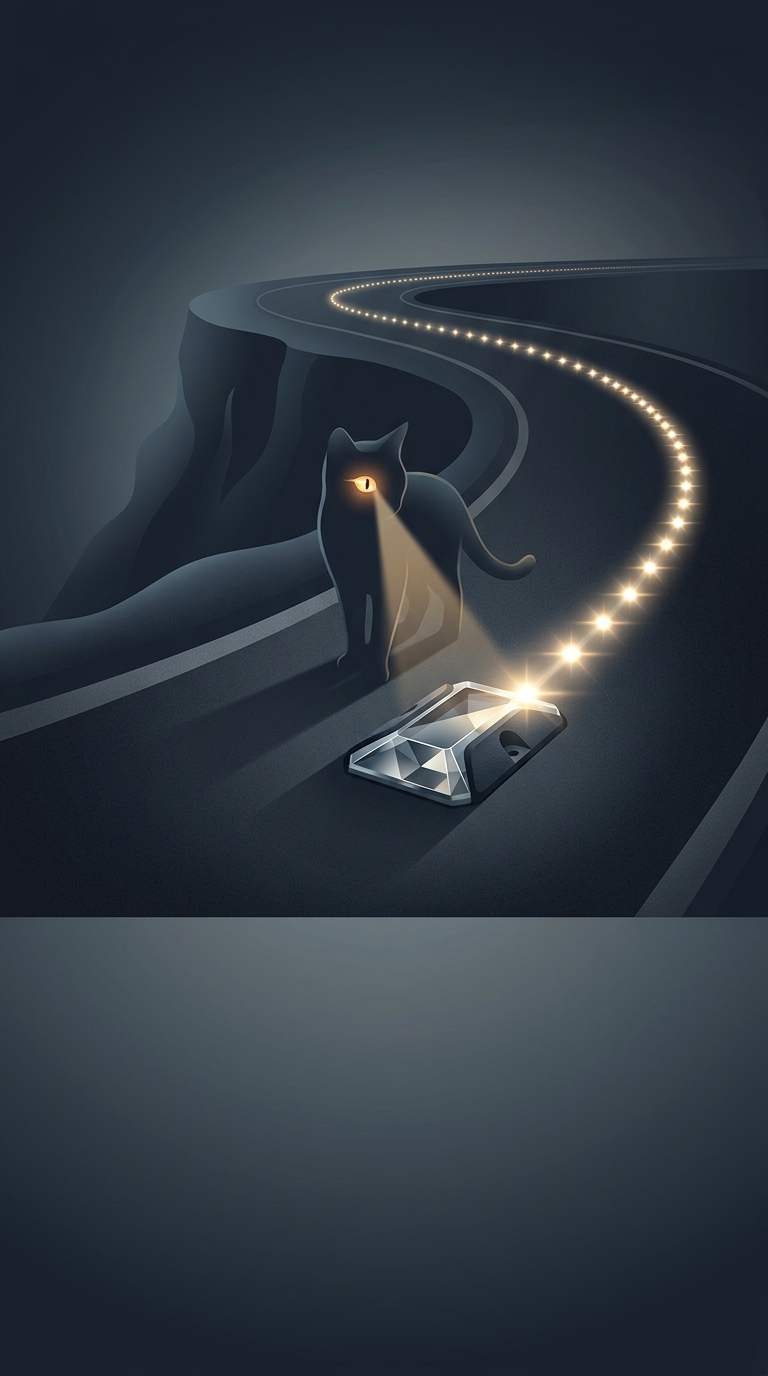
A headlight beam normally spreads out after hitting a surface, sending light in many directions. A cat’s-eye stud is shaped to send much of that light back toward its source. This is called retroreflection: the driver sees a bright point because the light returns roughly along the path it came from, rather than simply shining off in some other direction.
The glass elements inside the stud do the optical work. Because they need the car’s headlights to illuminate them, the markers do not make the road visible on their own; they turn passing headlights into a line of guidance, especially where painted markings are hard to pick out.
Traffic helps keep the signal clear
The reflector is housed in a flexible rubber mounting. When a vehicle rolls over it, the top can dip and spring back. That movement helps clear dirt and water from the optical surface, so the stud can keep reflecting light instead of becoming just another dark bump in the road. Its visibility therefore depends partly on a useful bit of give: a rigid marker might endure the load, but it would not perform the same self-cleaning motion.
The familiar origin story links the invention to a driver noticing headlights reflected in a stray cat’s eyes near a dangerous drop. Whether every detail of that account is reliable or not, the design’s enduring idea is concrete: place a reflector where drivers need guidance, and let each passing car supply the light that reveals it.