A railway idea adapted for a crowded street
The problem outside Parliament was not speed in the modern sense; it was competing movement. Horse-drawn carriages, carts, and people on foot all needed to pass through a busy junction, often at the same time. A signal could make one stream wait while another crossed, replacing guesswork with an orderly turn-taking system.
The device borrowed a useful idea from railway signaling. At railways, signals told drivers whether a track was clear. In London, a constable worked a street version by hand: movable arms communicated instructions in daylight, while red and green gas lamps made them visible after dark. The officer was not just a bystander—the system depended on a person judging the flow and changing the signal.
A traffic signal with a human operator
That arrangement suited a street where conditions could change from moment to moment. A fixed timetable would have been less useful when the number of carriages and pedestrians varied. The signal instead gave the constable a way to pause one group and release another, helping prevent the junction from becoming a tangle of crossing routes.
It also shows why traffic control did not have to wait for automobiles. The essential challenge was already there: several kinds of road user sharing limited space. Cars would later make the traffic problem faster and more intense, but they did not create the need to coordinate it.
Why the experiment did not last
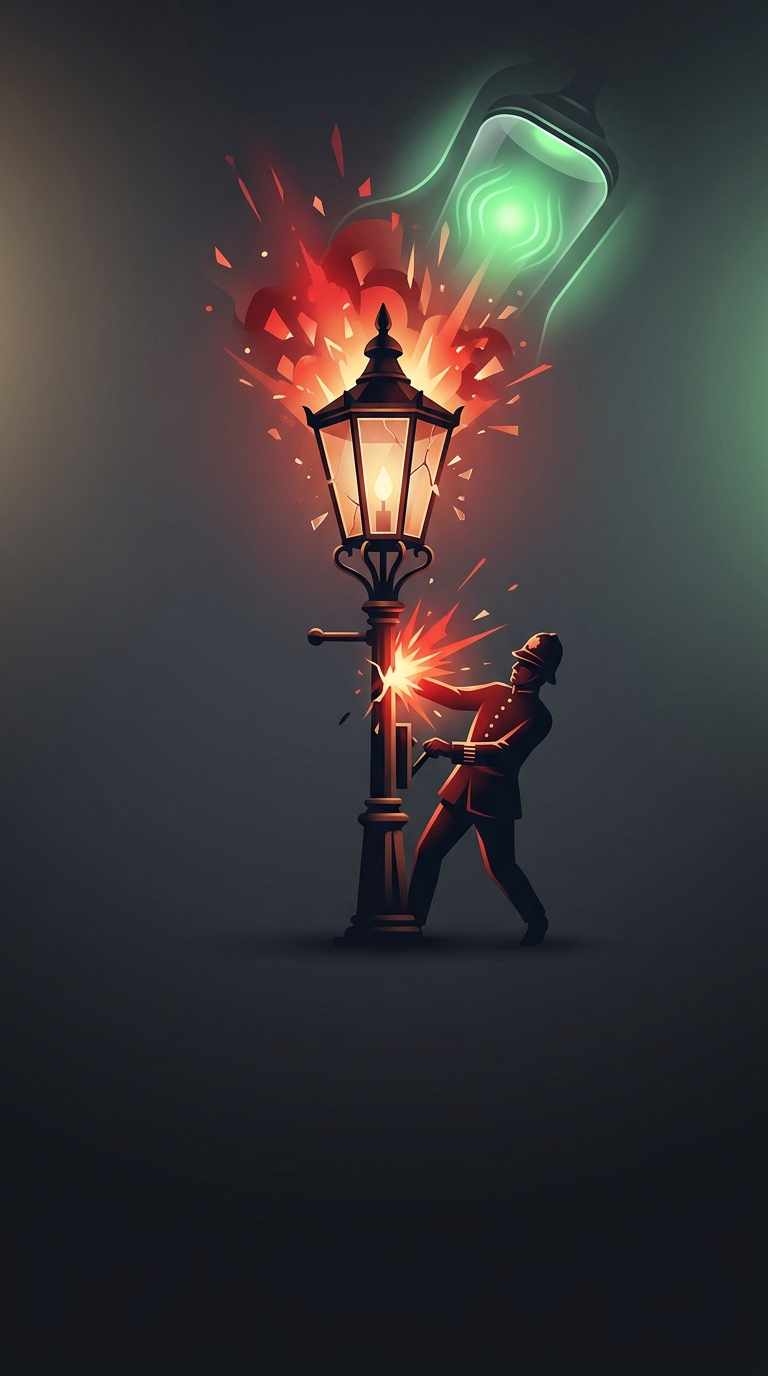
The gas-lit equipment introduced a hazard of its own. In January 1869, a leak led to an explosion that injured the constable operating the signal, and the installation was withdrawn. The early experiment therefore revealed both sides of the idea: a signal could organize traffic, but a street device also had to be safe enough for the person standing beside it. London’s first signal was an answer to congestion—and a reminder that traffic technology has to manage the risks it brings with it.