Why a Green Wave Has to Be Carefully Timed
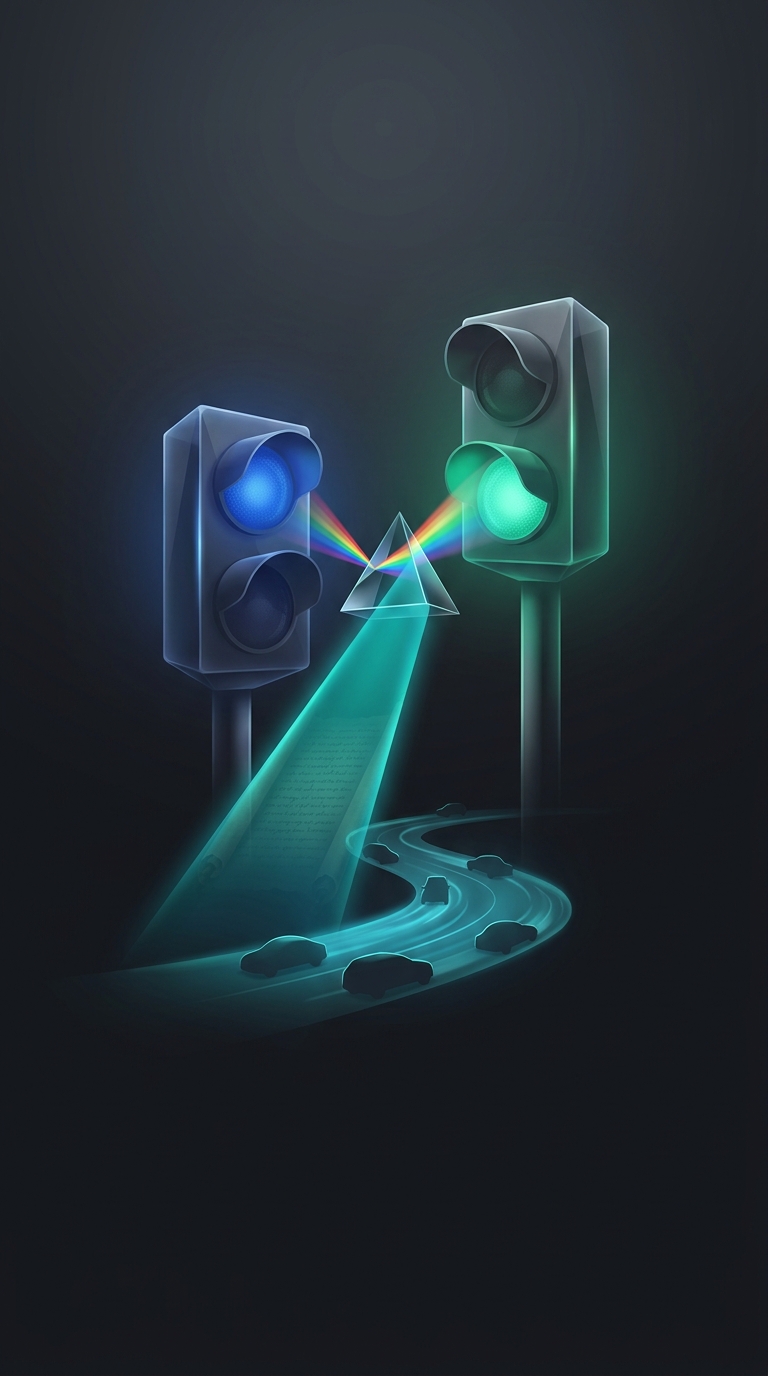
Coordinated signals do not all turn green together. Instead, engineers set a cycle—the repeating sequence of green, yellow, and red—and an offset, the delay between one intersection’s cycle and the next. If those delays match the time a car takes to travel between intersections, a driver moving at a steady pace can reach several greens in a row.
That timing is a compromise, not a magic setting. A signal must also give time to cars crossing the main street, people walking, and vehicles turning. Make the main route’s green too long, and traffic waiting on side streets can build up. Change the timing for one intersection, and the carefully spaced green wave may no longer line up farther along.
Why the System Cannot Make Congestion Disappear
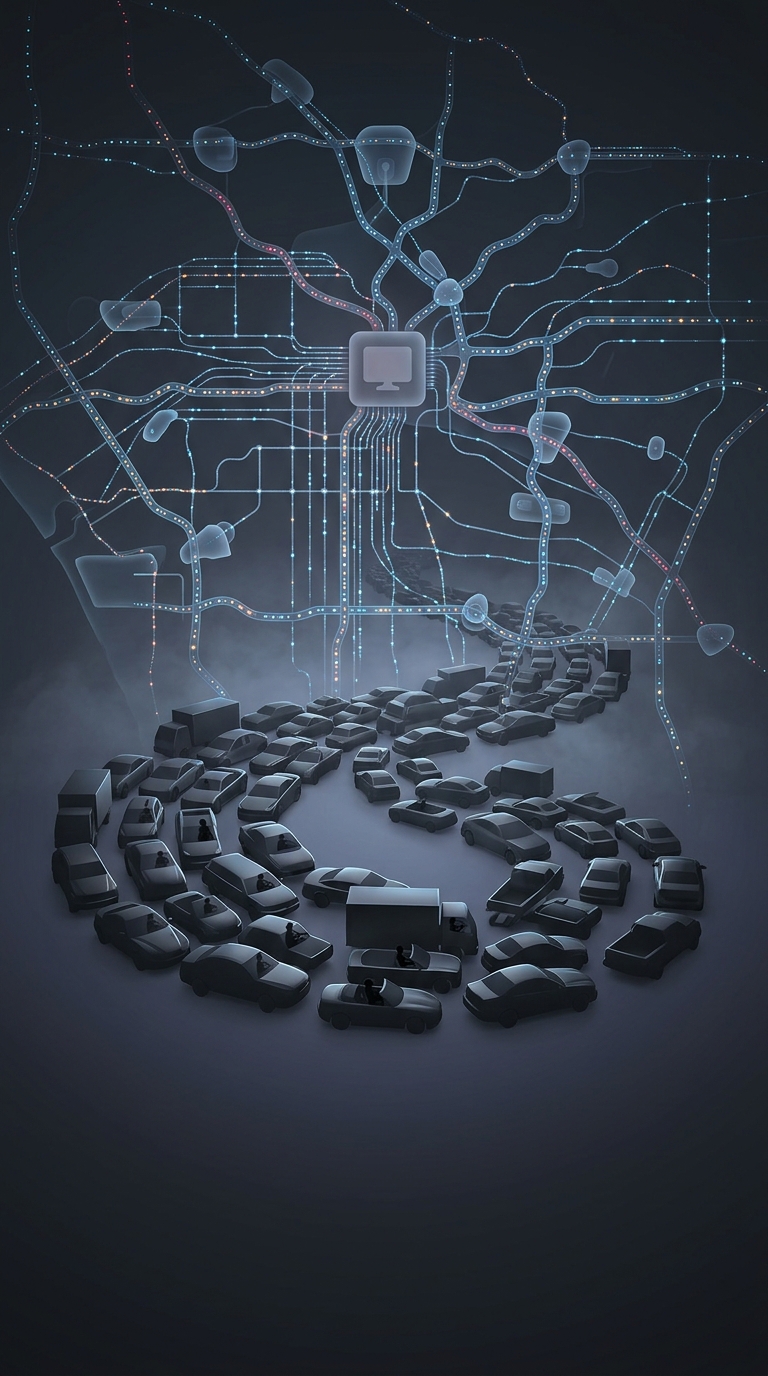
Traffic engineers can adjust the schedule to suit different patterns—for example, heavier traffic moving one way at one time of day and the other way later. But signals can only manage how vehicles use the road space available. They cannot create more room once too many cars arrive at once.
Even well-coordinated lights can therefore leave drivers in stop-and-go traffic. A wave of cars may move smoothly for several blocks, then catch up with a queue that has nowhere to go. The lights have reduced interruptions along the route; they have not removed the bottleneck. That is the limit built into the strategy: better timing can make a crowded network work more smoothly, but it cannot make a full road uncrowded.