How a camera changes a signal’s decision
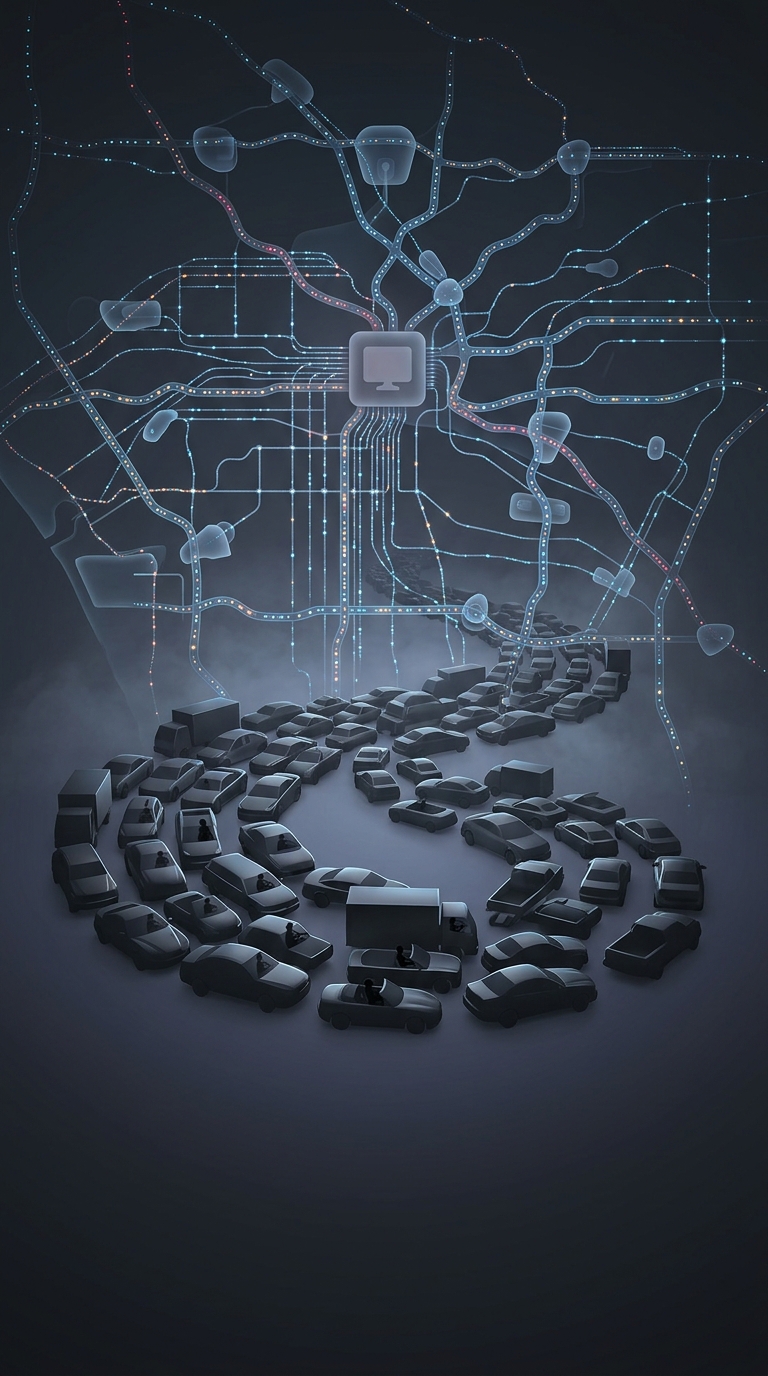
A camera does not simply tell a light, “This road is busy.” Software analyzes the images to estimate whether vehicles are present and whether they are building into a queue. The signal controller—the device that chooses which direction gets a green—uses those estimates to adjust its next decision.
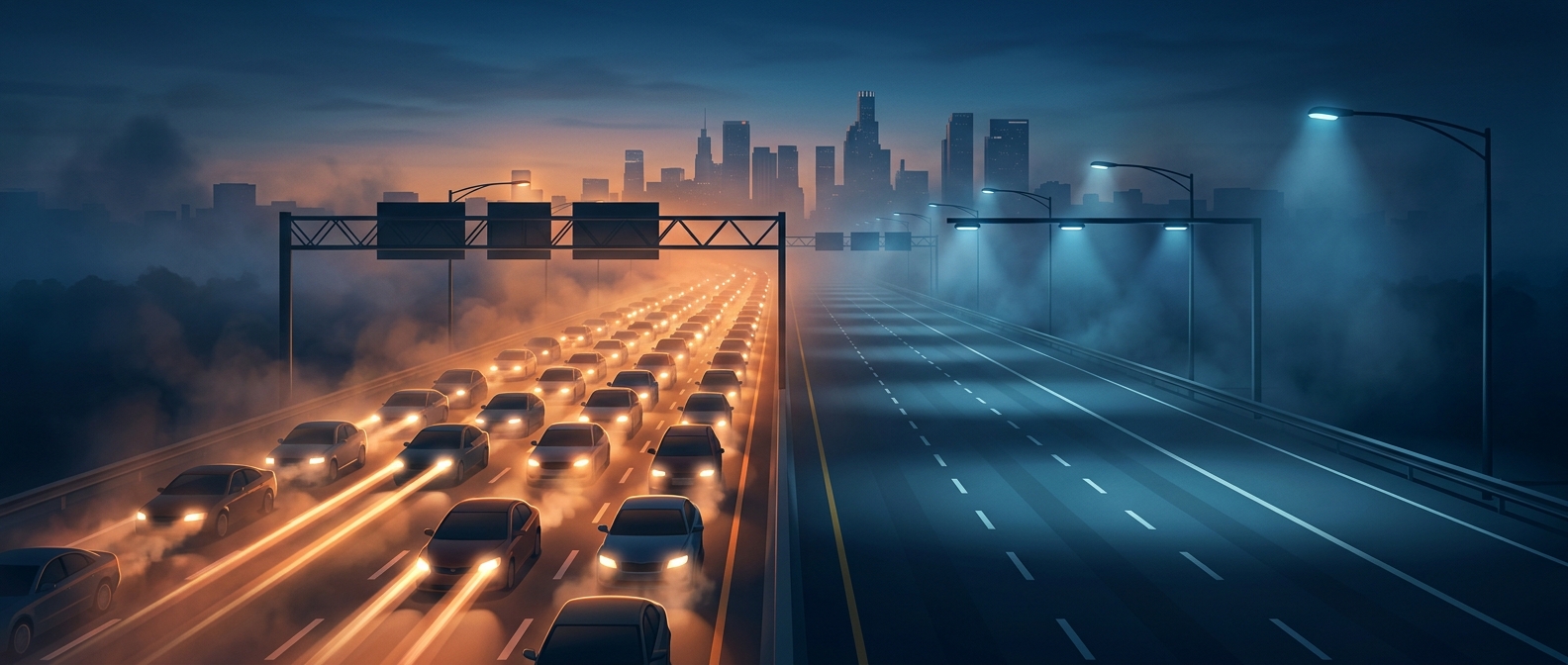
That makes the light responsive rather than purely scheduled. A fixed-time signal might switch after a preset interval even when the road it serves is empty. An adaptive signal can hold or extend a green when vehicles are still waiting, then move on when demand eases. It is adjusting the timing of familiar signal phases, not inventing a new set of traffic rules.
Why the green cannot simply follow the biggest queue
An intersection has competing needs. Giving one approach more time can leave cars waiting on another, and pedestrians may also need time to cross. Signal controllers therefore work within programmed limits and phase sequences; camera readings inform those choices but do not make every other approach disappear.
The camera’s view also matters. It must capture the relevant lanes well enough for the software to distinguish stopped or approaching traffic. Where the camera is mounted, what it can see, and how the intersection is configured all affect the information available to the controller.
The practical payoff—and tradeoff
The appeal is that timing can better match conditions that change over the day, rather than treating a quiet hour like rush hour. But the system depends on usable camera data and careful configuration, and a longer green for one direction is not automatically a shorter trip for everyone.
The consequential change is small but visible: instead of waiting for a clock to run down, a signal can use evidence from the intersection itself to decide whether the crowded approach still needs its turn.