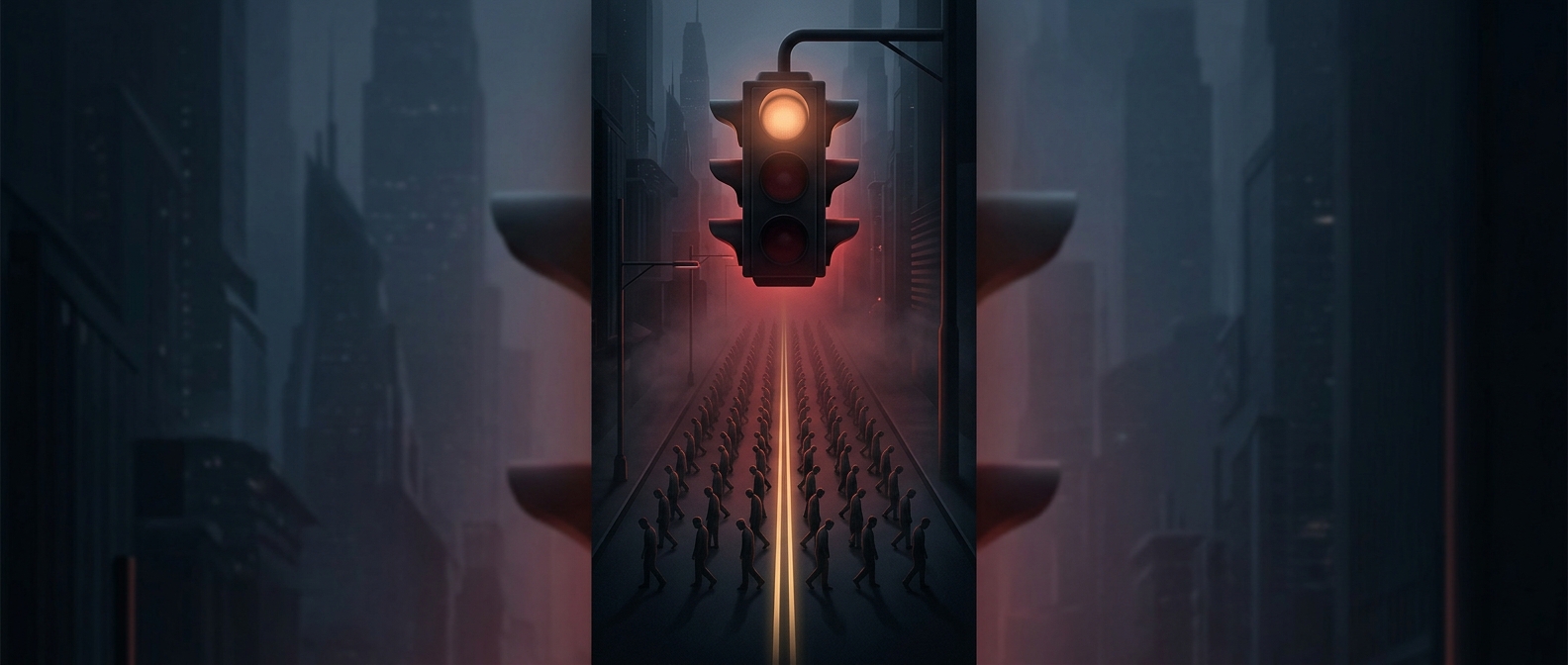
How a color becomes an action
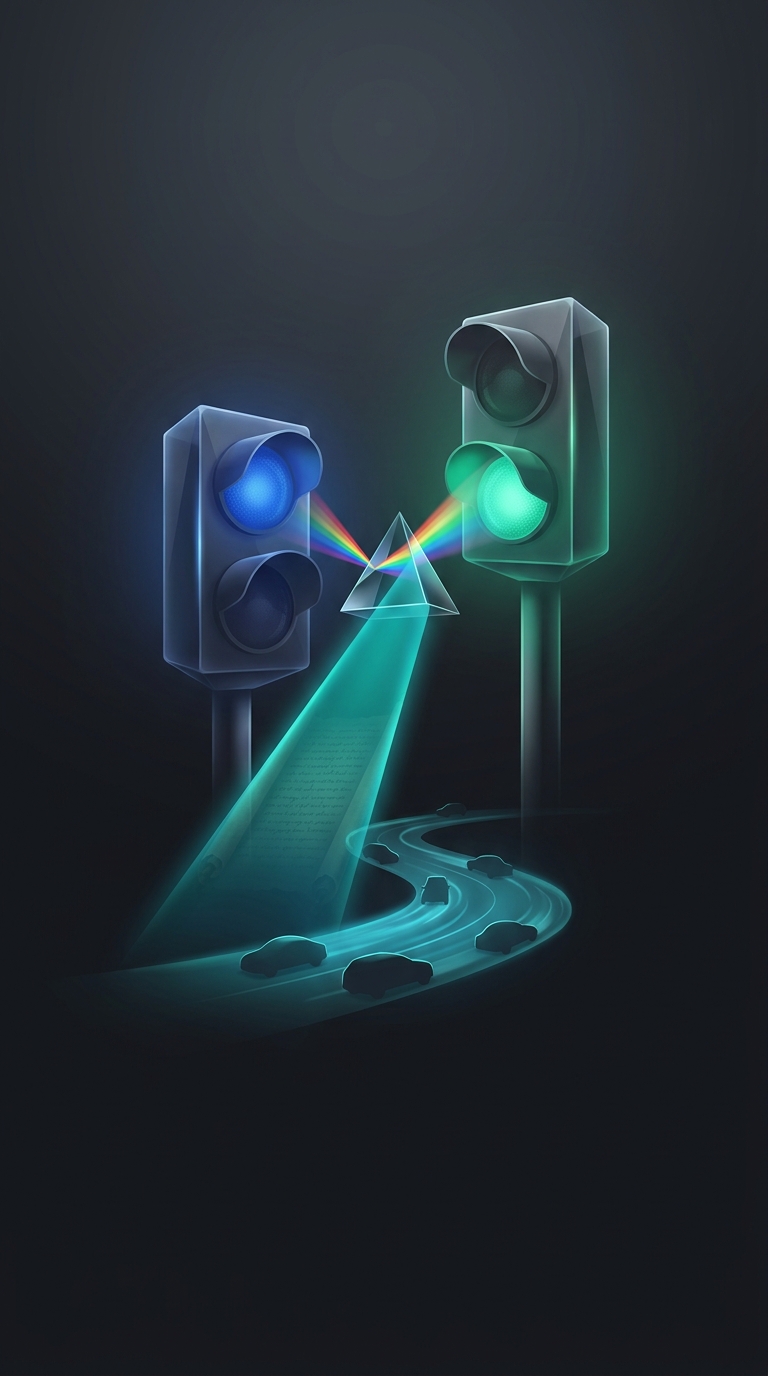
A traffic light works because drivers learn to connect a visual cue with a specific response. Red appears, and the driver presses the brake; green appears, and the driver proceeds when the intersection is clear. Repeated across everyday trips, that pairing becomes quick enough that it can feel instinctive.
This is conditioned recognition: the color itself does not physically stop a car or make it safe to move. Its meaning comes from a shared rule, reinforced whenever drivers encounter the signal and see other road users respond to it. The rule is useful precisely because everyone is expected to follow the same code.
Repetition makes the response fast
At an intersection, a driver has little time to study a signal and reason from first principles. Familiarity lets the color trigger an expected action with minimal deliberation. That speed helps coordinate many people approaching the same crossing, including drivers who have never met and cannot communicate directly.
The learning also depends on consistency. If red meant stop at one intersection and go at the next, drivers would have to interpret each signal anew. Standardized meanings turn a changing light into a reliable instruction, while the surrounding traffic supplies feedback: moving on red is dangerous, and waiting on green can hold up vehicles behind you.
The code is learned, not universal
Red and green do not carry traffic instructions by nature. A person encountering the system for the first time must learn the convention, and drivers traveling between places may need to recognize local differences. In the United States, the familiar fixed order—red above yellow above green—provides another cue, so position can help identify a signal when color alone is hard to distinguish.
The striking result is that a small lamp can coordinate a crowded intersection without conversation: drivers have learned to treat the same color as the same instruction.