Each car keeps its own time
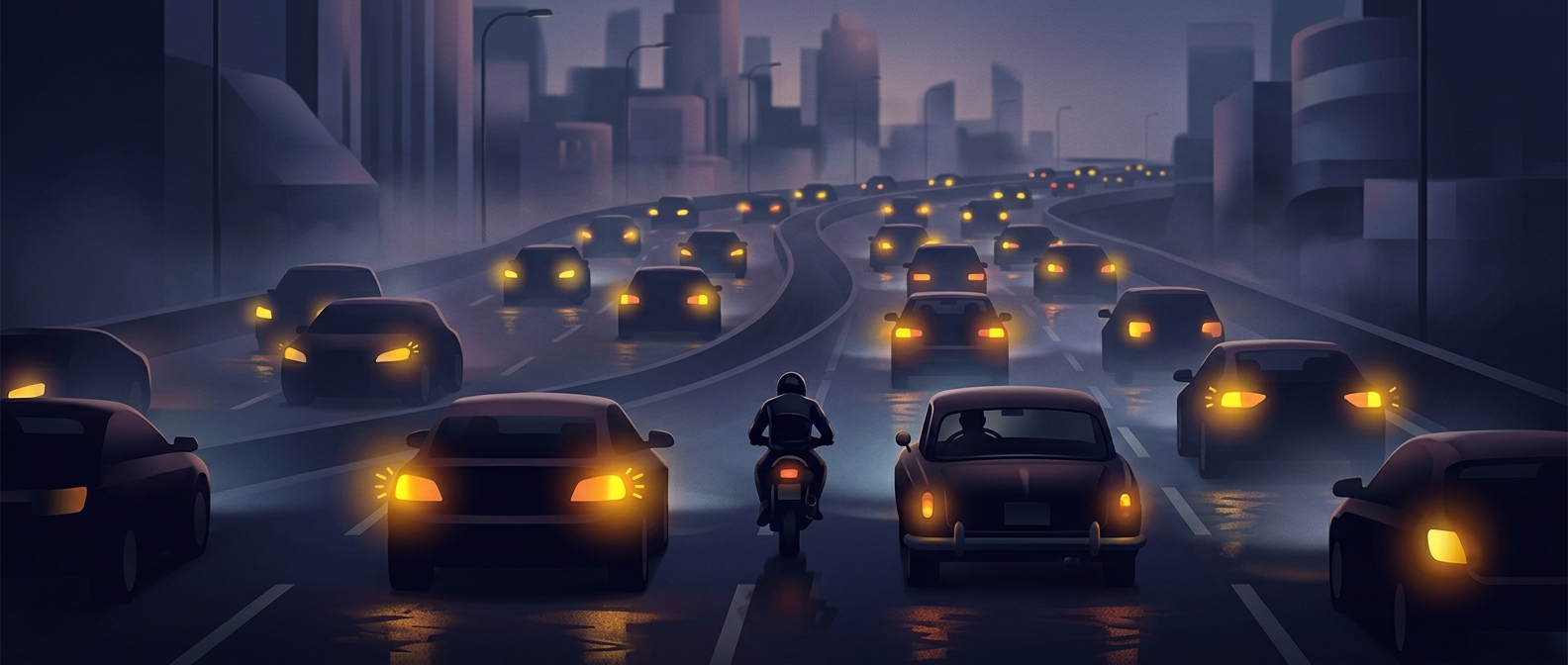
A turn signal does not follow a shared timing system. When a driver switches it on, the car’s flasher—a circuit that repeatedly turns the signal lamps on and off—starts a cycle controlled by that vehicle’s own electrical system. The next car over starts its cycle separately, often at a different point in the blink.
That starting offset is enough to make two signals look out of step. If their blink rates differ even slightly, the gap between their flashes also shifts over time: one may briefly seem to match the other, then lead or lag. They are not coordinating; they are simply running independent cycles.
Why the pattern does not hold
Flasher timing is not perfectly identical from car to car. The timing circuits and vehicle designs can differ, and each signal is activated at a different moment. So even when two cars happen to blink together for a beat, there is no mechanism keeping them synchronized.
From the sidewalk, distance and viewing angle can make the mismatch harder to judge. A signal farther down the road may appear to flash at a different moment simply because it is harder to see clearly. But the basic cause is simpler: each car is keeping its own beat, and traffic contains no conductor to bring those beats together.