The signal was only half the system
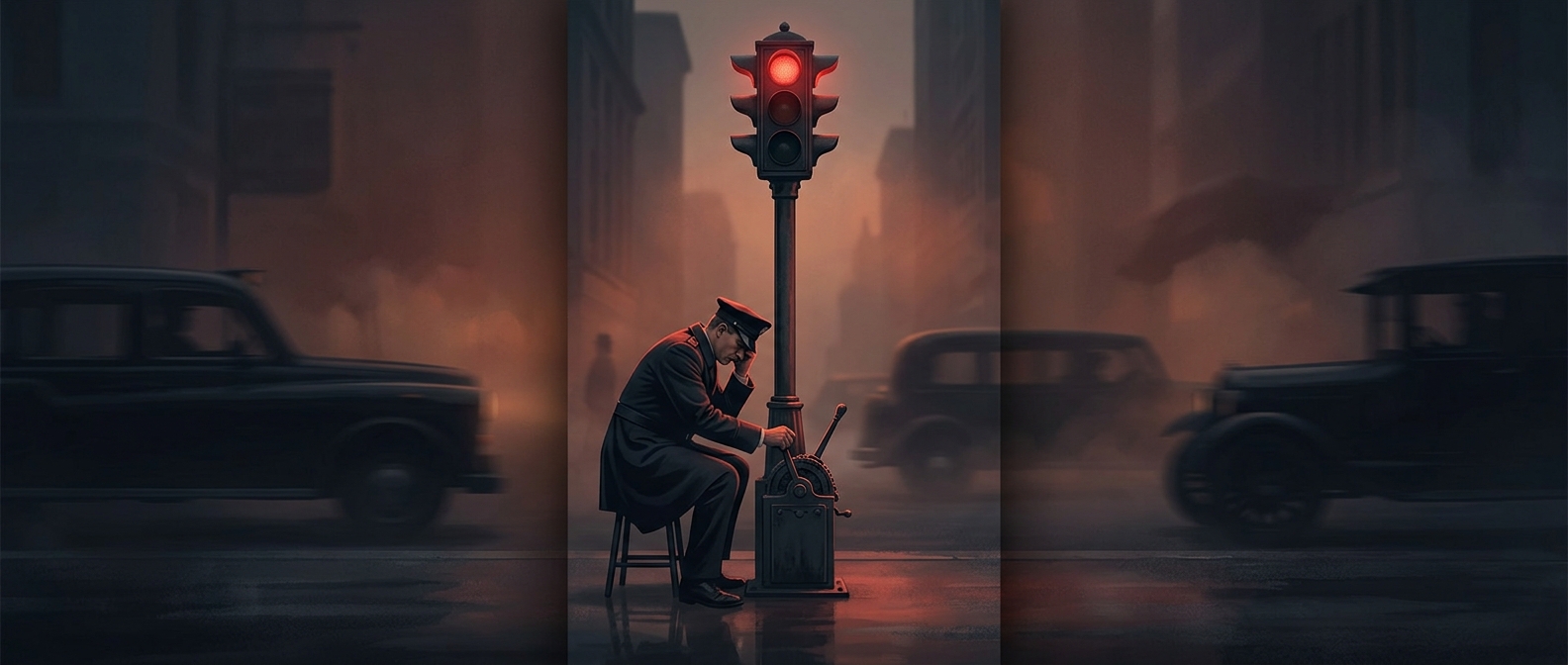
A traffic light can display who should move, but it cannot decide on its own when to change. In a manually operated setup, an officer watched the intersection and switched the signal, managing the handoff between conflicting directions of traffic. The officer was, in effect, the timing system.
That arrangement put judgment where the technology had not yet put automation. A fixed sequence can change at set intervals; a person at the intersection can respond to what is actually happening—such as a line of vehicles building in one direction. But that flexibility depended on the officer noticing conditions and making a timely decision.
A human controller in a hazardous place
The arrangement also made traffic control a demanding physical job. The officer had to monitor moving vehicles while operating the signal, and drivers depended on clear, consistent instructions. A delayed or confusing change could disrupt the flow or create uncertainty about who had the right of way.
Automation changed more than the light’s mechanism: it moved the task of deciding when to switch from a person at the curb to a control system. The intersection could then follow a repeatable cycle without requiring an officer to stand in the middle of its traffic.