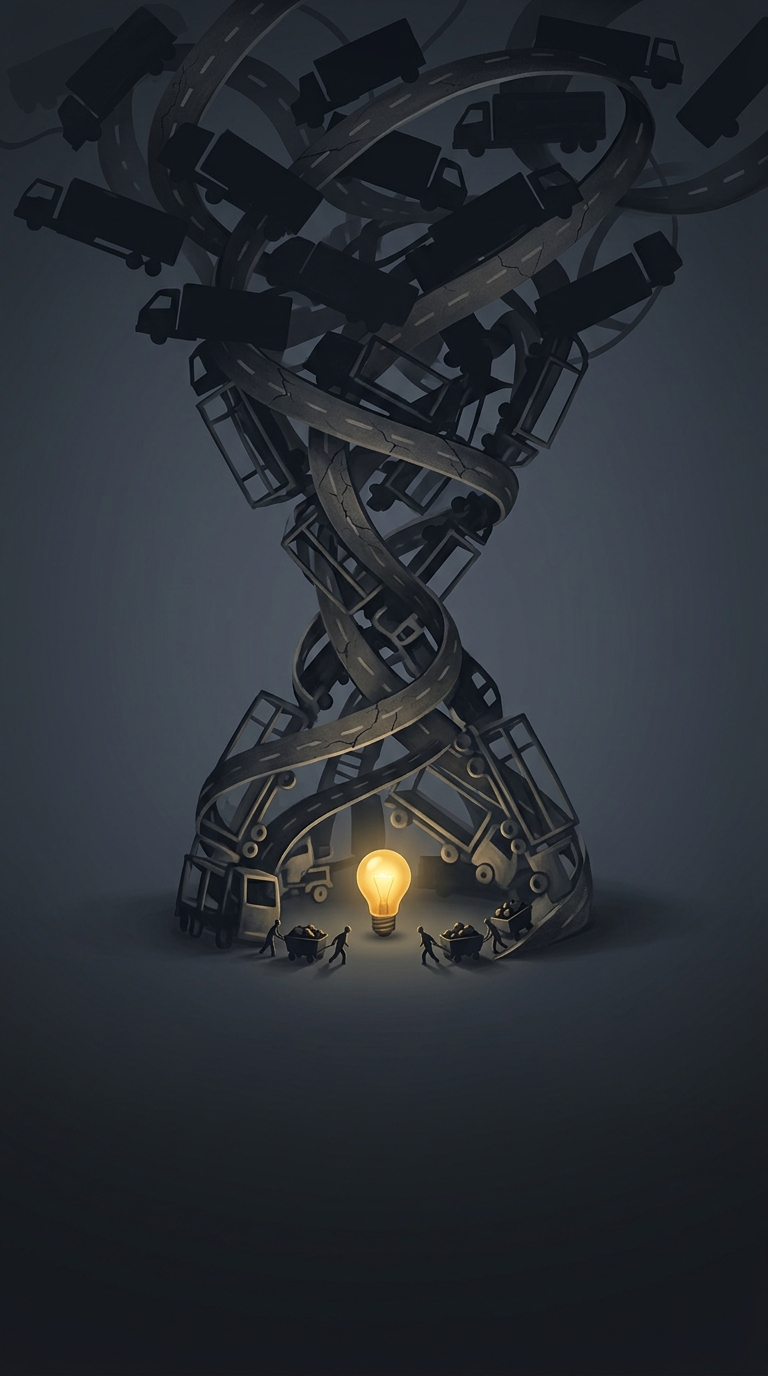
How a Narrowed Road Became a 62-Mile Queue
Roadworks can reduce a highway’s capacity far more than the number of blocked lanes suggests. At a narrowing, vehicles must merge into less space, and the stretch beyond the work zone can let only so many vehicles through at a time. If trucks arrive faster than that bottleneck can clear them, the excess has nowhere to go but backward along the road.
Coal trucks made the imbalance harder to absorb. A long, heavy vehicle takes up more road space than a car and needs more room and time to accelerate after slowing. Once traffic is compressed, each truck’s hesitation can delay the vehicles behind it; a breakdown can reduce the usable space still further. The queue grows even if cars near the front are moving.
Why the Jam Crawled
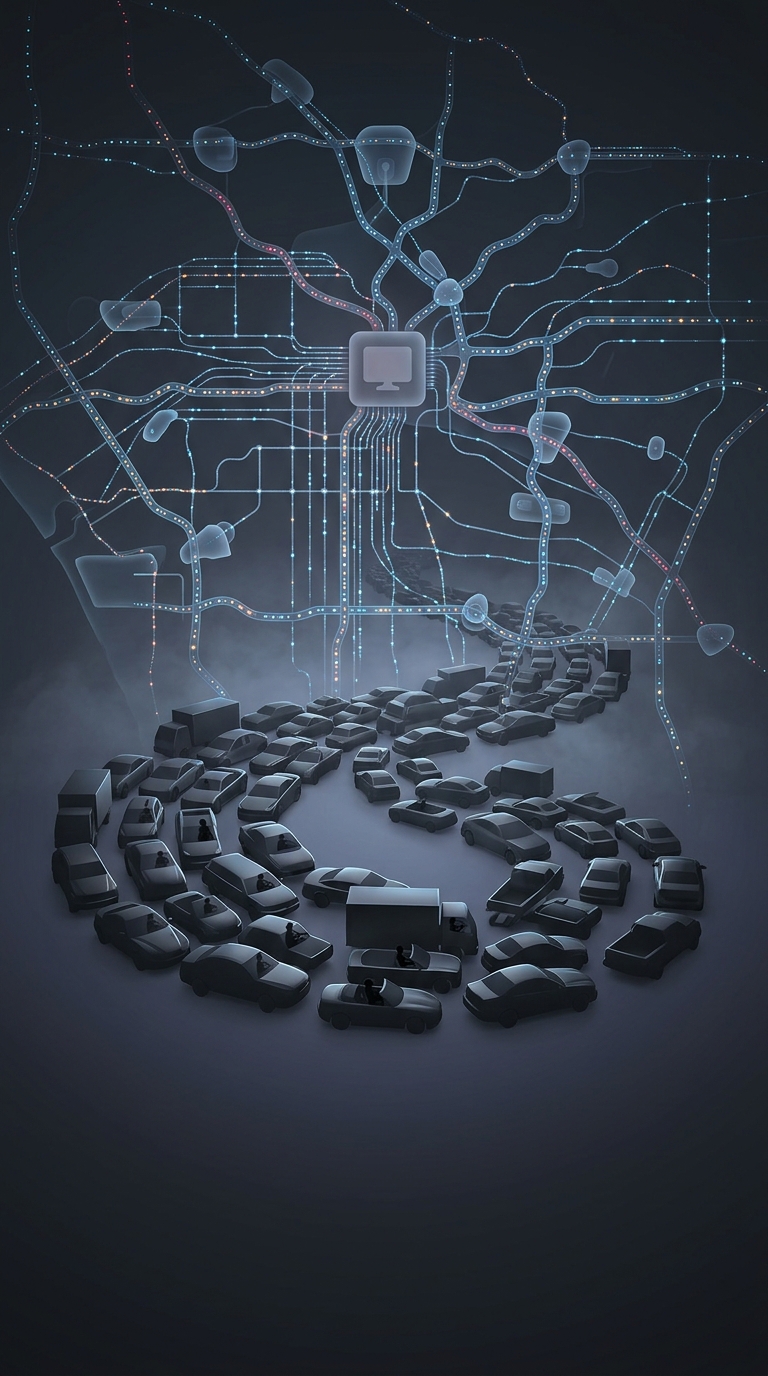
Traffic jams behave less like a single stopped object than a moving wave. The front may inch forward while vehicles far behind wait, and each stop-and-start disturbance can travel backward through the line. That helps explain how a queue could stretch for miles without every vehicle being motionless for the entire time.
The reported two miles per day describes the jam’s overall progress, not a steady speed for each driver. The deeper problem was a mismatch: too many trucks feeding into a road narrowed by construction, with too little spare capacity to recover when traffic slowed. When a highway has no room to absorb even small disruptions, a merge or a single disabled vehicle can help turn delay into a queue that reaches far beyond the work zone.