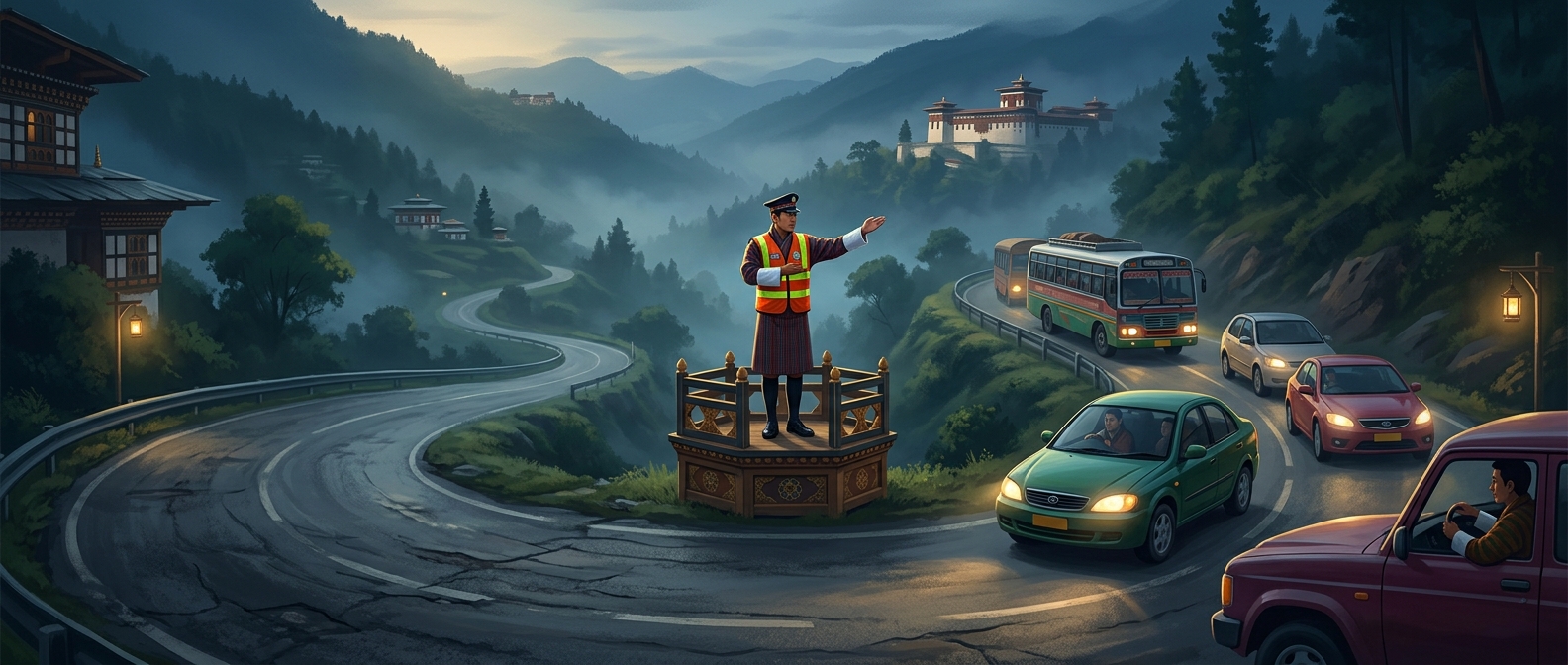
How a Thimphu traffic officer becomes the signal
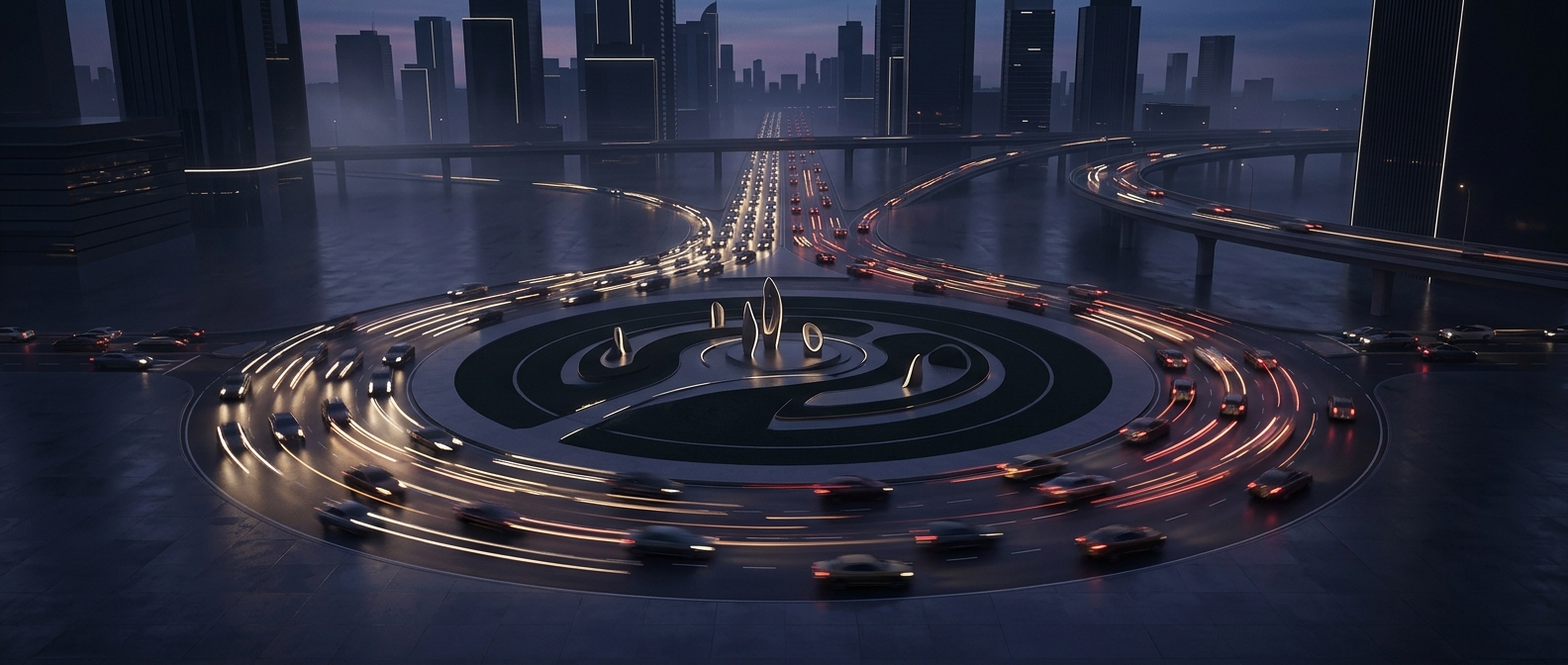
A traffic light follows a preset cycle: it gives one direction a turn, then another, whether or not the queue has changed. A police officer directing traffic can adjust that sequence on the spot. By watching vehicles approach from different sides, the officer can let a backed-up stream move, hold another, and respond when a gap opens.
The gestures are only one part of the system. Drivers must be able to see the officer and understand which movement is being allowed; the officer, in turn, has to keep track of several approaches at once. A car edging forward, a vehicle turning across another lane, or a sudden lull can alter what should move next. The person at the junction is making rapid decisions that a fixed signal would make according to its programmed timing.
Flexibility has a human cost
That flexibility comes with limits. A light can keep directing traffic without fatigue, while a person must remain attentive and visible amid noise and motion. Hand direction also depends on drivers recognizing and obeying the signals. The method is therefore less a rejection of technology than a different way to manage a particular intersection: replace a fixed schedule with live judgment.
At a busy junction, the officer’s most important tool is not a dramatic gesture but the ability to change the order of movement as conditions change. The traffic pattern is being managed in real time, one release and one stop at a time.