How a Slow Patch Became a 109-Mile Queue
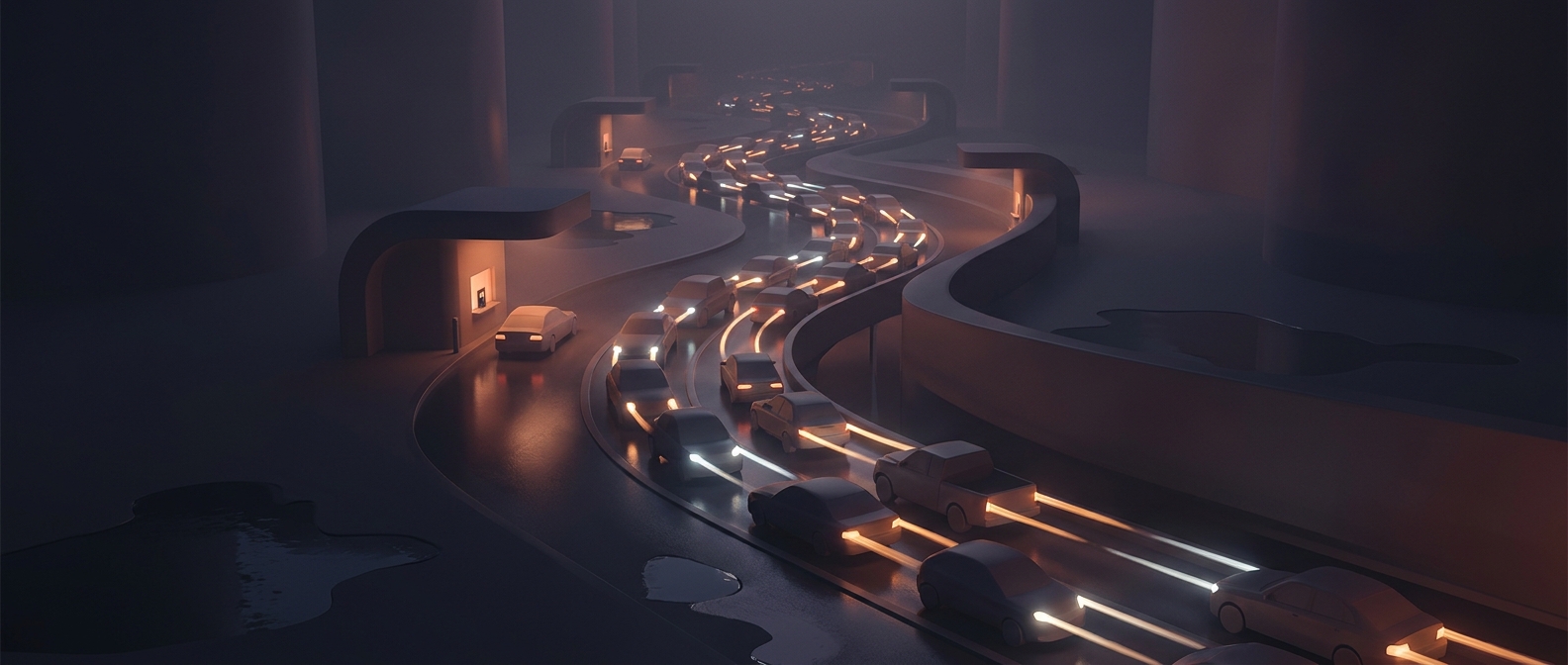
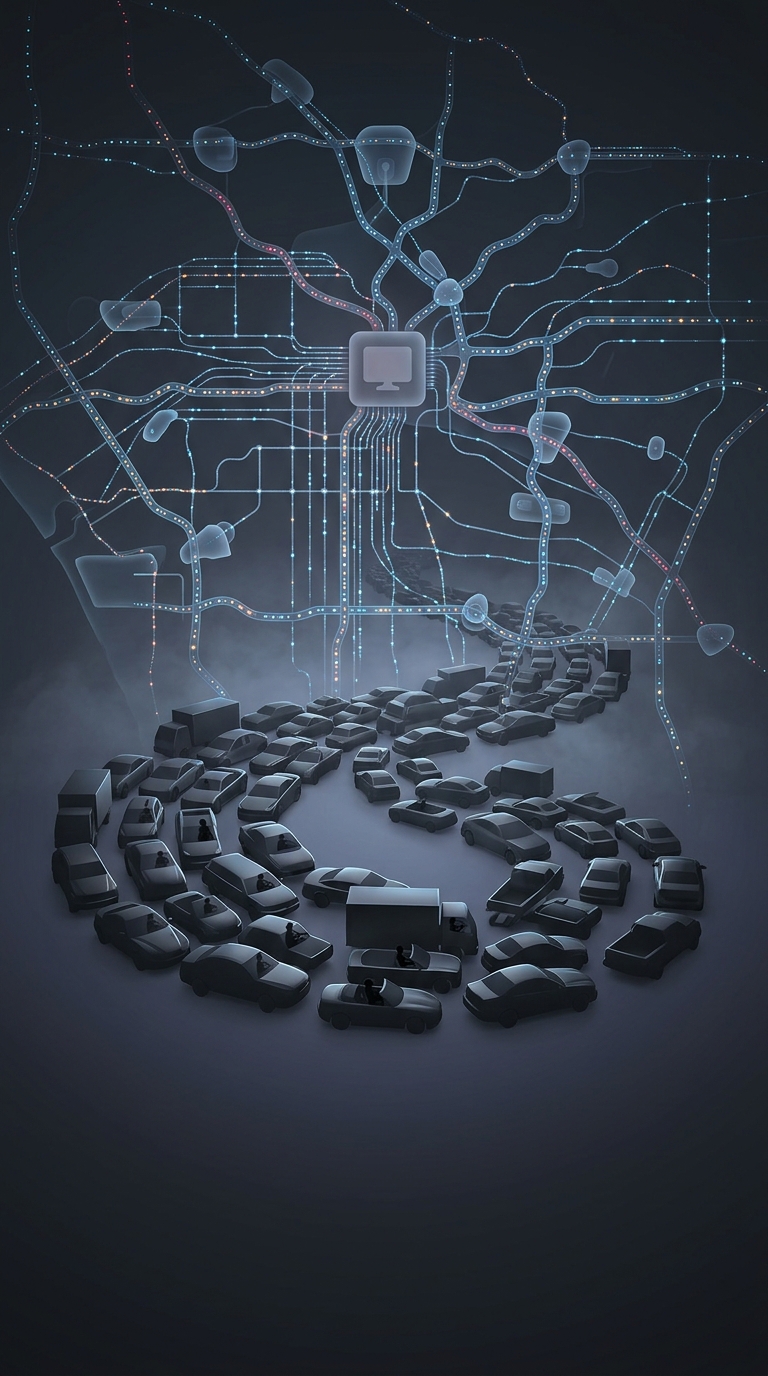
On the road between Lyon and Paris, holiday traffic and bad weather combined to produce a jam stretching 109 miles. The key was not simply how many cars were on the road, but how quickly traffic could move through its slowest point. Rain, poor visibility, or a slick surface can make drivers leave more room and brake earlier; a narrowing or other disruption can have a similar effect. When many vehicles arrive faster than that stretch can release them, the excess has nowhere to go but backward, into the approaching traffic.
The Jam Moves Backward
A traffic jam can grow even while individual cars are moving forward. One driver brakes, the car behind reacts a moment later, and each following driver repeats the slowdown. That delay creates a backward-moving wave of braking: vehicles encounter it one after another, although the original slow patch may already have cleared.
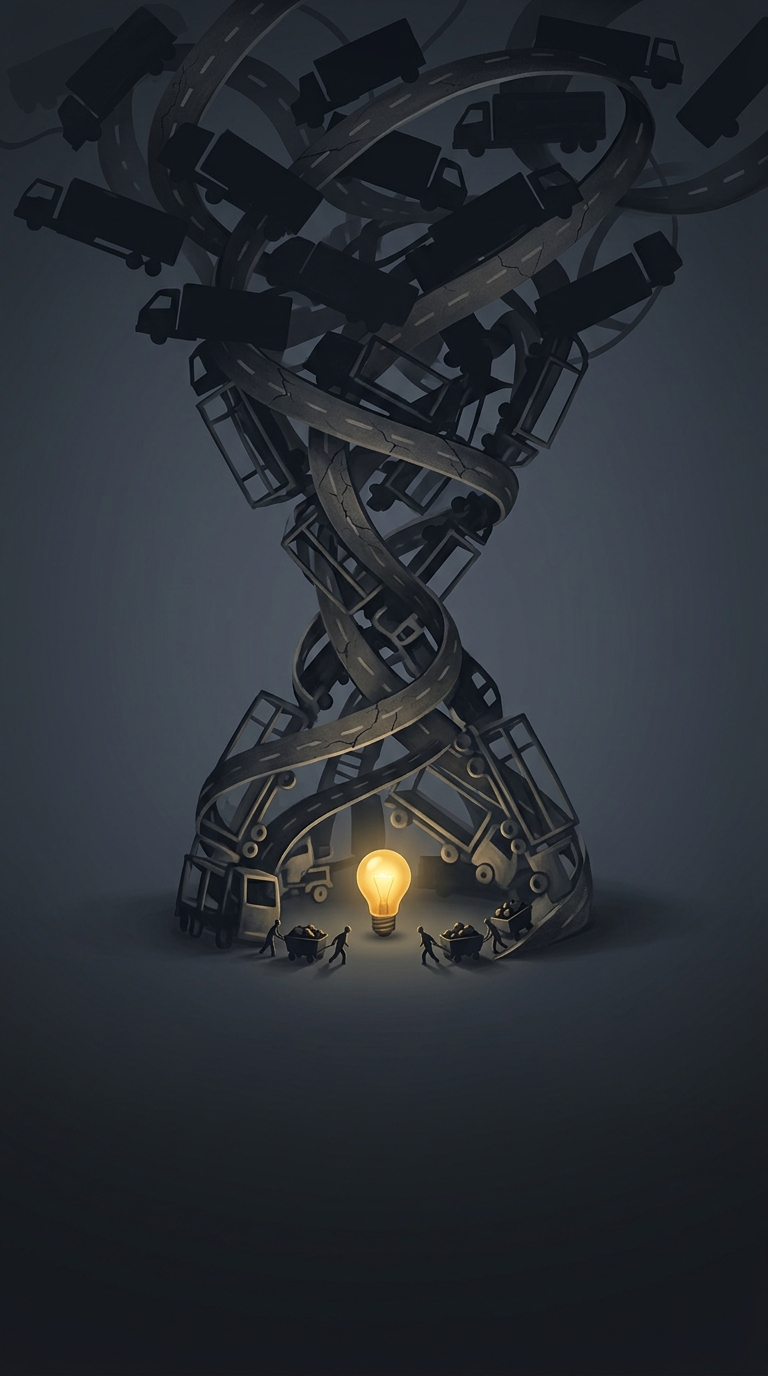
In dense traffic, small gaps matter. If drivers leave little room, a modest slowdown can trigger a sharp brake-and-accelerate cycle. Each cycle reduces the number of cars that can pass a bottleneck, so the queue keeps lengthening until traffic thins or the road can carry cars away as fast as they arrive.
Why the Distance Could Grow So Far
Holiday travel concentrates many journeys into the same period, while bad weather lowers the road’s effective capacity. Those pressures reinforce each other: more cars reach a stretch that can handle fewer of them, and every new slowdown sends another wave toward the back of the line. The striking consequence is that a jam need not have one dramatic cause or one fixed location. A series of ordinary braking reactions can turn a difficult patch of road into a queue that extends for miles.