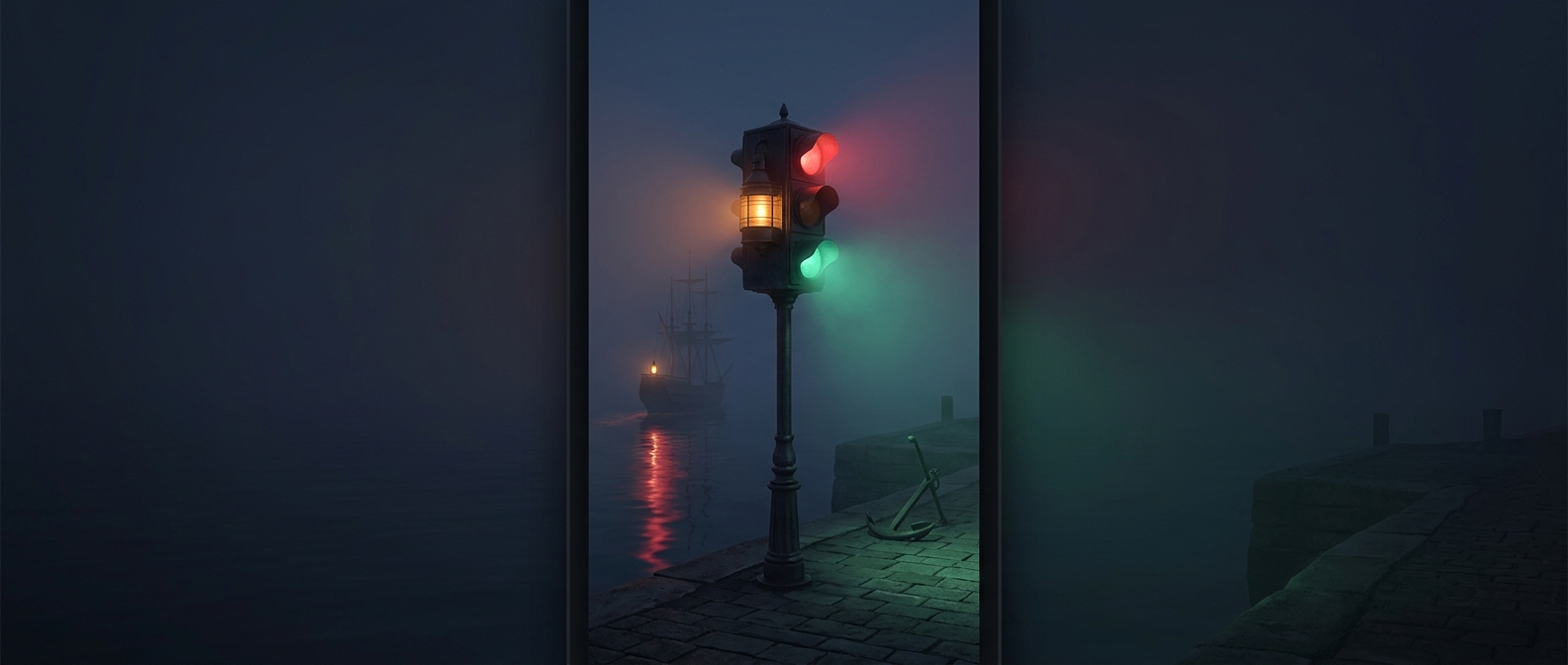
A railway code moves to the street
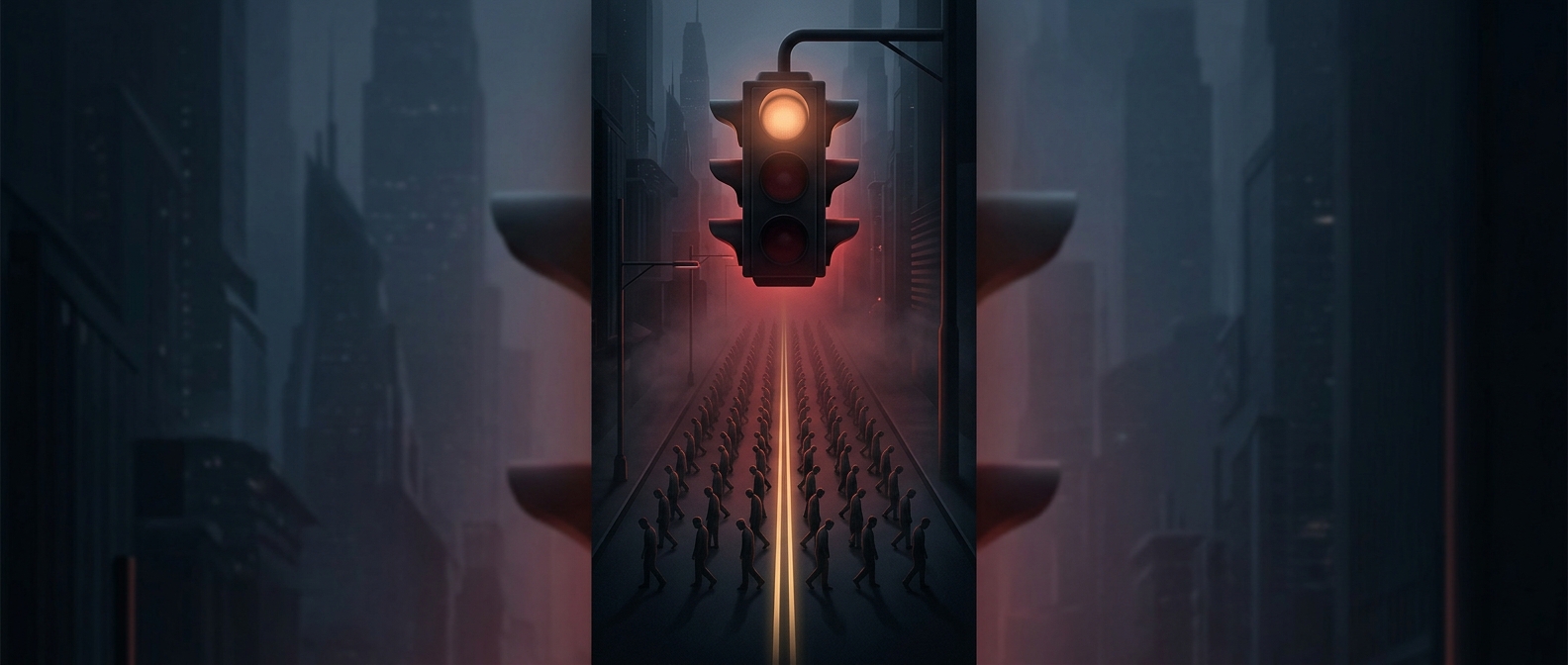
Before cars crowded intersections, railways had already solved a similar problem: how to tell someone moving fast, from a distance, whether to proceed. Their signal systems made colors part of a shared visual code. Early street signals adapted that idea, giving road users instructions they could recognize without stopping to read a sign.
The colors were only one part of the solution. A signal had to be visible in daylight and darkness, understandable at a glance, and consistent enough that drivers approaching an unfamiliar junction would know what to do. That made a small set of repeating signals more useful than a different arrangement at every intersection.
From a simple signal to an intersection system
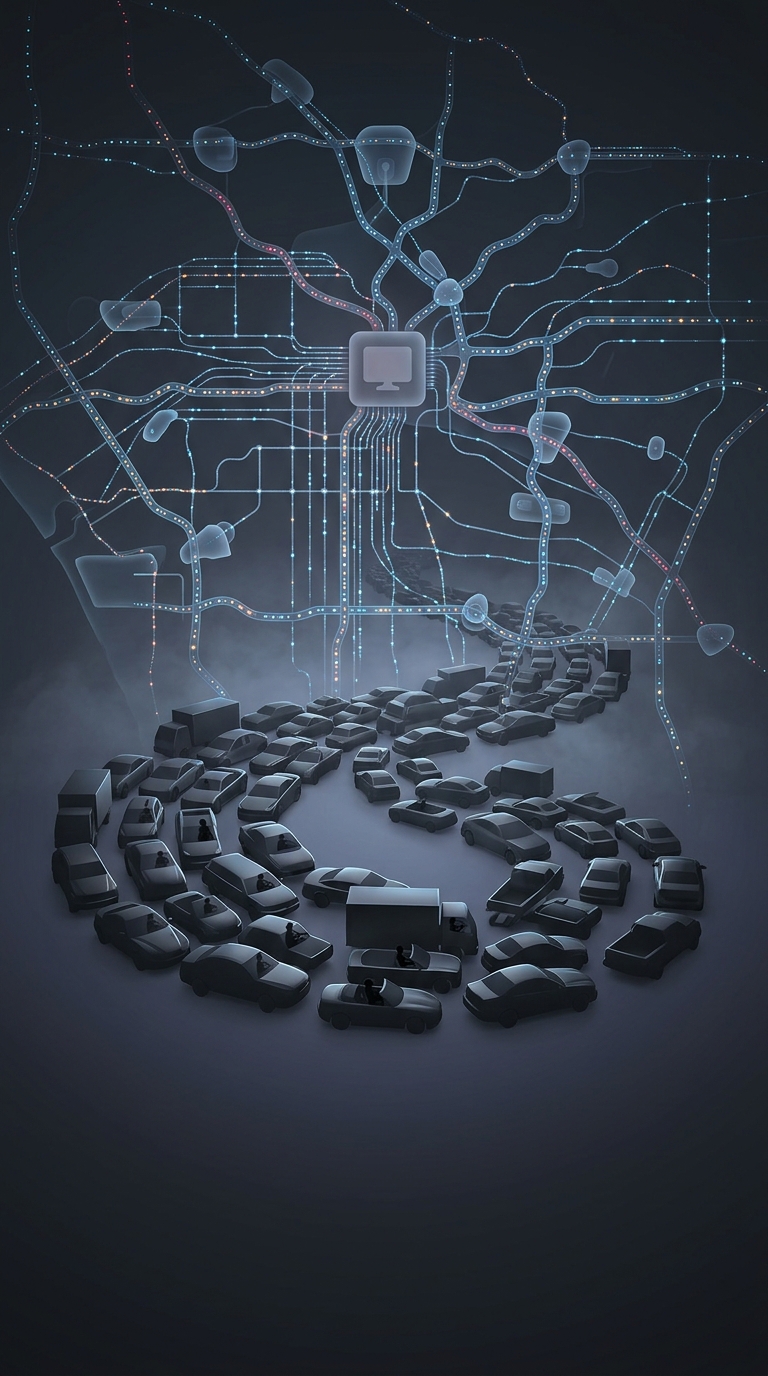
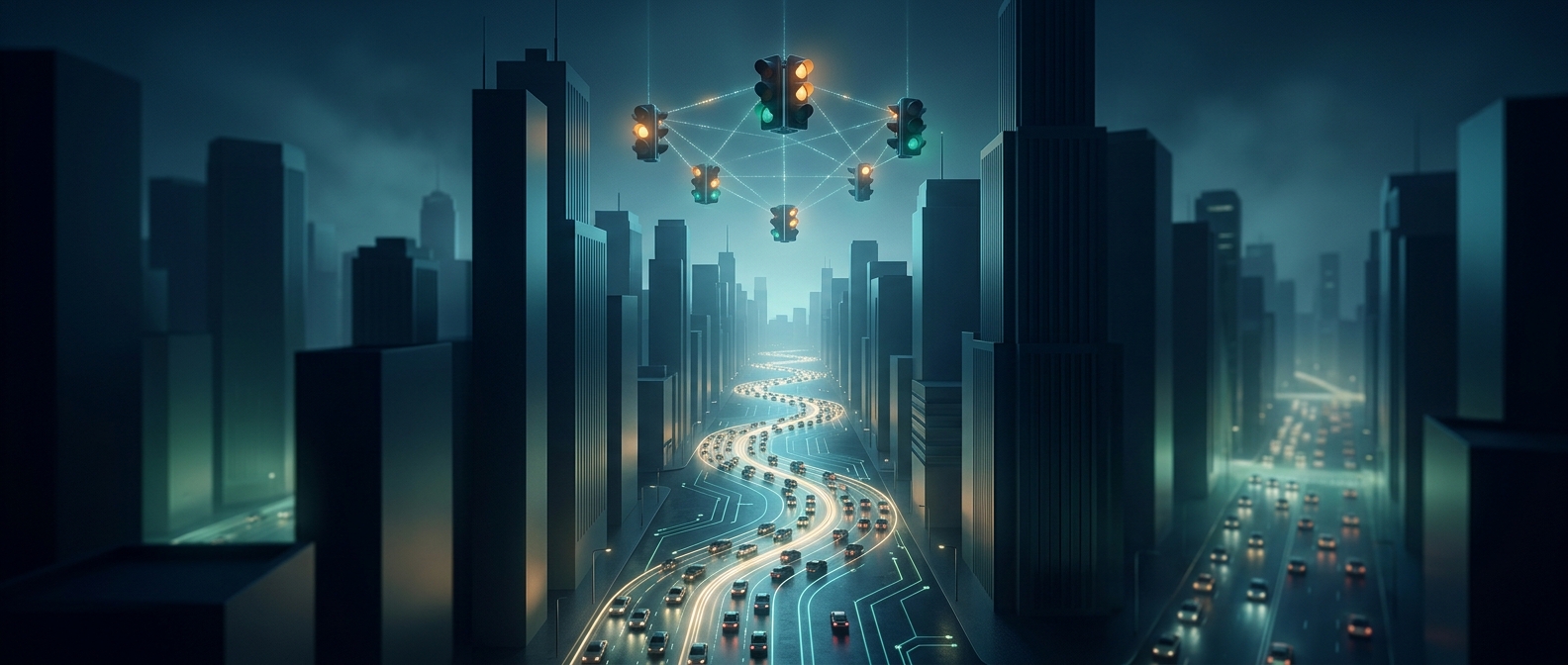
A light does not merely tell one driver when to move; it divides time among competing streams of traffic. One direction gets a turn to proceed while crossing traffic is held back. The sequence must allow the junction to clear before another movement begins, so the signal’s timing and placement matter as much as its color.
As intersections became busier, systems added a warning phase between go and stop. That brief interval gives drivers already near the junction a chance to clear it, while alerting others that the right to proceed is about to change. The signal is therefore a compact coordination device: it makes separate drivers follow the same schedule without needing to negotiate with one another.
Why the code has to be unmistakable
Color alone is not enough for every driver or every viewing condition. Position and familiar patterns help reinforce the instruction, and the signal’s meaning depends on people encountering the same code repeatedly. The practical payoff is that a driver can understand the next required action in a glance—leaving attention available for the pedestrians, vehicles, and turning movements that make an intersection complicated.