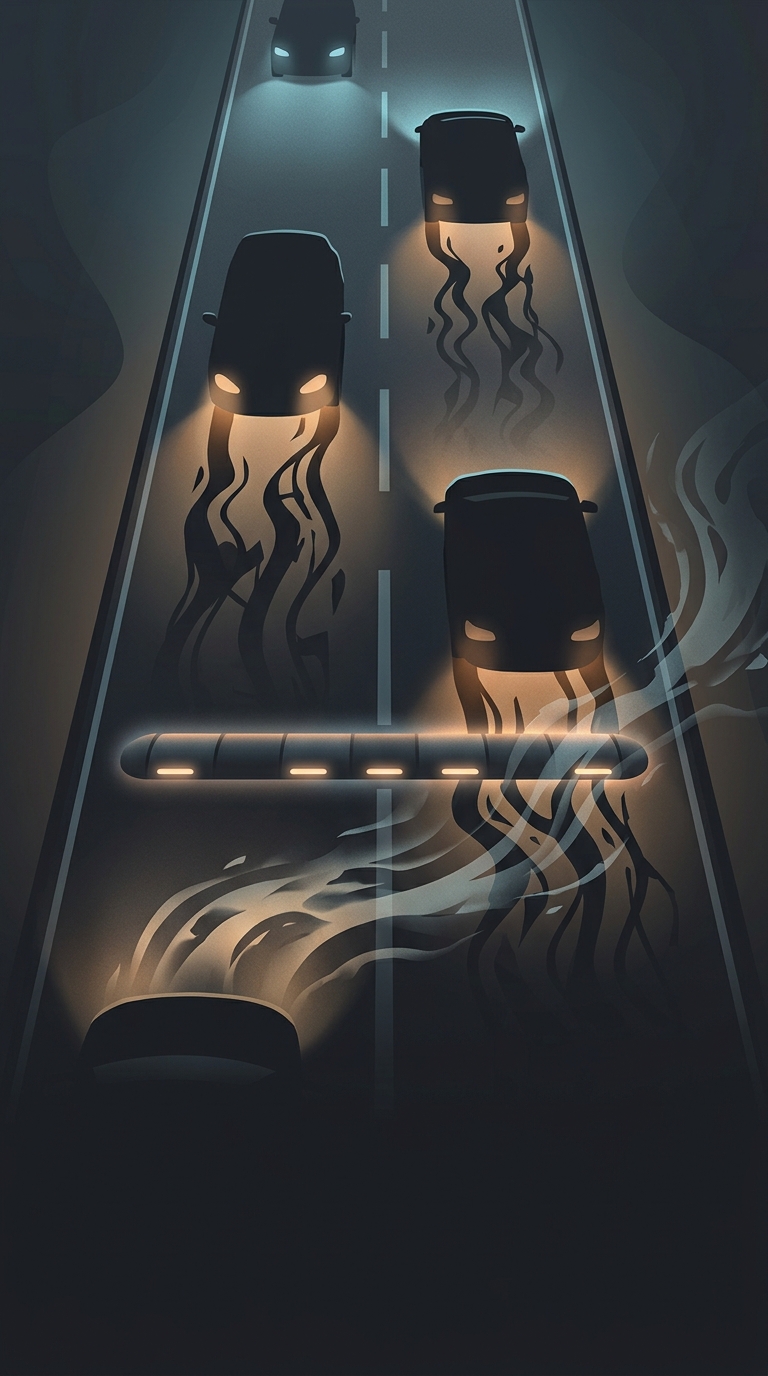
The pollution hidden in stop-and-go traffic
A speed bump can make a street feel calmer while adding a small, less visible cost: extra air pollution from vehicles repeatedly slowing down and speeding up. Drivers brake before the raised section, then press the accelerator to regain speed. That change in pace can use more fuel than traveling steadily, especially when bumps are closely spaced or traffic is already heavy.
Combustion engines release pollutants in their exhaust, and braking and acceleration can also increase wear on tires and brakes, creating particles that enter the air. The effect varies with vehicle type, driving style, bump design, and traffic conditions; one bump does not turn a street into a pollution hotspot. But a long series can make stop-and-go driving more common along the route.
A safety tradeoff shaped by street design
The added pollution is concentrated where vehicles pass, so people walking, cycling, or living close to the road may breathe more of it. Electric vehicles avoid tailpipe exhaust, but they still produce particles from tire and brake wear; regenerative braking, which uses the motor to slow the vehicle, can reduce conventional brake wear.
That does not make speed bumps inherently unsafe. Their purpose is to reduce vehicle speeds, which can lower the severity of crashes. The practical challenge is to calm traffic without creating needless acceleration cycles: spacing, road layout, and alternatives such as raised crossings can influence how often drivers have to brake and speed up. A quieter-feeling street can still have an air-quality tradeoff that residents cannot see.