Why Japan’s “Blue” Light Looks Greenish
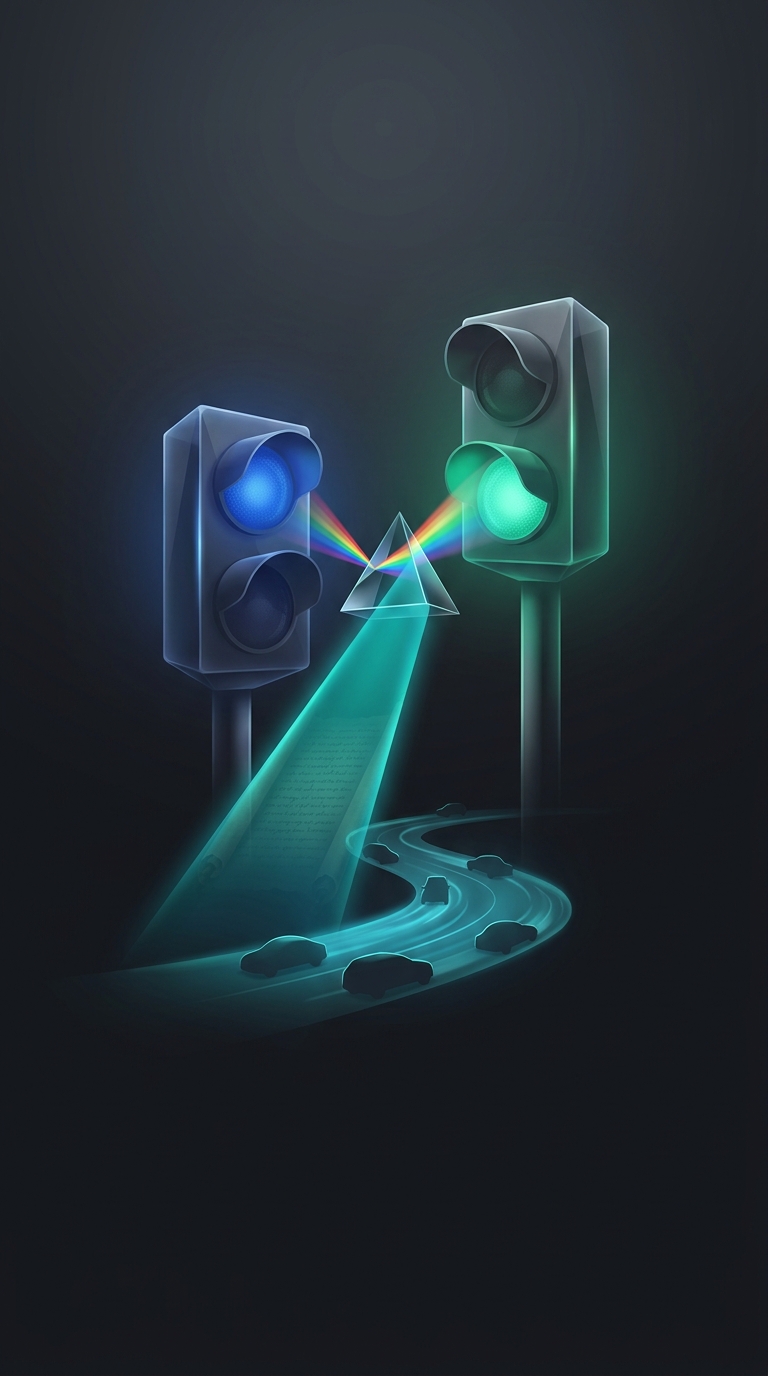
Japanese drivers commonly call the signal to proceed ao, a word historically used for a broader range of colors than English “blue”—including some shades that English speakers would call green. Modern Japanese has a separate word, midori, for green, but older color categories did not divide the spectrum in exactly the same way.
That linguistic history explains the signal’s name, not a national refusal to use green. Japan’s traffic signals follow standards that specify green for “go.” The light can look distinctly blue-green, but describing it simply as blue makes the difference sound larger—and the rules looser—than they are.
A Word Can Outlast Its Old Color Boundary
Color words are categories, not precise labels for fixed points on a spectrum. A language may group shades differently from another, and those boundaries can shift over time. As midori became the usual word for green, ao remained embedded in familiar expressions and conventions, including the name for the traffic signal.
So when a Japanese speaker refers to an “ao” light, the phrase need not mean that the lamp is blue by an English speaker’s everyday classification. It reflects a longstanding naming habit applied to a light whose standardized signal is green.
The Practical Result
For a visitor, the useful distinction is simple: follow the signal’s position and meaning, not the color word used to describe it. The apparent blue cast is a reminder that everyday language can preserve an older map of color even after the map has acquired a new boundary.