An Empty Lane Can Carry More People
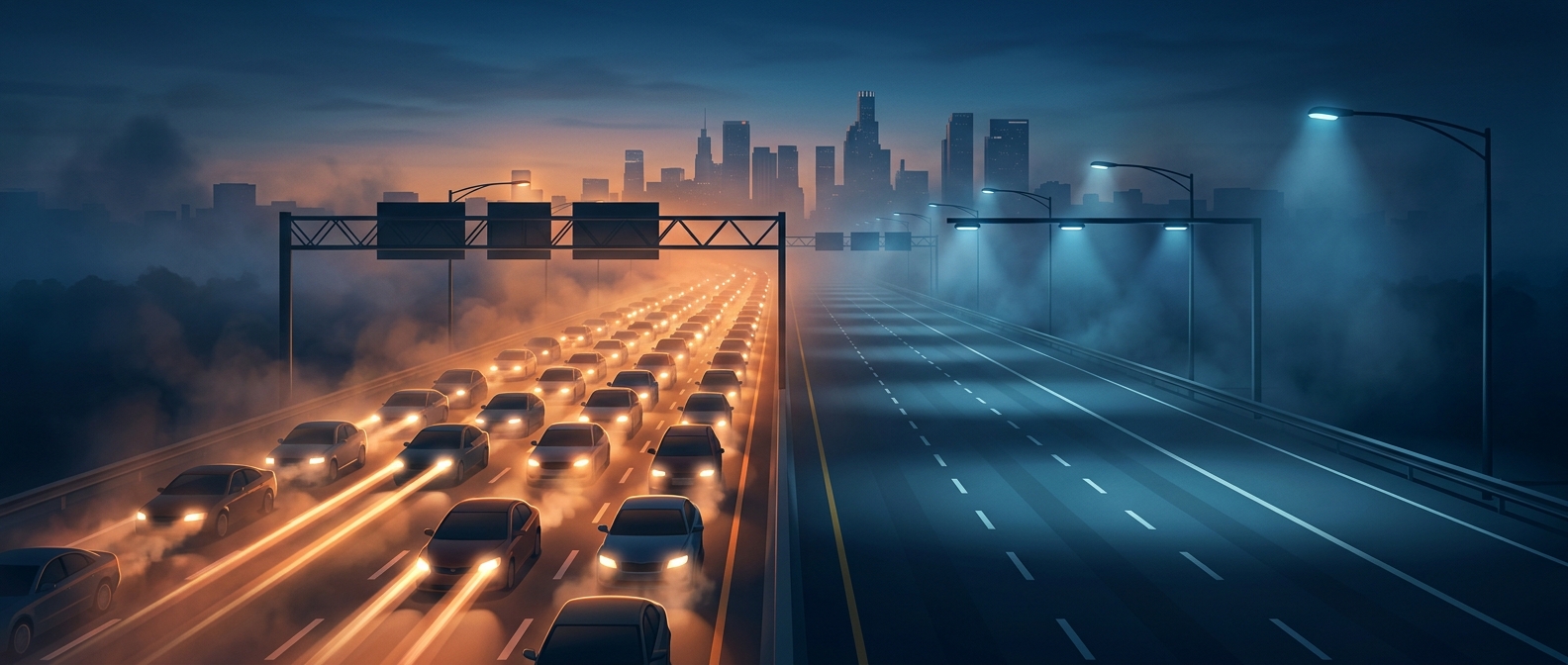
A rush-hour lane can look wasteful when it has fewer cars, but counting vehicles misses what the lane is meant to move: people. If several commuters share one car, they use less road space than the same number of people traveling in separate cars. The lane’s lighter traffic is therefore not necessarily a sign that it is doing nothing; it may be moving a comparable number of travelers with fewer vehicles.
The Tradeoff Behind the Rule
A carpool lane gives qualifying vehicles a travel-time advantage in exchange for limiting who can use that space. That restriction helps prevent the lane from filling with the same single-occupant traffic as the lanes beside it. It also gives drivers a reason to coordinate trips or share a ride—though whether that incentive changes anyone’s commute depends on local conditions and the time and effort of finding a carpool.
The goal is not to keep every lane equally full of cars. It is to make shared travel more attractive while reserving road capacity for vehicles carrying more people. A lane can look underused by cars yet still be serving its purpose as a people-moving lane.
Why the View Can Be Misleading
From outside the carpool lane, the contrast is easy to notice: a stream of vehicles crawls alongside a lane with more open pavement. But the visible emptiness is only one part of the comparison. The relevant question is how many people get through, and how quickly—not simply how many vehicles occupy the asphalt. The open space is the incentive: without a meaningful travel-time advantage, drivers have less reason to share a ride.