A workplace that has to hold its place
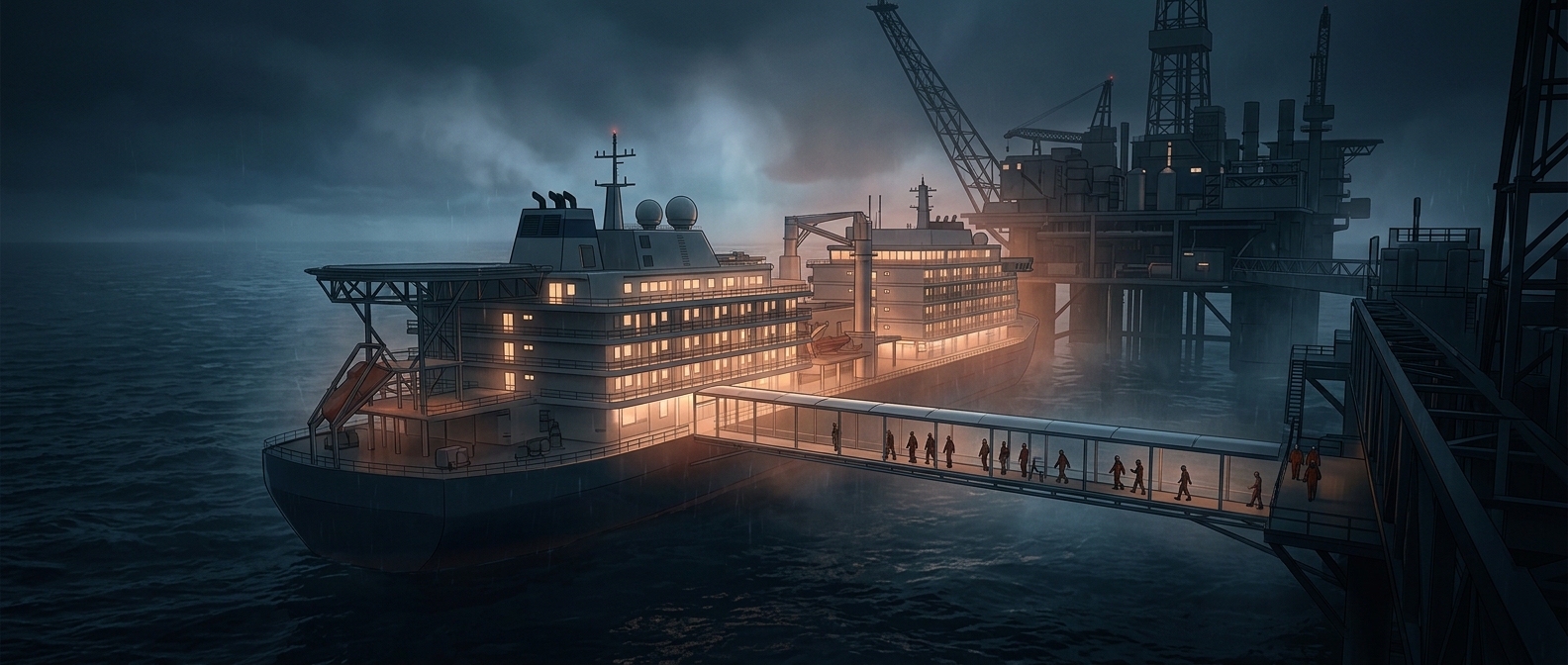
Offshore projects can be too far from shore for crews to commute each day. Instead of building permanent accommodation beside an installation, operators may bring in a vessel built to house workers near the job. Its cabins and shared spaces provide a place to sleep and eat; work areas and equipment support the tasks crews need to carry out offshore.
The vessel’s position matters because workers and supplies may need to move between it and a nearby installation. Yet it cannot simply be tied to a fixed point in every situation: water depth, seabed conditions and the installation’s layout all affect how a ship can stay nearby.
Thrusters make constant small corrections
Wind and waves push a floating vessel off course. Thrusters—propellers that can push the ship in different directions—counter that drift. A dynamic positioning system uses position and motion information to adjust the thrust, making repeated corrections to keep the vessel within its working area.
This is not the same as making the ship motionless. The vessel still moves with the sea, and its operators must manage both its position and the conditions around it. If the weather or motion makes work or personnel transfers unsafe, operations may have to pause or the vessel may need to move away.
The tradeoff is proximity without a fixed building
Keeping accommodation afloat lets a project place living space close to offshore work without constructing a permanent base there. But the convenience depends on machinery, fuel, crew and suitable sea conditions. The hotel’s address is therefore not just a location on a chart: it is a position the vessel has to keep earning, correction by correction.