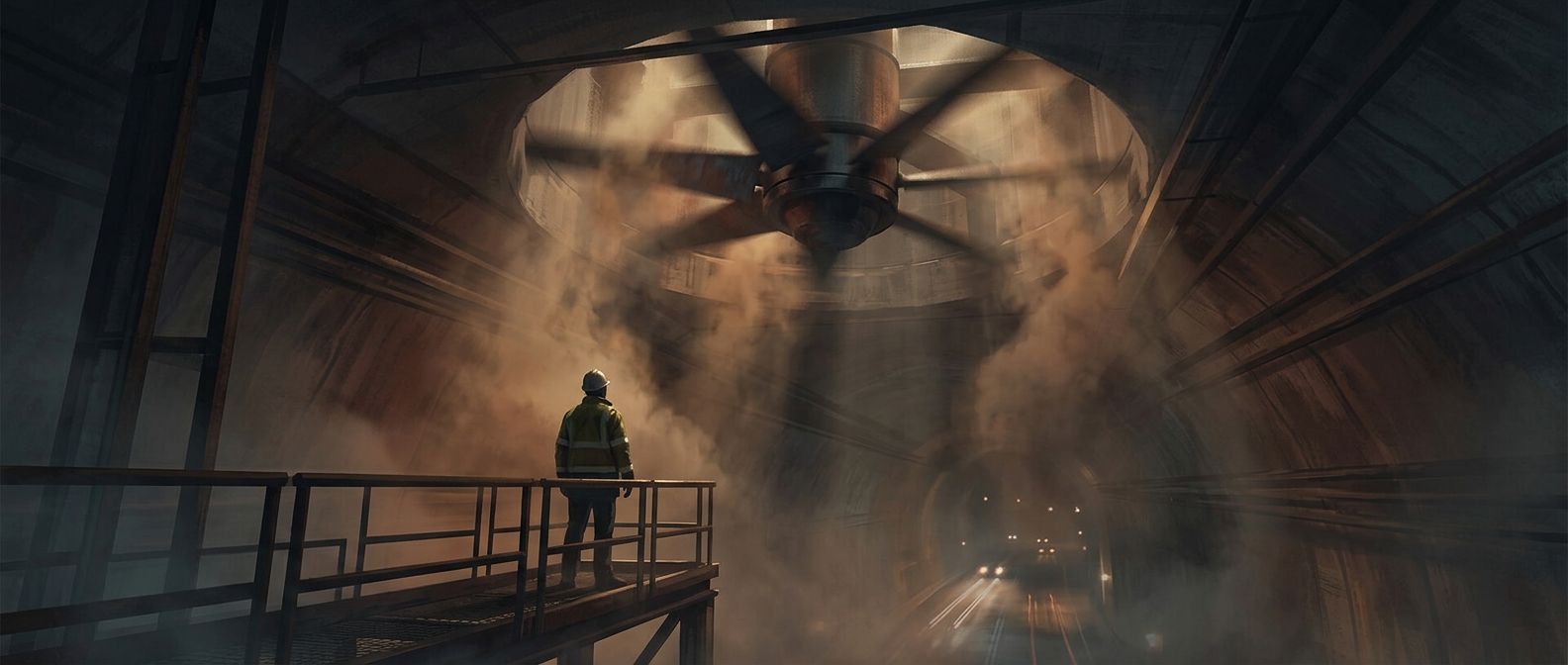
Why a tunnel needs a ventilation system
A road tunnel is not simply a covered stretch of highway. Its walls and roof limit how quickly vehicle exhaust can disperse, while traffic continually adds gases and fine particles to the air. Ventilation fans create a controlled flow that carries polluted air toward the portals—the tunnel’s entrances and exits—where it can mix with outdoor air.
The airflow also helps keep conditions from becoming uneven along a long tunnel. Depending on the design, fans may move air lengthwise, push fresh air into particular sections, or draw polluted air out. The goal is to manage air quality where vehicles and people are, not merely to make the tunnel feel breezy.
A fire changes what the fans are for
Smoke is often the more urgent danger during a tunnel fire. It can spread quickly through a confined space, making it hard to see, breathe, or find an exit. Ventilation controls can direct the smoke’s movement so that it is less likely to flow toward people escaping or responders approaching the fire.
That requires more than switching every fan to full power: airflow can carry smoke from one part of a tunnel to another. The system’s response depends on the tunnel’s layout and the location of the fire, and is coordinated with other safety measures such as signs, alarms, and escape passages.
The tunnel’s hidden weather
Outside, wind and open space disperse exhaust. Inside, fans and ducts have to create an equivalent, carefully managed flow. That is why ventilation is part of a tunnel’s safety design—not just a way to remove fumes, but a means of controlling where dangerous air goes when minutes matter.