A heavier car loads more than the surface
A road is not a solid slab. Asphalt sits over layers of compacted stone and soil, which spread traffic loads into the ground. When a tire rolls over a spot, those layers bend slightly; repeated bending can gradually crack the asphalt, while pressure can also push pavement downward into ruts.
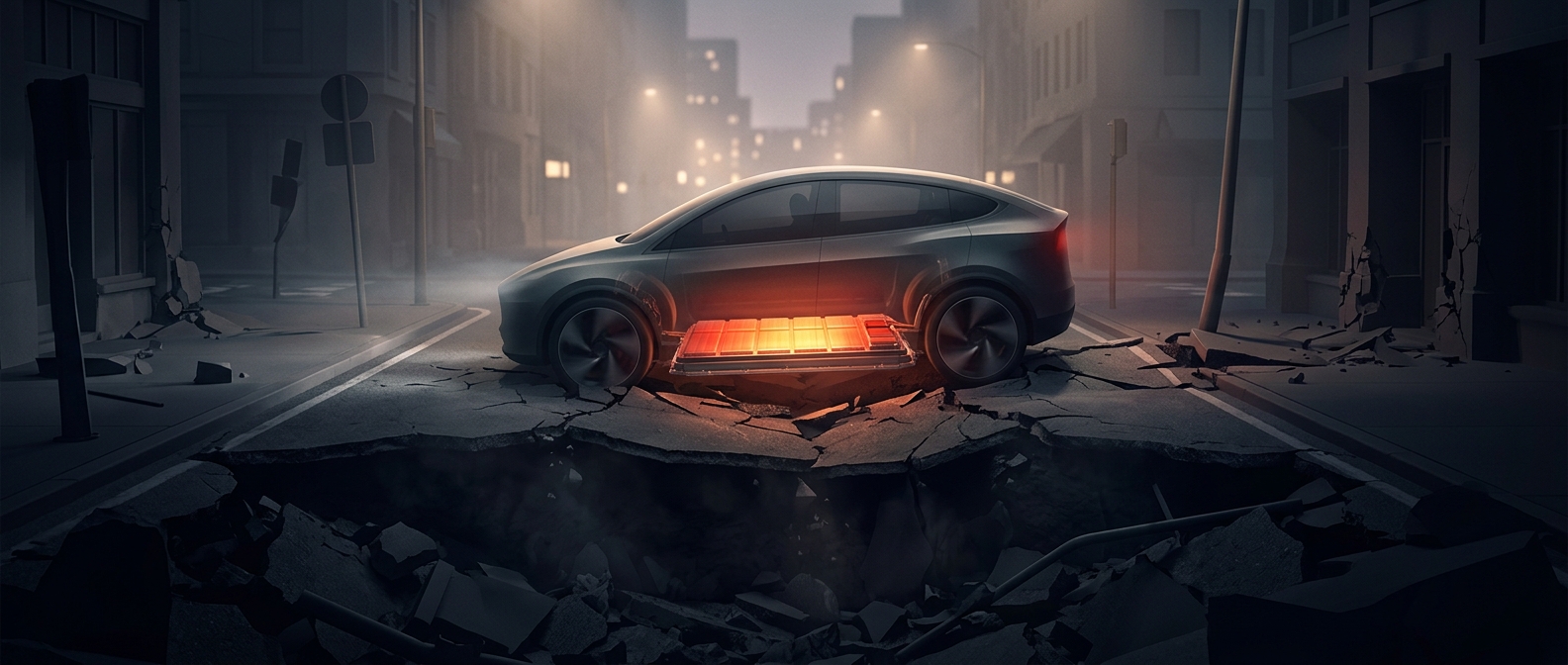
An electric car’s battery can make it heavier than a comparable gasoline car. That added mass increases the force carried by its tires and axles, giving the pavement a larger workout each time the car passes. The effect depends not just on the vehicle’s total weight but on how that weight is distributed among its axles and tires.
Repeated loads make the difference
Road wear accumulates over many trips, and heavier axle loads can cause disproportionately more damage than lighter ones. That is why engineers pay close attention to trucks: their concentrated loads can be much more demanding than those of passenger cars. Electric cars contribute to wear too, but they are only one part of the traffic a road must withstand.
Pavement design reflects this tradeoff. Engineers choose layer thickness and materials to handle expected traffic, weather, and the strength of the ground below. More heavy traffic can mean earlier repairs or a need for stronger pavement. So an EV’s weight does not instantly damage a road; it adds to the repeated loading that determines how quickly the road wears out.