Why a Small Booth Could Mean a Large Exposure
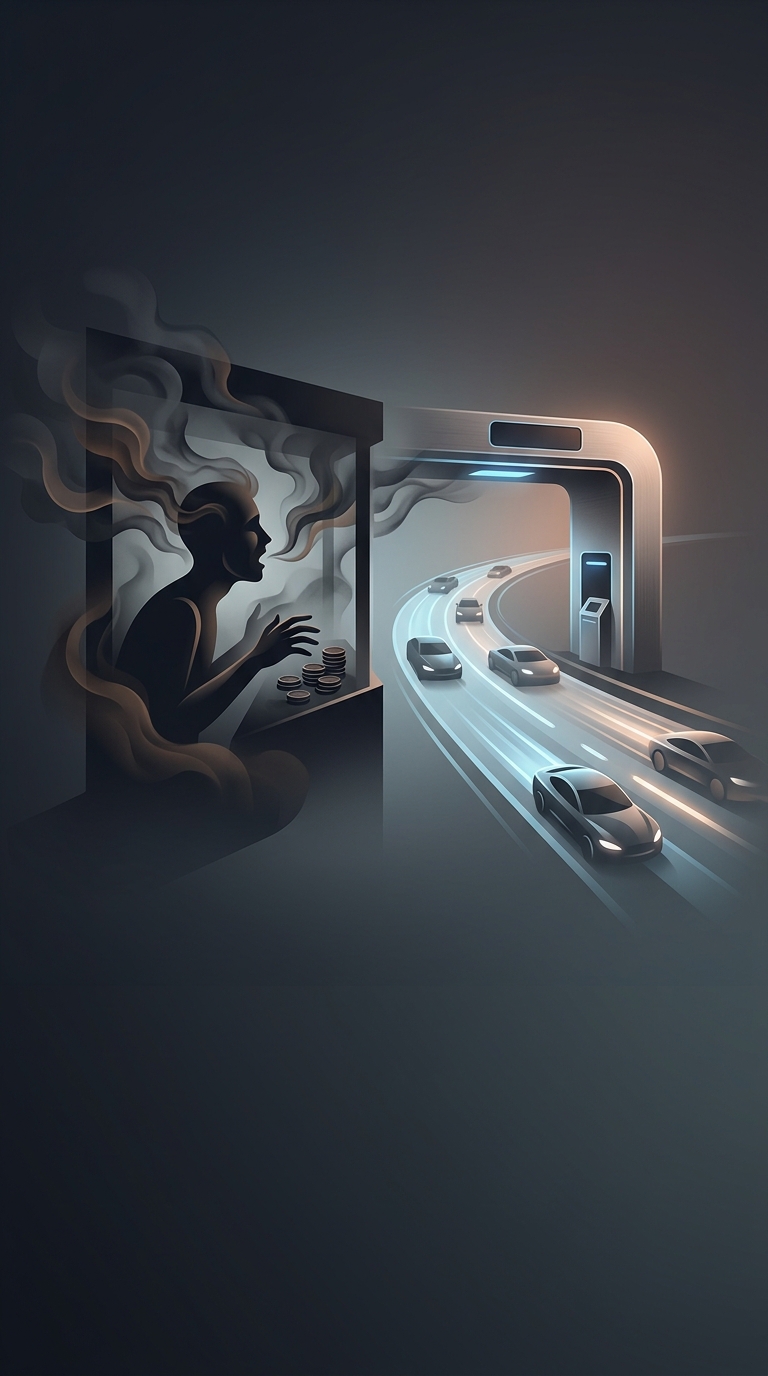
A toll collector sat only a few feet from a stream of tailpipes. When traffic slowed, cars and trucks often waited with engines running, releasing exhaust again and again beside the booth. The collector’s window connected that roadside air to a small work space, where ventilation could not reliably keep every plume away. Eight hours in that setting meant repeated exposure, not a brief encounter with a passing vehicle.
Exhaust is a mixture, including gases such as carbon monoxide and nitrogen oxides, along with fine particles. The amount a worker inhaled depended on traffic, weather, vehicle type, and airflow around the booth. But the basic workplace problem was straightforward: a person had to remain at the point where emissions were being produced.
Taking the Collector Out of the Traffic Stream
Electronic toll collection changed the transaction itself. A vehicle could be identified by a device or license plate and charged without stopping to hand over cash. With fewer cars needing to queue at a staffed window, agencies could reduce the number of collector positions and, in some places, move toward open-road tolling, where traffic passes beneath equipment without stopping at a booth.
Automation was not simply a ventilation upgrade; it removed much of the need to station a worker beside idling vehicles. It also let toll roads process traffic more continuously. For workers, that meant less time spent in a roadside microenvironment shaped by exhaust. For drivers, it meant fewer stops—and, as the system spread, fewer booths where a collector had to breathe the air of the queue all day.