A railway signal became a road rule
Before cars filled city streets, railways had to tell fast-moving trains when to stop, often from far down the track. Their signals established red as the stop indication, and road traffic signals later borrowed that familiar code. That inheritance mattered: drivers did not have to learn an entirely new meaning when electric traffic lights appeared.
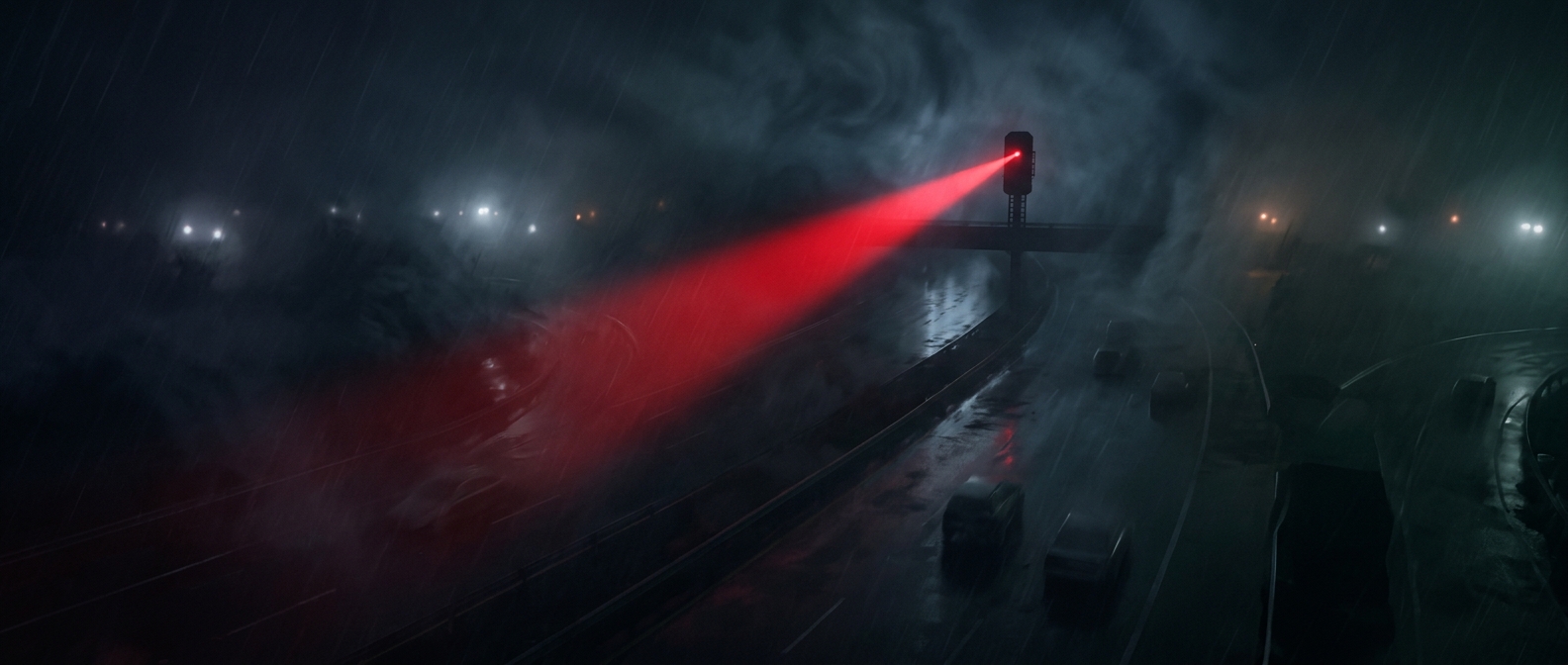
The color also had practical advantages outdoors. Red light has a longer wavelength than blue or green, so air and small particles tend to scatter it less. In mist or smoke, that can help a red signal remain distinguishable at a distance—though heavy fog can obscure any light. Its association with danger reinforced the message, making the signal easier to recognize under pressure.
A signal must work at a glance
A traffic light is a compact instruction delivered to people moving quickly, sometimes from several lanes away. Red offers a strong visual cue, while the same meaning across rail and road systems reduces the chance that a traveler will misread an unfamiliar signal. The design is not just about what a color looks like; it depends on a shared convention that people can act on immediately.
That is why the red lens does more than mark the end of one driver's turn. It carries a rule that began in railway signaling into an everyday road intersection, where a brief flash of color can coordinate dozens of vehicles without a spoken command.