A train pulled by a cable beneath the street
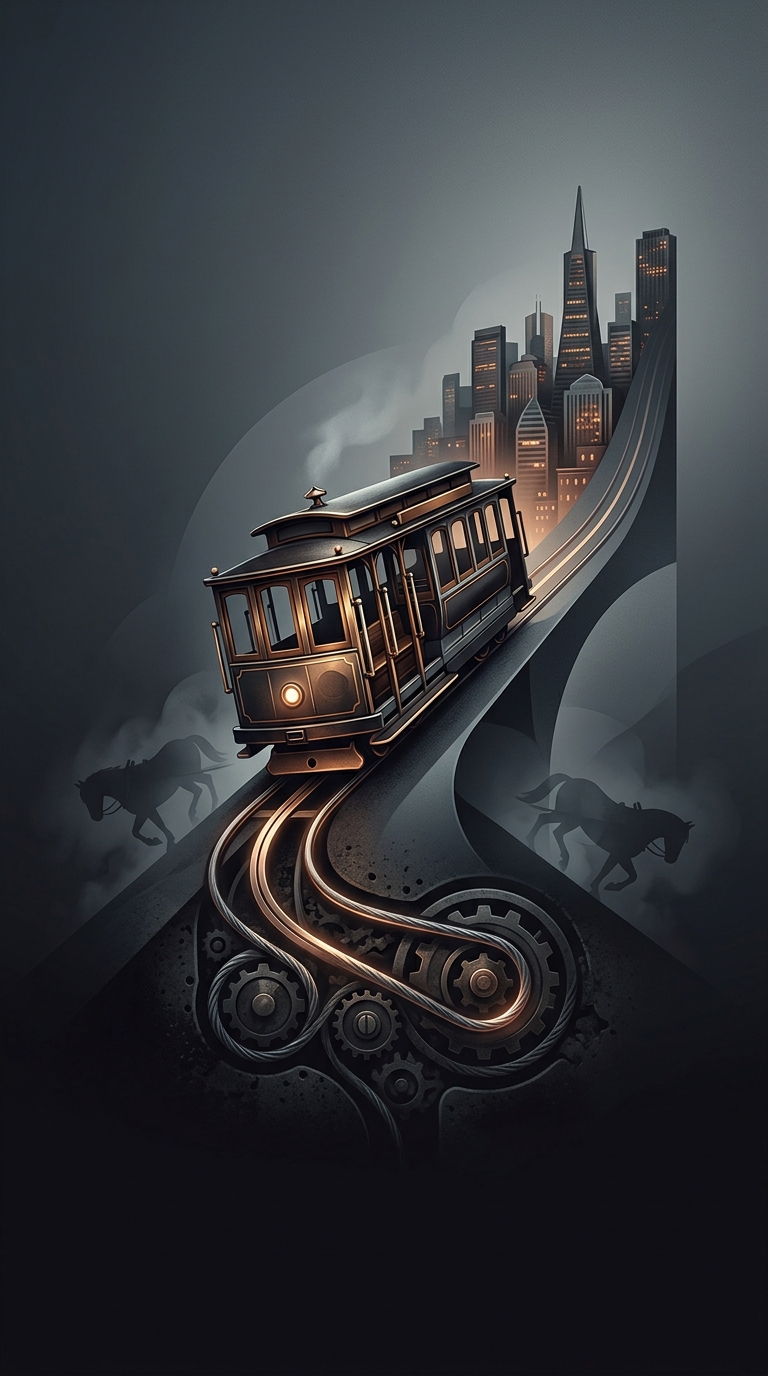
A San Francisco cable car has no engine of its own. Its power comes from a steel cable that travels continuously through a narrow slot between the rails, driven by machinery in a central powerhouse. Beneath the car, a device called a grip reaches through the slot and clamps onto the moving cable. The cable pulls the car uphill; the gripman—the operator at the controls—can loosen the clamp to let the car coast or stop without stopping the cable itself.
That arrangement is what makes the system different from a tram with an onboard motor. The cable keeps moving whether a car is attached to it or not, so several cars can use the same line. But the car cannot simply accelerate at will: its speed is tied to the cable’s speed. Brakes, rather than an engine, handle the work of slowing and holding it on steep streets.
The mechanism lives in the pavement
The visible car is only the part passengers ride. Under the road, the cable runs around pulleys and through a channel that must stay aligned with the grip. Track, cable, pulleys, and gripping gear all have to work together. The street itself is therefore part of the vehicle’s machinery, not just the surface it travels on.
This design trades flexibility for a durable way to move cars over demanding grades. A cable failure or shutdown affects every car using that line, and the hidden equipment needs continuing care. Yet the same basic principle still carries passengers through ordinary city streets. San Francisco’s landmark status is unusual for a moving system: the historic machinery is not preserved behind glass, but operates as part of a working transit service.