Why a lounge door can quiet a busy terminal
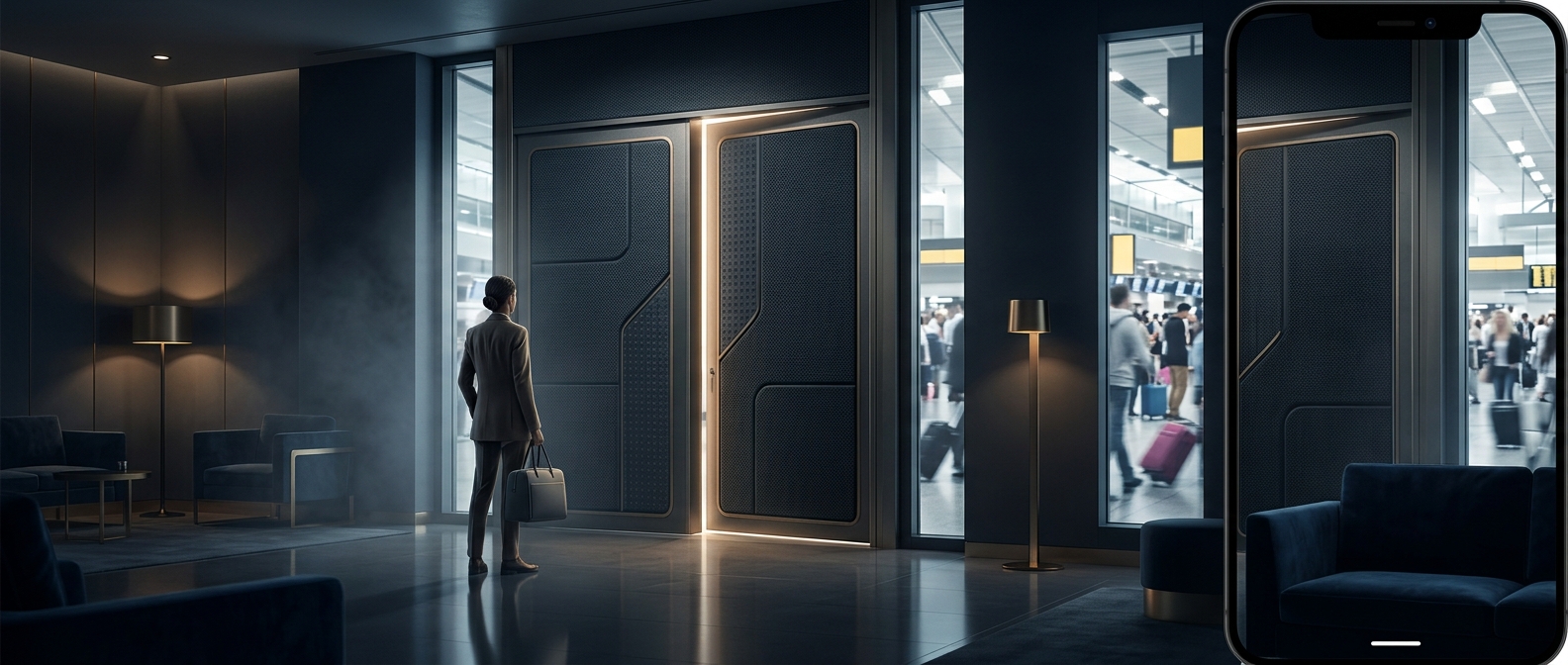
An airport terminal is full of overlapping sounds: rolling suitcases, announcements, conversations and the steady mechanical hum of the building. A lounge does not need to eliminate all of them; it needs to interrupt the direct path that carries them inside. The entrance door is a key part of that boundary.
Mass slows the door’s vibration
Sound travels through air as pressure changes. When those waves reach a door, they make it vibrate, and the vibrating surface can transmit some of that sound to the other side. A heavier, thicker door is harder for the waves to set in motion, so less sound passes through it. This is one reason a substantial door can outperform a light interior door.
But thickness alone cannot do the whole job. Sound can also travel around the door through small openings, especially beneath it or along the edges. Even a well-built door is less effective if it does not close snugly against its frame.
The seal closes the easy routes
Seals around the perimeter and a close-fitting threshold reduce those gaps. In effect, the door has to block two routes at once: vibration through its surface and airborne sound leaking around its edges. The result is a quieter room, not necessarily a silent one; noise can still enter through walls, ceilings or other openings.
That practical distinction matters in a terminal, where the loudest sounds often have a clear line to the lounge entrance. A door that shuts firmly turns the doorway from an open passage into a real acoustic barrier—and makes the change in noise noticeable the moment it closes.