The glass redirects the room’s reflection
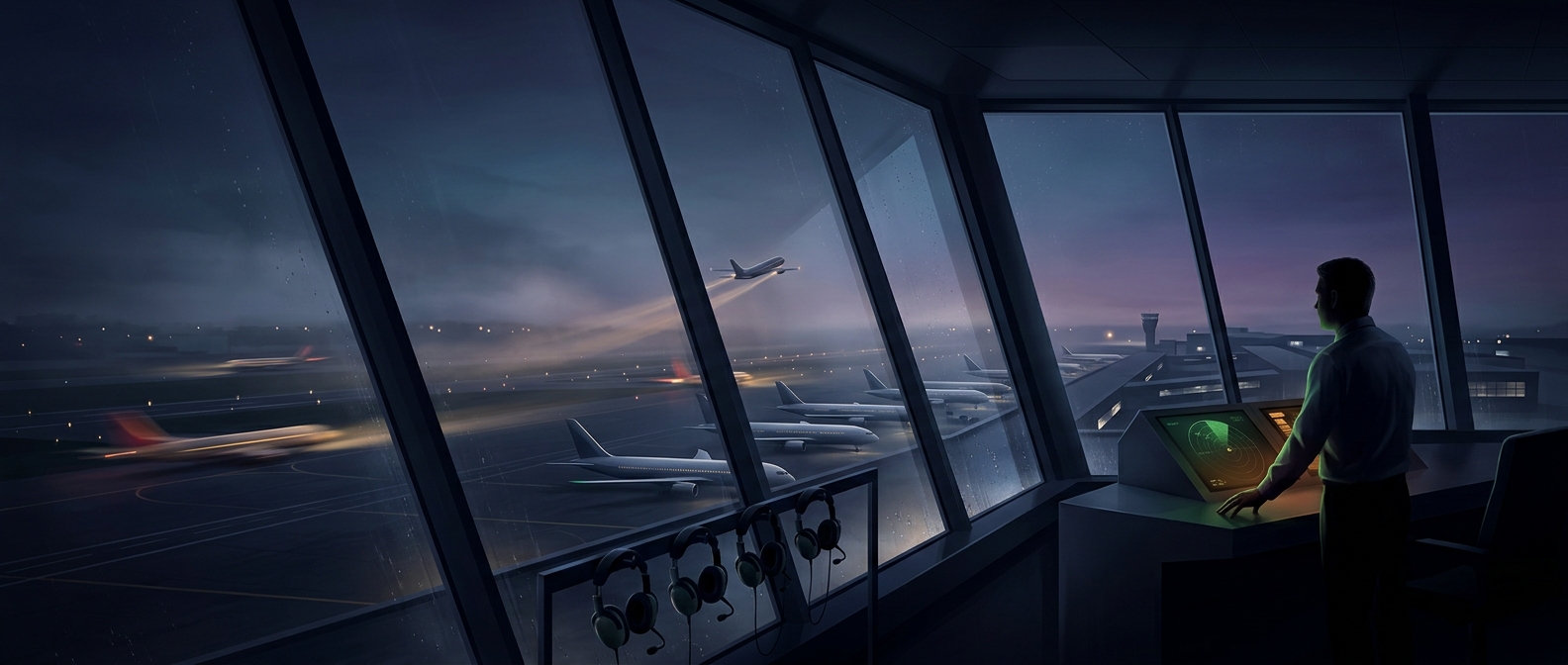
A tower window is not perfectly transparent. Some light bounces off its surfaces, just as it does from a mirror. If the pane is vertical, bright lamps or pale ceiling panels can appear as ghostly reflections over the runway—especially when the room is brighter than the view outside.
Tilting the glass changes where those reflections go. Light follows a simple rule: it leaves a reflective surface at the same angle at which it arrived. With the pane leaning outward, reflections from much of the room are sent away from a controller’s usual viewing position rather than back toward their eyes.
A small change with a practical payoff
The tilt does not make reflections disappear, and it cannot compensate for every lighting condition. Its value is that it reduces a predictable source of visual clutter without requiring controllers to look through a different kind of window. That matters when they are scanning distant aircraft, runway markings, and nearby movement in quick succession.
The design also reflects a broader constraint of tower work: controllers need a wide, relatively unobstructed view, while the room behind them must still be lit and usable. Angling the glass helps keep those two needs from competing as much. The memorable detail is that the window is shaped not only to frame the airport, but also to keep the control room from appearing on top of it.