A moving link between street levels
In Potenza, the escalators are part of the city’s pedestrian network, not just a convenience inside a station or shopping center. They let people travel between streets at different heights without making every uphill trip on foot. That matters because a steep route can be a practical barrier: it takes more effort, and the climb can be difficult for anyone carrying bags or moving at a slower pace.
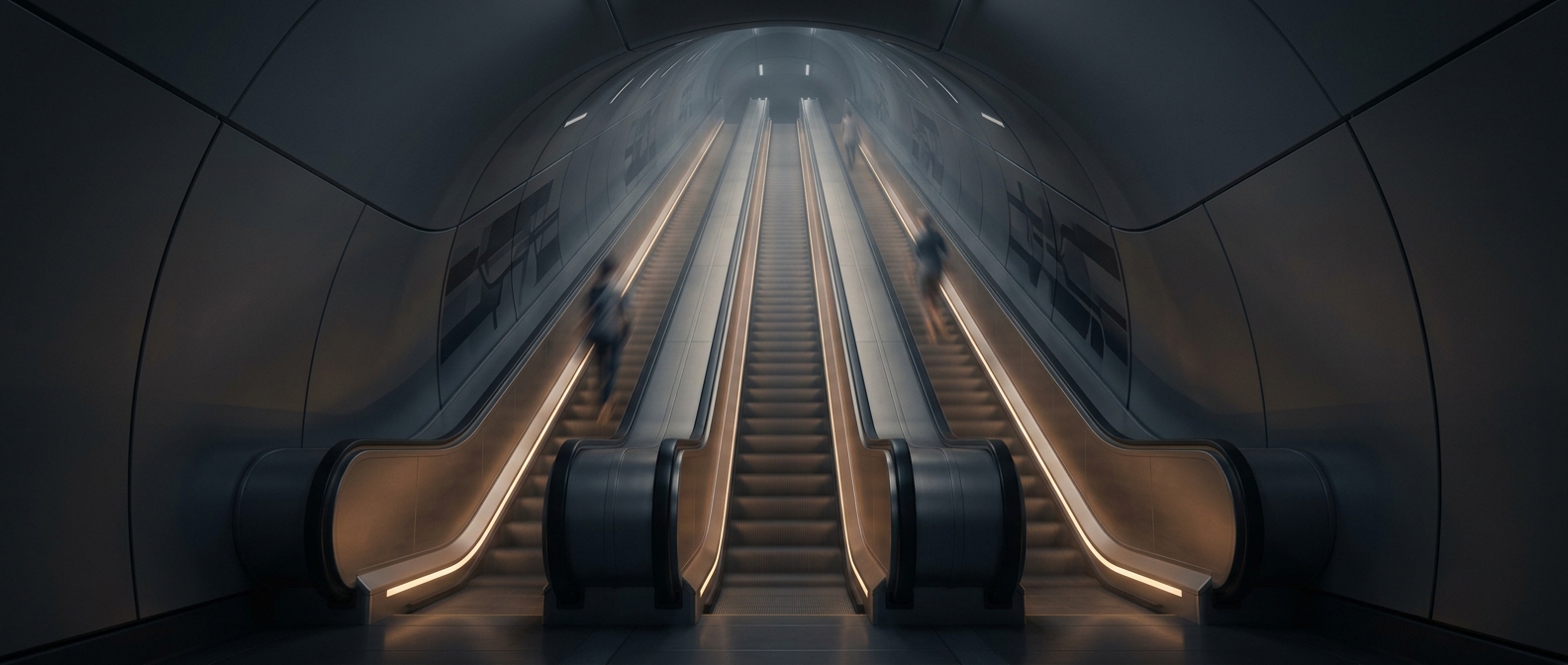
An escalator works by circulating linked steps in a continuous loop. Unlike a lift, which carries people in batches inside a cabin, it can keep a steady stream of pedestrians moving while remaining available at street level. Used along a hillside route, that turns a strenuous climb into a more ordinary connection between parts of town.
Keeping the walk, easing the climb
The system does not flatten Potenza’s terrain or replace its streets. It changes how people get through it. Pedestrians can still choose the steps or slopes, while the moving route offers another way to reach higher ground. The city’s dramatic levels remain visible; the effort required to cross them becomes less of a condition of daily life.
That is the useful urban tradeoff: infrastructure can preserve a place’s steep character while making its everyday routes more accessible. In Potenza, a trip uphill can still be a walk—but it no longer has to be a workout.