A long climb makes speed matter
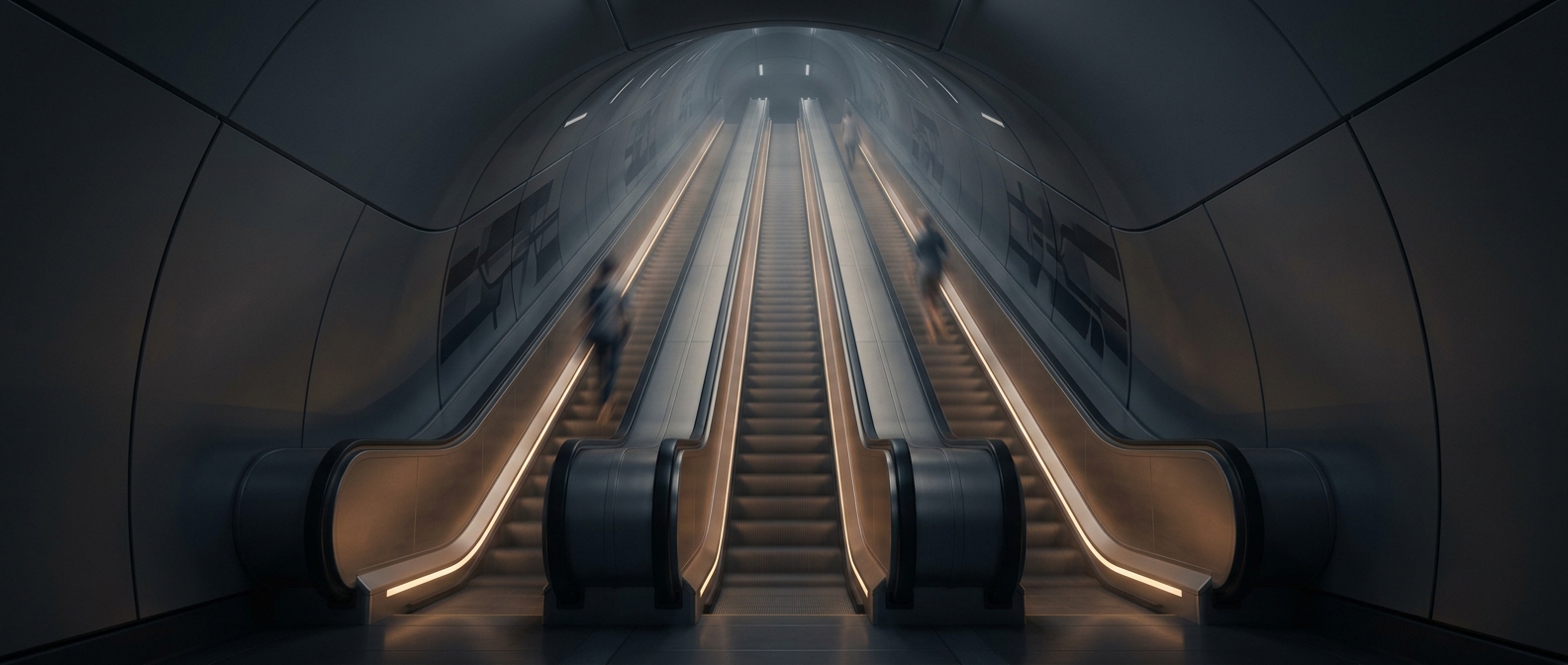
At a deep Underground station, the escalator is doing more than moving passengers between floors: it is carrying them through a substantial vertical distance. A faster belt shortens the time each person spends on that journey. Across a busy station, that can also help keep passengers moving through the route rather than waiting on the steps.
Speed changes how the ride feels
An escalator’s steps rise and fall through a continuous loop, while its handrail moves alongside them. At a brisk pace, passengers have less time to settle in, so boarding and stepping off require attention. The machinery can keep moving steadily, but the people using it must adapt their balance and timing.
That is the tradeoff: quicker travel through a deep station in exchange for a ride that feels less leisurely. The moving staircase is part of the station’s circulation system, not simply a convenience for tired legs.
The journey is part of the station
Because the escalator carries passengers through a long stretch underground, its pace shapes how the station feels before they reach the train or street. What might be a brief ride at a shallow stop becomes a sustained climb at a deep one—and the escalator’s speed helps make that climb manageable.