How a green wave is timed
On some roads, traffic signals are coordinated so that a car traveling near a target speed can pass through several intersections on green. If the first signal turns green, the next one is scheduled to turn green after roughly the time it takes to cover the distance between them at that speed. This sequence is called a green wave.
The timing is a moving window, not a promise that every driver will get a green. It works best when traffic flows near the speed the signals were coordinated around and when vehicles arrive in a reasonably steady stream.
Why going faster can work against you
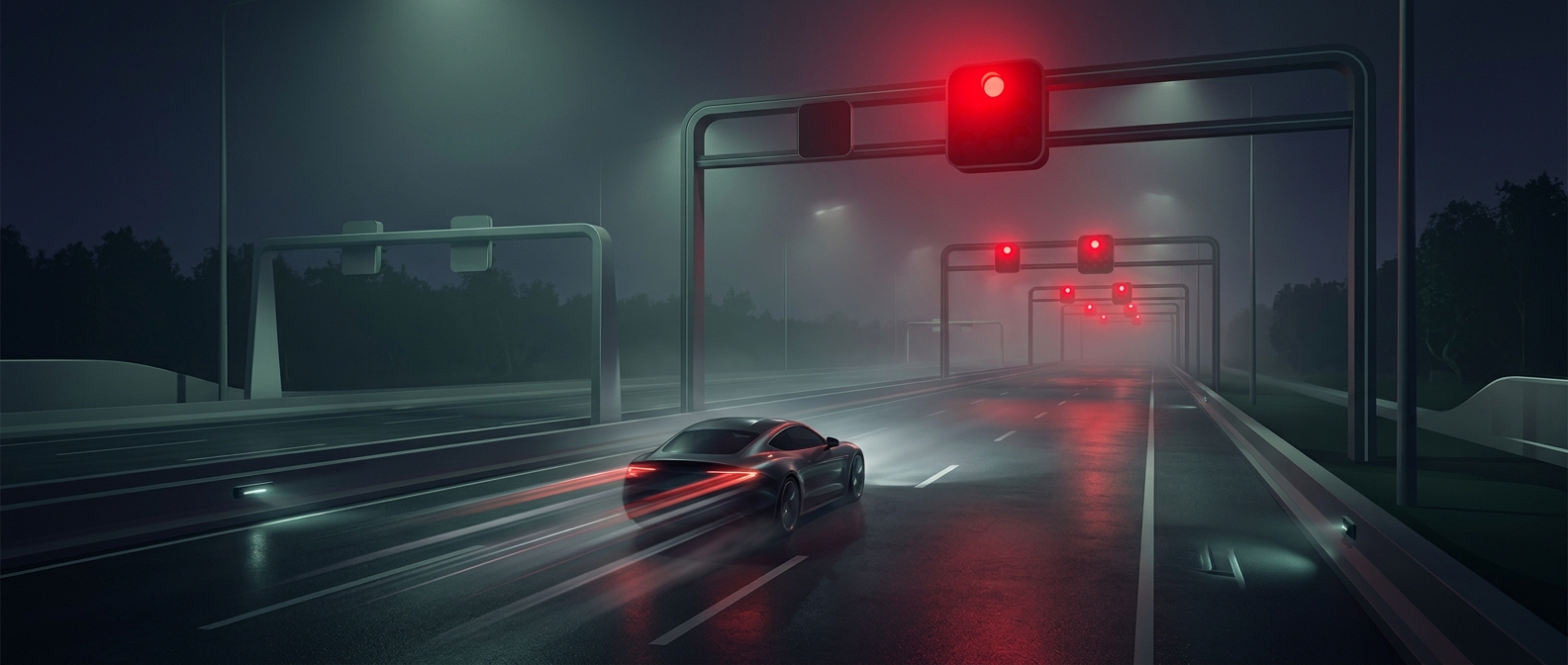
Suppose the next light is timed to turn green about 30 seconds after the previous one, matching the travel time at the road’s target speed. A driver who covers that stretch much faster may arrive before the downstream signal’s green window begins. The light is still red, even though the driver has hurried toward it.
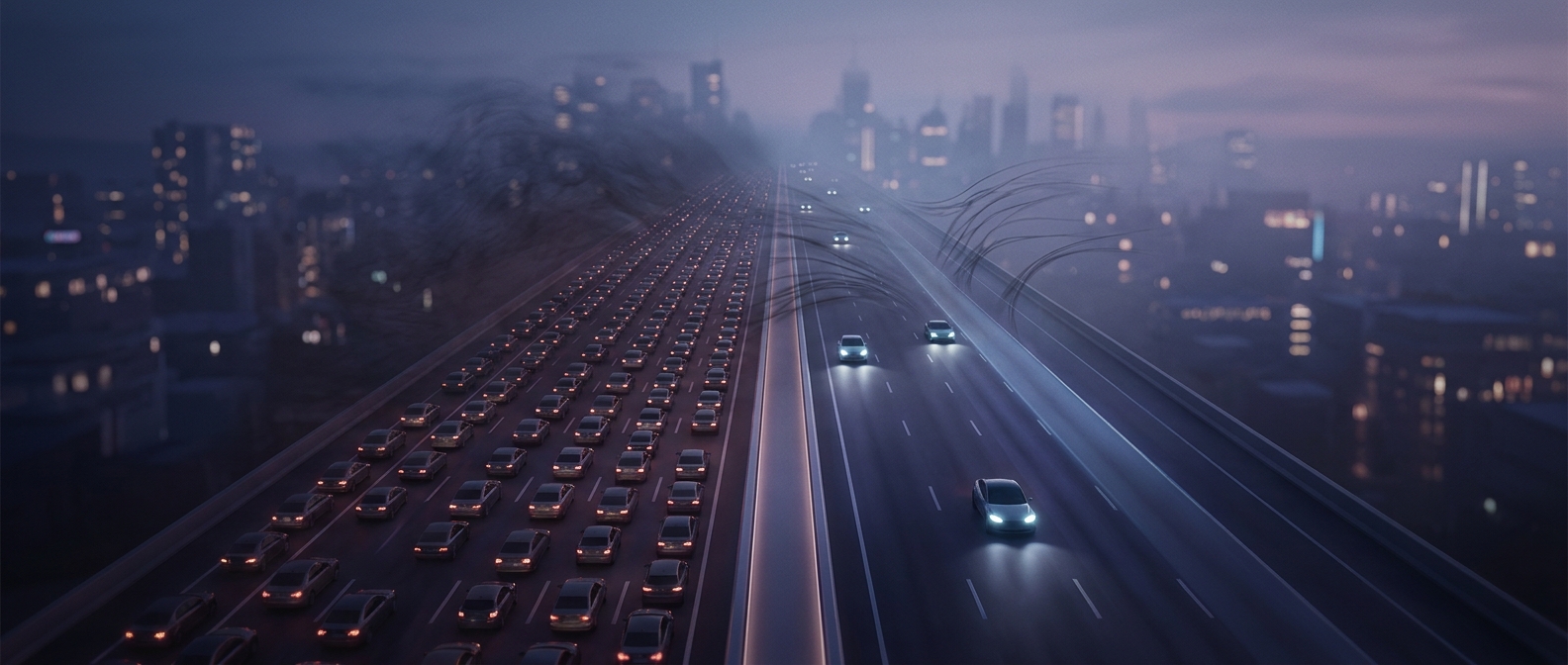
Once stopped, that driver may miss the next coordinated window, too. Meanwhile, vehicles traveling at the intended pace can reach the intersection as it turns green. Speeding may therefore trade a brief gain on one block for a stop—and another burst of acceleration—at the next.
The wave has limits
Signal coordination is only one influence on what a driver encounters. Traffic volume, turning vehicles, pedestrians, and signals that respond to cross traffic can disrupt a smooth sequence. A green wave also cannot make every approach green at once; the schedule must allocate time among competing directions.
That is why driving faster is not a reliable way to “catch” green lights. The useful target is the pace the road’s timing can support, not the highest speed that gets a car to the next intersection first.