Why a Painted Stall Can Still Be Too Small
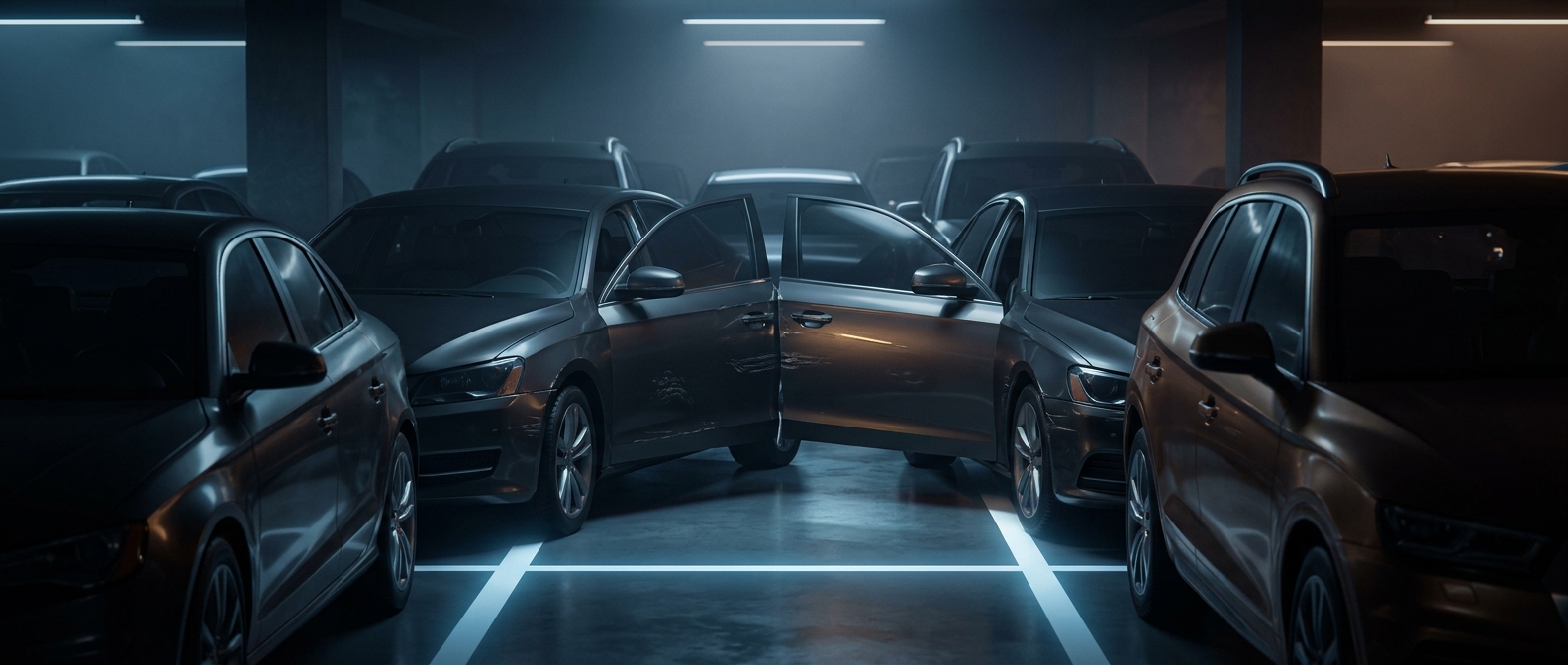
Parking lines define where a car should sit, but they do not control how much room people need to get in and out. A stall can fit a vehicle’s tires and body while leaving too little clearance for its doors to open without reaching the next car.
That gap matters because a car door does not slide straight outward. It pivots on hinges, so its outer edge sweeps through an arc. The door’s widest point may extend well beyond the side of the parked car, and a neighboring vehicle can occupy that space even when both cars are neatly inside their painted boundaries.
The Hidden Cost of Packing Stalls Tightly
When spaces are narrow, drivers often have to open doors only partway, turn sideways, or squeeze through a small opening. A passenger—especially a child or someone carrying bags—may need more room. If the adjacent car is close, a door can strike its body before the person can climb out, leaving a dent or chipped paint.
The risk is greatest when cars are parked close to one another and their doors are opened quickly or carelessly. But careful parking cannot always eliminate the problem: the lines may allocate room for the vehicles without allocating enough room for their doors and occupants.
A Tradeoff Made Visible
A lot can fit more stalls by making each one narrower, but that efficiency shifts some of the burden to drivers and passengers. The practical test of a space is not only whether the car fits between the lines; it is whether people can use the car without the door reaching the next one. That is why two vehicles can be perfectly lined up and still be one swing away from a ding.