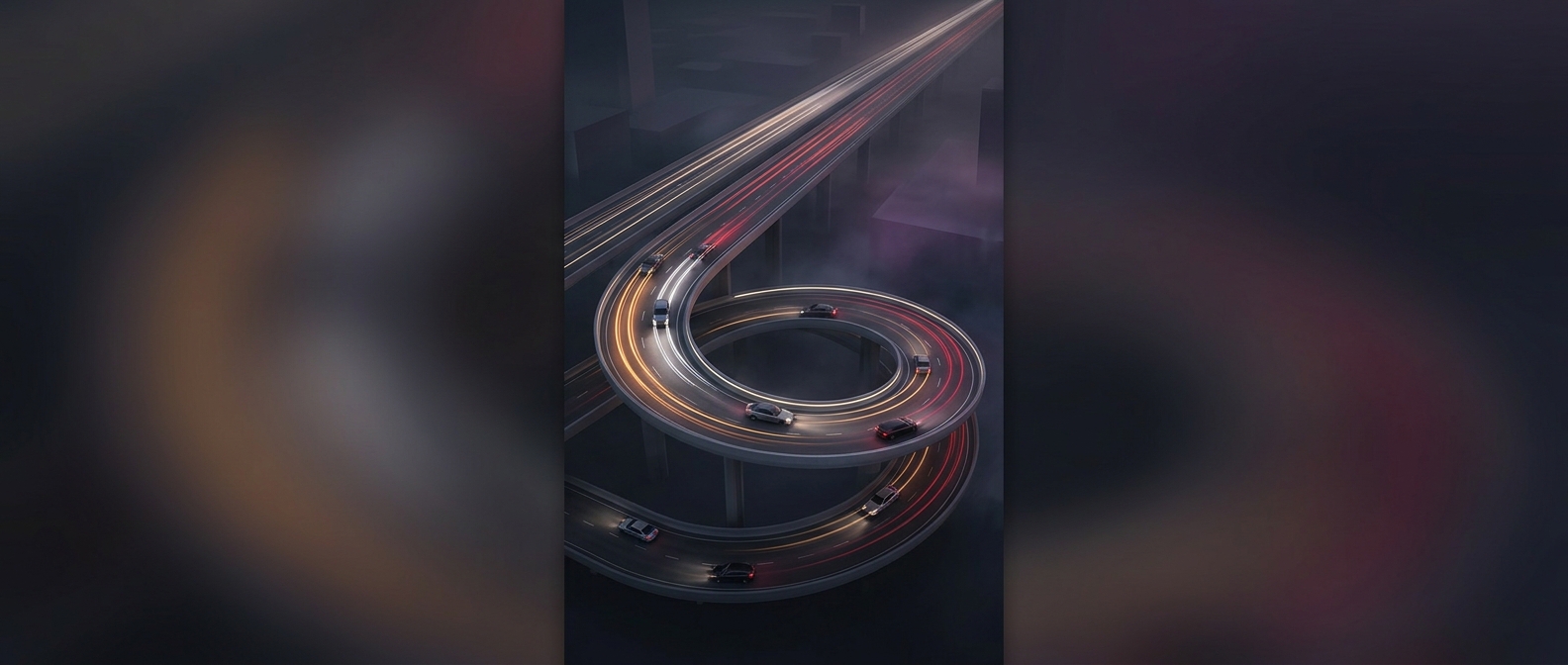
Why an exit ramp bends
A highway exit has to shed speed in a limited space. A straight ramp would offer little physical cue to slow down, so designers use a curve whose radius—the distance from its center to the roadway—is tighter than the highway’s. The tighter the curve, the more sideways force a vehicle needs to follow it at a given speed.
That demand rises sharply with speed: doubling speed requires about four times as much sideways force for the same curve. Tires provide that force through friction with the pavement. If the demand exceeds the grip available, the vehicle may slide outward instead of following the lane.
The road is designed around a safe pace
Ramp designers choose curvature and banking—the slight tilt of the pavement toward the inside of a turn—to help vehicles negotiate the bend. Signs may also post an advisory speed, especially where a curve requires a substantial slowdown. These features work together: the ramp’s geometry sets the task, while the sign gives drivers a speed target before they reach it.
Grip is not unlimited or constant. Rain, ice, loose material, worn tires, and abrupt steering can all reduce the margin. Braking hard while turning adds another demand on the tires, which must handle both slowing the car and holding its path. Easing off speed before the curve leaves more grip available for steering.
A curve is a cue, not a guarantee
The ramp’s shape helps make the needed slowdown legible, but it cannot ensure that every driver enters at a suitable speed. A vehicle that arrives too fast may drift wide, which is why ramps need clear sightlines and room for error as well as guardrails. The useful lesson is simple: reduce speed before the bend, when the tires are still free to devote more of their grip to the turn.