A lane is a moving space, not a car-sized slot
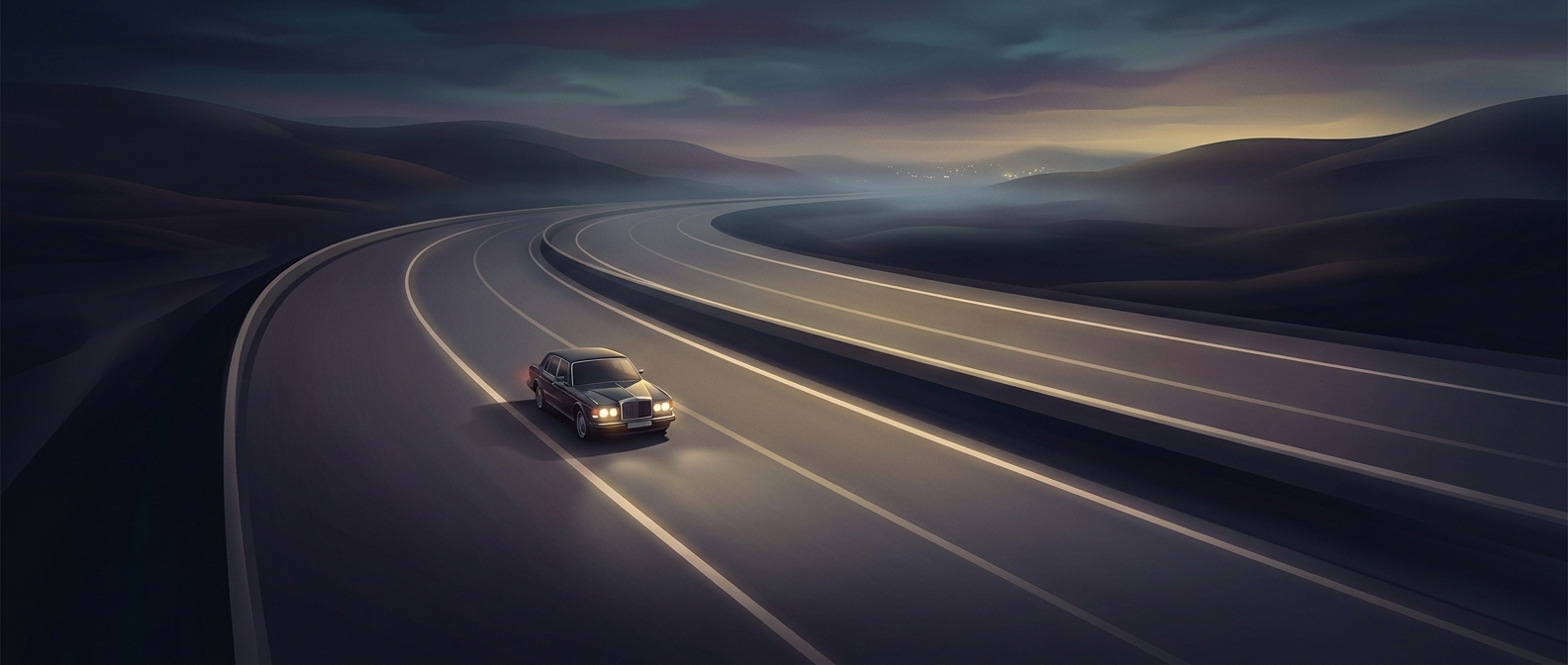
A vehicle does not travel as a perfectly centered rectangle. Drivers make small corrections, tires wander within the lane, and mirrors extend beyond the body. Road designers therefore allow room for the vehicle’s changing position—not just its parked width. The painted lines mark the boundaries of that operating space; they are not meant to fit snugly around an ordinary car.
The largest vehicles shape the margin
Highways must also accommodate buses and trucks. A truck’s width, mirrors, and movement can make a neighboring driver feel close even when both vehicles remain in their lanes. On a curve, a long truck’s rear wheels may follow a tighter path than its front wheels, so the vehicle can occupy more lateral space than a car. Extra clearance helps drivers pass without having to steer precisely to the inch.
Width is a tradeoff
More space can make it easier to keep vehicles apart, but it takes land and pavement to build. On streets with people crossing, wider lanes can also mean a longer distance to walk across. Designers balance those concerns against the speeds and vehicles a road is expected to carry.
That is why a highway lane is sized for the messy motion of real traffic—not merely the outline of the car in front of you.