Why a tiny crack can become a road hazard
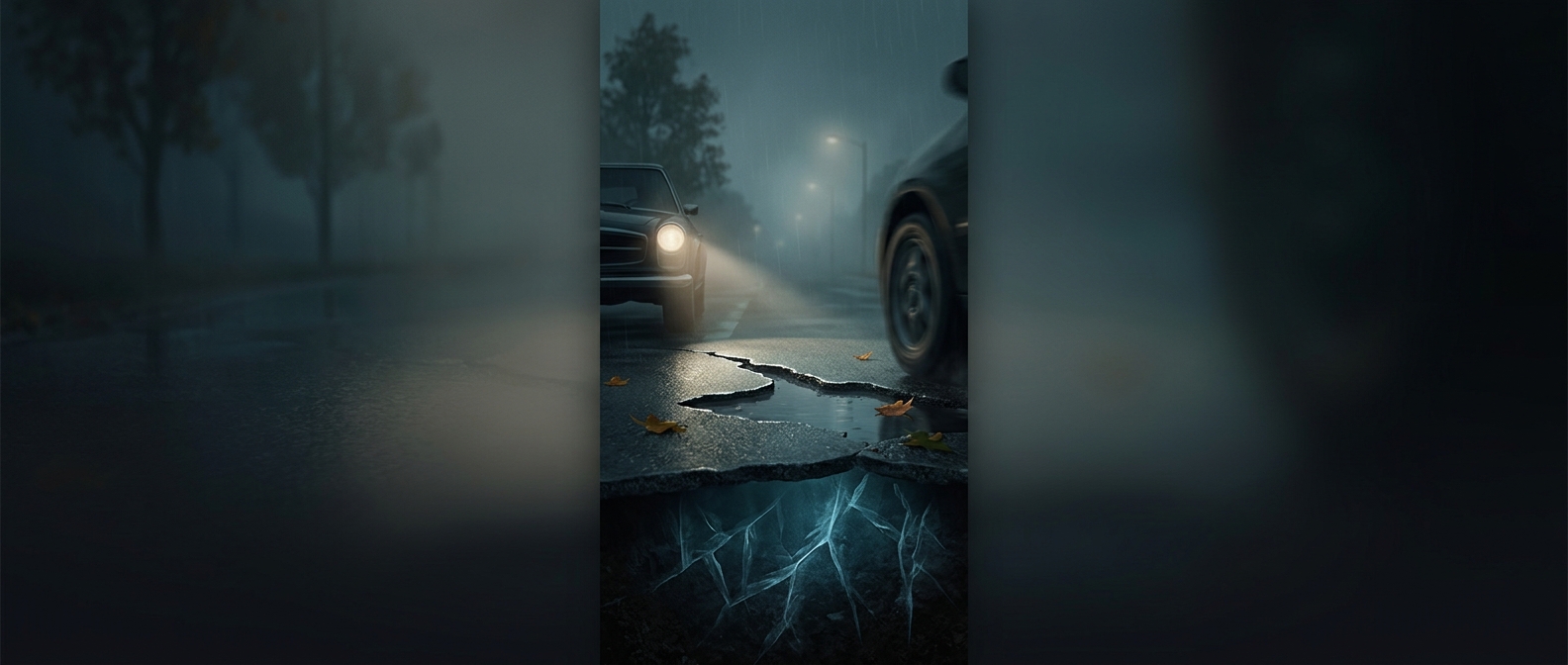
Pavement is built in layers: a hard surface sits over supporting material below. A crack gives rain or meltwater a route into that structure. When temperatures drop below freezing, water in the trapped damp material turns to ice and takes up more space, pushing against the crack and loosening the pavement around it.
The damage accumulates in cycles
A single freeze may not create a deep hole. The more destructive pattern is repeated freezing and thawing. Ice loosens the edges; when it melts, a gap remains, and the patch is less able to support the surface above it. More water can enter the enlarged opening, setting up another round of damage.
Traffic supplies the final force. Tires press and flex the weakened pavement, breaking loose pieces and exposing more of the underlying layers. Each passing vehicle can widen the opening, especially when water remains in the damaged spot and temperatures keep fluctuating around freezing.
Why repairs can be temporary
Filling a pothole restores the surface, but the repair lasts only if it bonds well and the surrounding pavement can still carry traffic. If water continues to seep into nearby cracks, or the base beneath the patch is already weakened, the hole can return. That is why a small surface defect can signal damage extending below what drivers can see—and why sealing cracks before water gets in can help prevent a larger break.