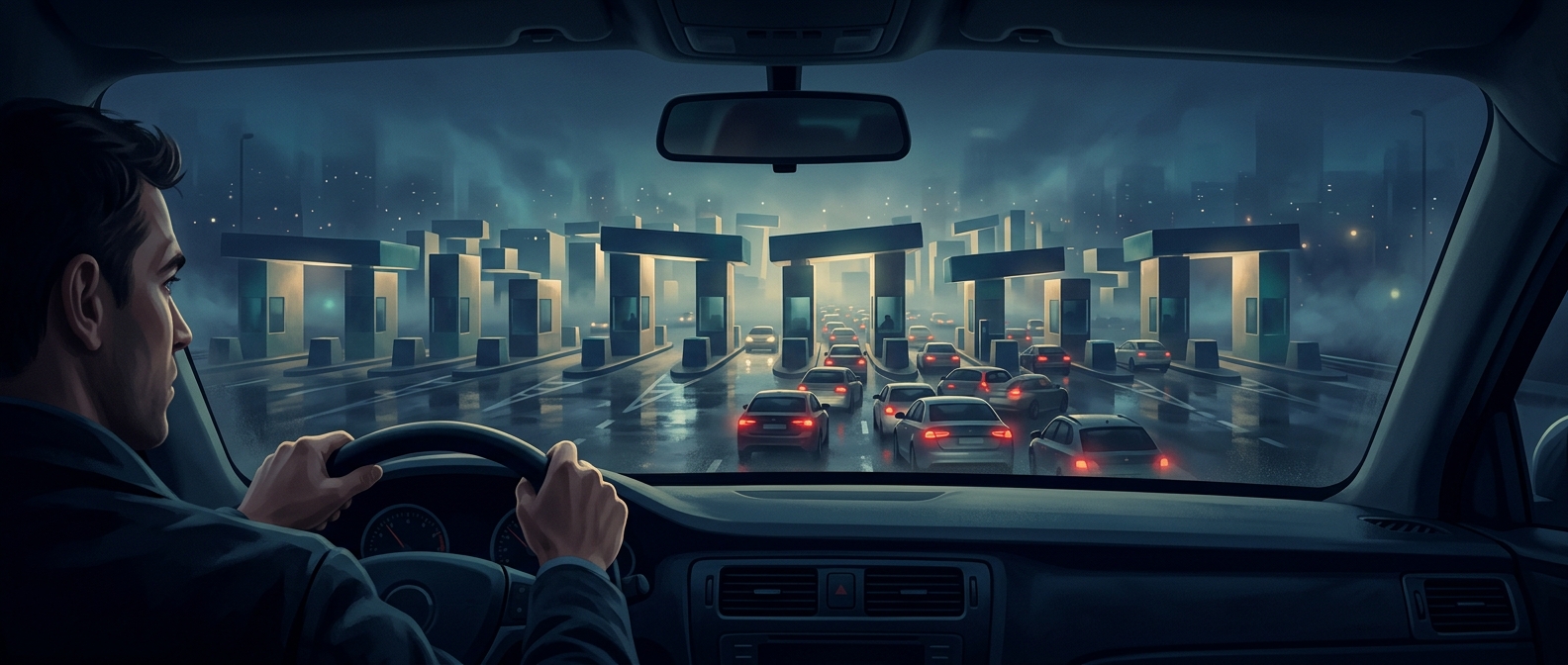
Why the toll plaza becomes a bottleneck
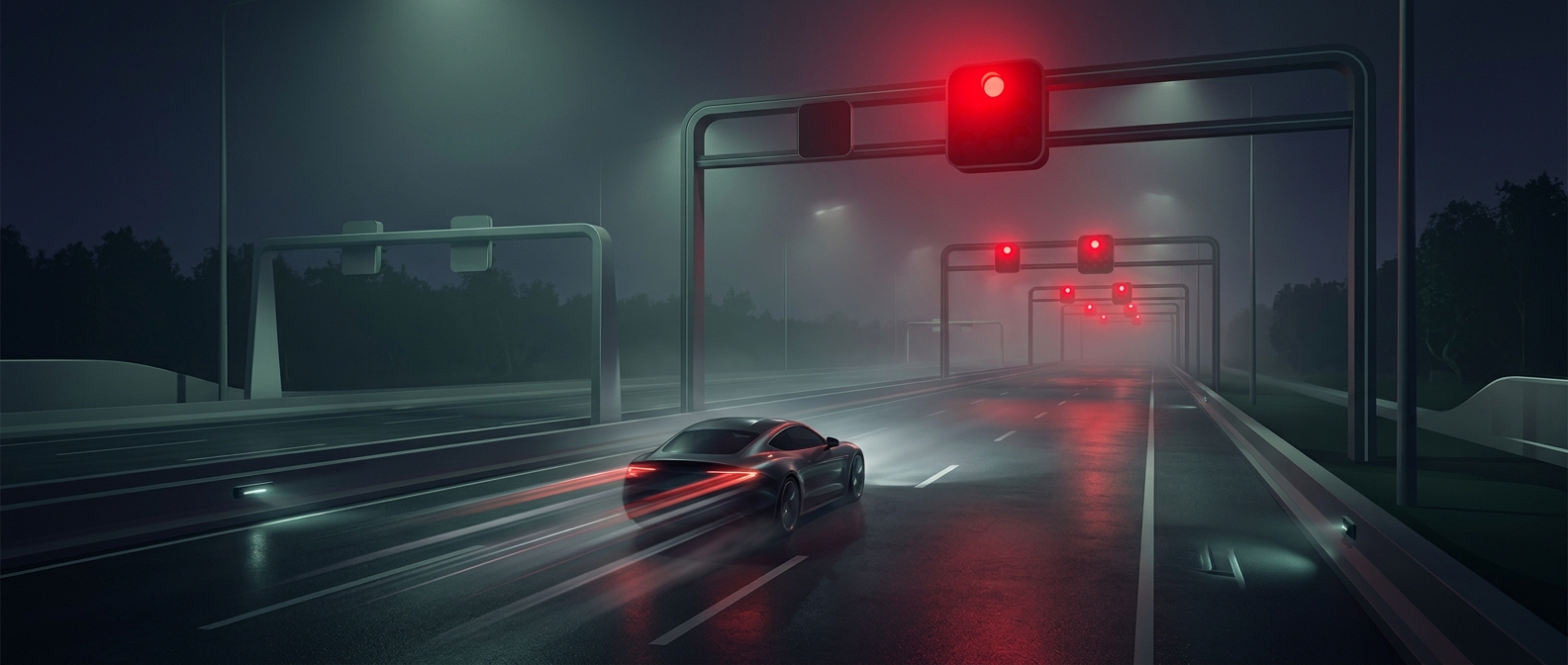
A highway can carry a steady stream of cars because many lanes let vehicles spread out. A toll plaza interrupts that flow: each car must reach a payment point, slow down, and then accelerate again. Even when every booth is open, those individual stops make the plaza handle fewer cars per minute than the road can carry at highway speed.
That mismatch creates a queue. As vehicles approach, they change lanes to reach an open booth, and drivers leave extra space to brake safely. The resulting slowdown can travel backward along the highway, reaching cars that are still far from the booths. A brief delay at the payment point can therefore become a much longer backup upstream.
The road has to widen, then narrow again
Plaza designers have to provide enough room for separate payment lanes, safe deceleration, and a gradual return to the highway. More booths can increase capacity, but they require more pavement and can make the merge afterward more complicated. The challenge is not simply to fit payment points; it is to manage two transitions—splitting traffic apart and bringing it back together.
Electronic toll collection changes the tradeoff. Cars can pass beneath a sensor without stopping to pay a person, reducing the delay at each payment point. But vehicles still need a safe path through the plaza, and any lanes that merge afterward can remain a pinch point. The most noticeable surge of congestion often begins where the extra lanes end and highway traffic has to share the road again.