The Exit Number Tab Is a Directional Clue
On many American highway signs, the small green panel that says EXIT and gives the exit number is deliberately placed toward one side of the larger sign. That placement can hint at which side the ramp leaves from: a tab set toward the right points to a right-side exit, while one set toward the left can flag a left-side exit.
The idea is simple: the exit information is grouped near the part of the sign that corresponds to the departing road. That gives drivers a clue before they reach the gore—the painted triangular area where the exit ramp splits from the main highway.
Read the Arrows, Too
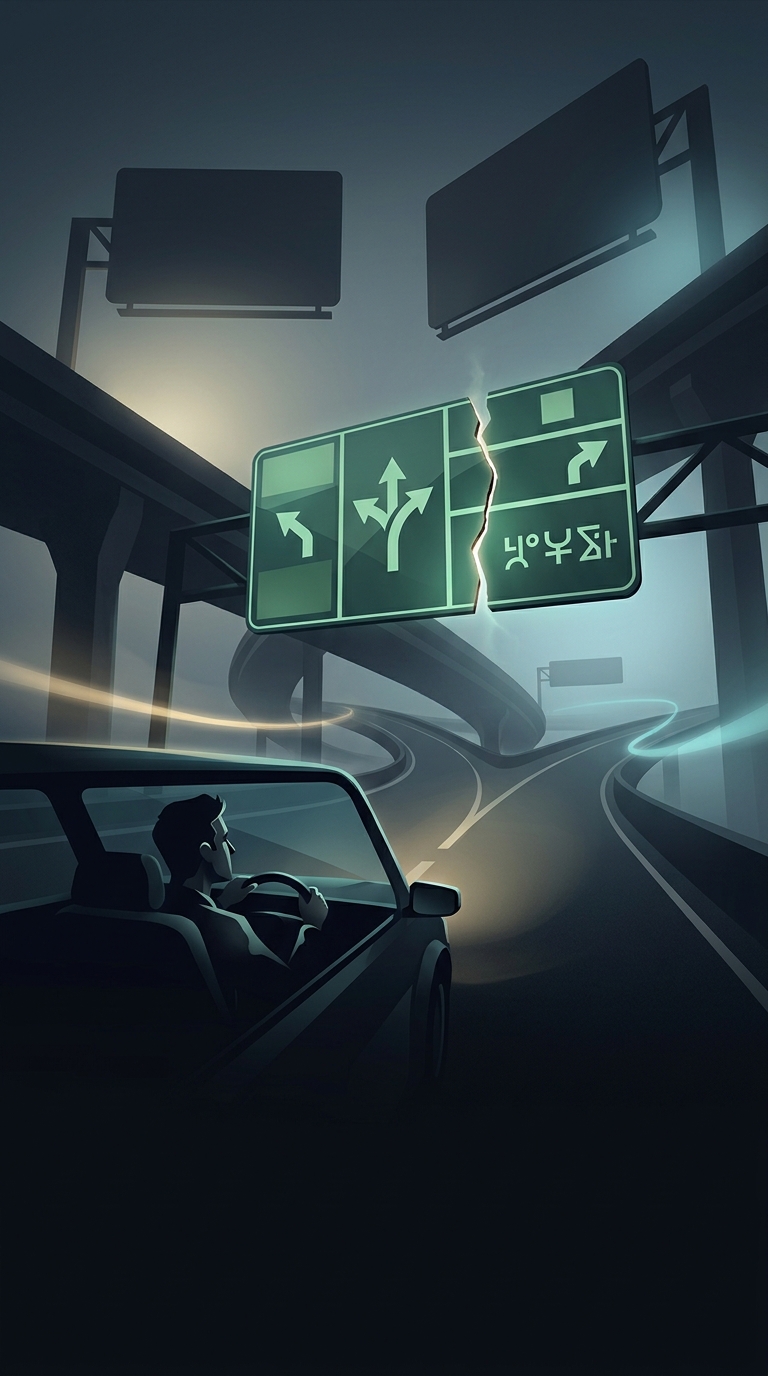
The tab is a useful heads-up, but the arrows and lane markings are the more immediate guides. A downward arrow typically identifies a lane that continues toward the route or destination named above it; an angled arrow can indicate the direction of an exit. As the interchange approaches, pavement arrows and solid lane lines reinforce which lane branches off.
This matters because exits are not always on the right. Left-hand exits can surprise drivers who expect every ramp to peel away on the passenger side, so signs may emphasize the exit’s position and assign it a specific lane. The offset tab helps you notice the arrangement early, while the arrows show what to do as the split gets close.
Treat the tab as a clue, not a substitute for reading the full sign: layouts vary, and the actual arrows and lane guidance tell you where the road goes. A quick glance at the tab can still reveal something easy to miss—the exit may be coming from the side you weren’t expecting.