The problem was aiming, not hiding
At sea, a ship could not simply disappear against the horizon. Its size and movement made it easy to spot, especially from a submarine periscope. The more useful question for an attacker was where the ship would be by the time a torpedo arrived.
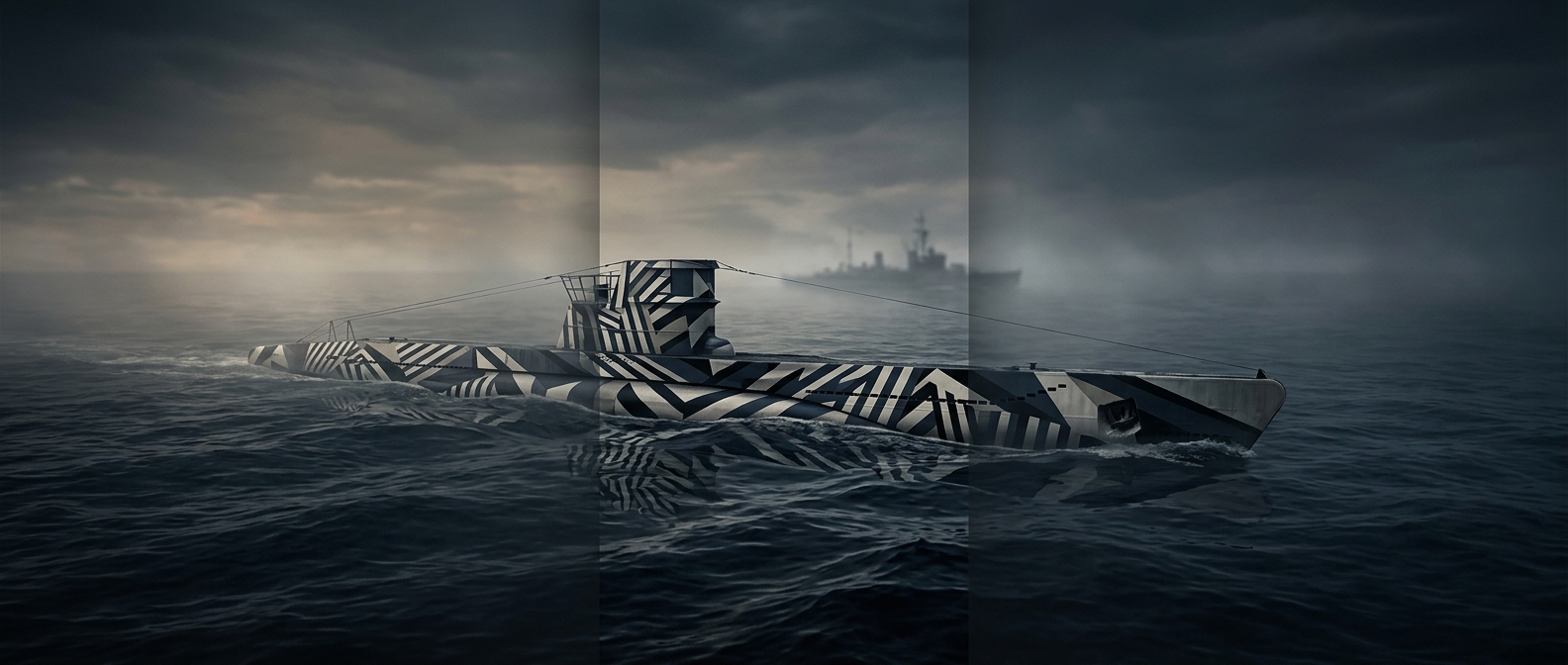
A gunner or submarine crew had to estimate a vessel’s course and speed from its apparent movement, then aim ahead of it. Dazzle patterns were meant to make those judgments less reliable. They did not conceal the ship; they disrupted visual clues that helped an observer read its shape and motion.
Turning a hull into a visual puzzle
The paint schemes used sharp contrasts, slanting bands, and shapes that seemed to break across the hull. These lines could obscure the bow and stern or make the vessel’s apparent direction harder to pick out. As the ship moved, an observer had to interpret the pattern at a distance and through changing conditions—precisely when a small mistake in estimating its course could matter.
The patterns were not one universal camouflage design. Ships received conspicuous, varied schemes, making the approach less about matching a vessel to its surroundings and more about confusing the person trying to track it.
A tradeoff under fire
Dazzle accepted that an enemy might see the ship clearly. Its gamble was that seeing a target is not the same as predicting where it will be. That distinction made the paint useful as a defensive idea, even though it offered no guarantee that an attacker would misjudge the ship.
The result was an unusual wartime compromise: a vessel could look more conspicuous to the eye while being harder to interpret as a moving target.