Why a Stroad Feels Risky
A stroad is a wide suburban route that tries to serve two different jobs: moving traffic quickly between places and giving drivers direct access to shops, homes, and parking lots along the way. The term blends “street” and “road.” A road prioritizes travel over distance; a street is a place to reach nearby destinations and interact with what is beside it.
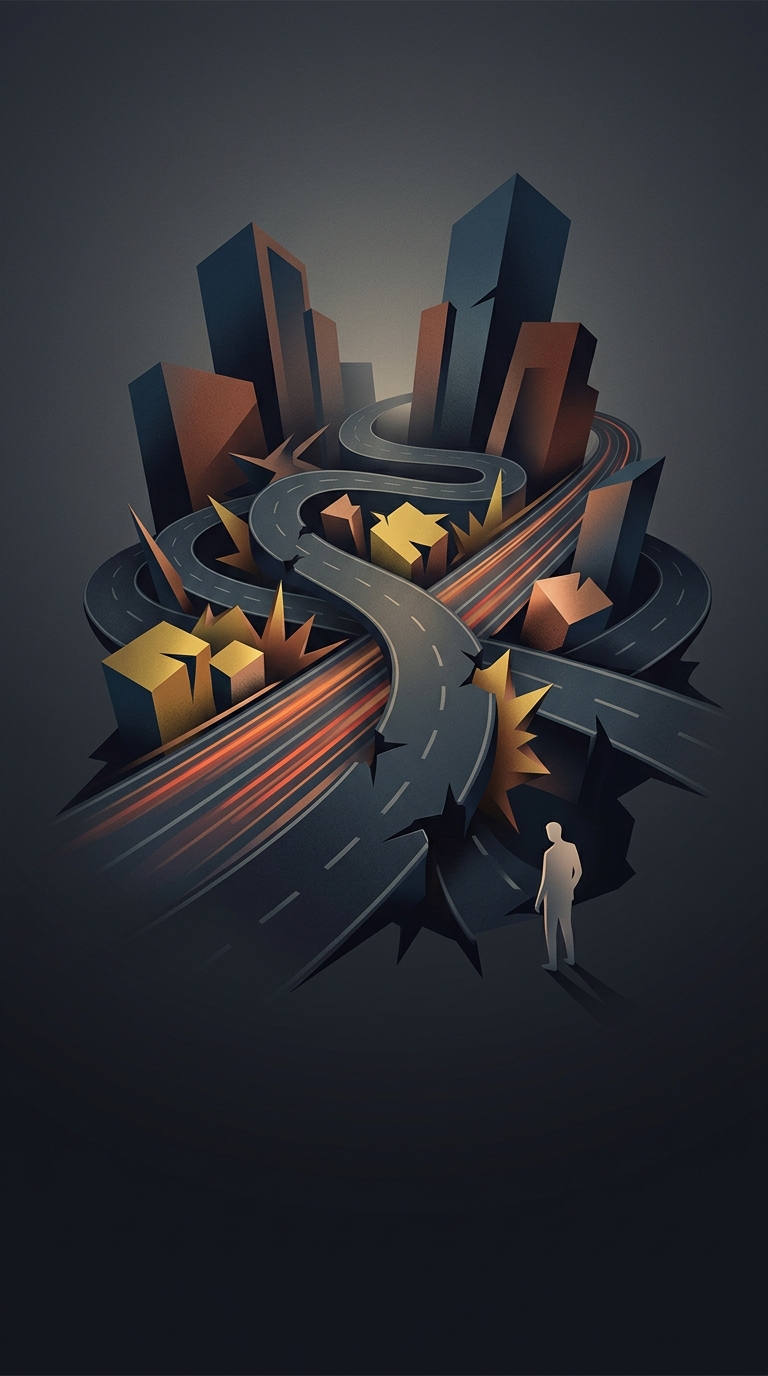
The trouble is that these jobs call for different designs. Fast, uninterrupted movement leaves little time to react. Frequent driveways, turning cars, traffic signals, cyclists, and people crossing create interruptions and points where paths meet. Combining them on one stretch puts rapid traffic beside many opportunities for conflict.
How the Conflicts Build
Each driveway gives a vehicle another place to turn in or out, potentially crossing the path of through traffic or someone cycling nearby. At intersections and crossings, people on foot must judge gaps in traffic, while drivers may be watching for signals, turning vehicles, or gaps to enter a shop. Wide lanes and long crossings can also leave pedestrians exposed for longer and make the far side feel distant.
No single feature causes every collision. The risk comes from the whole arrangement: high speeds make errors more consequential, while frequent access points and crossings create more situations in which people must anticipate one another. A driver who expects a fast, clear route may not be prepared for a vehicle braking to turn or someone crossing toward a store.
The Design Tradeoff
These routes often emerge where development lines a major suburban corridor with businesses and parking entrances. The road must carry through traffic, but each destination also needs access. Instead of separating those functions, the layout asks one road to do both—and leaves people walking or cycling to navigate a space shaped mainly around cars.
A safer approach is to make the route’s purpose clearer: keep faster through traffic on roads with fewer direct access points, and use slower streets for destinations and crossings. Where a corridor must serve both, reducing speeds and organizing turns and crossings can reduce the number of sudden conflicts. The key implication is practical: a road’s danger is shaped not just by how many vehicles use it, but by how many different tasks it asks them to perform at once.