A green light begins with a request
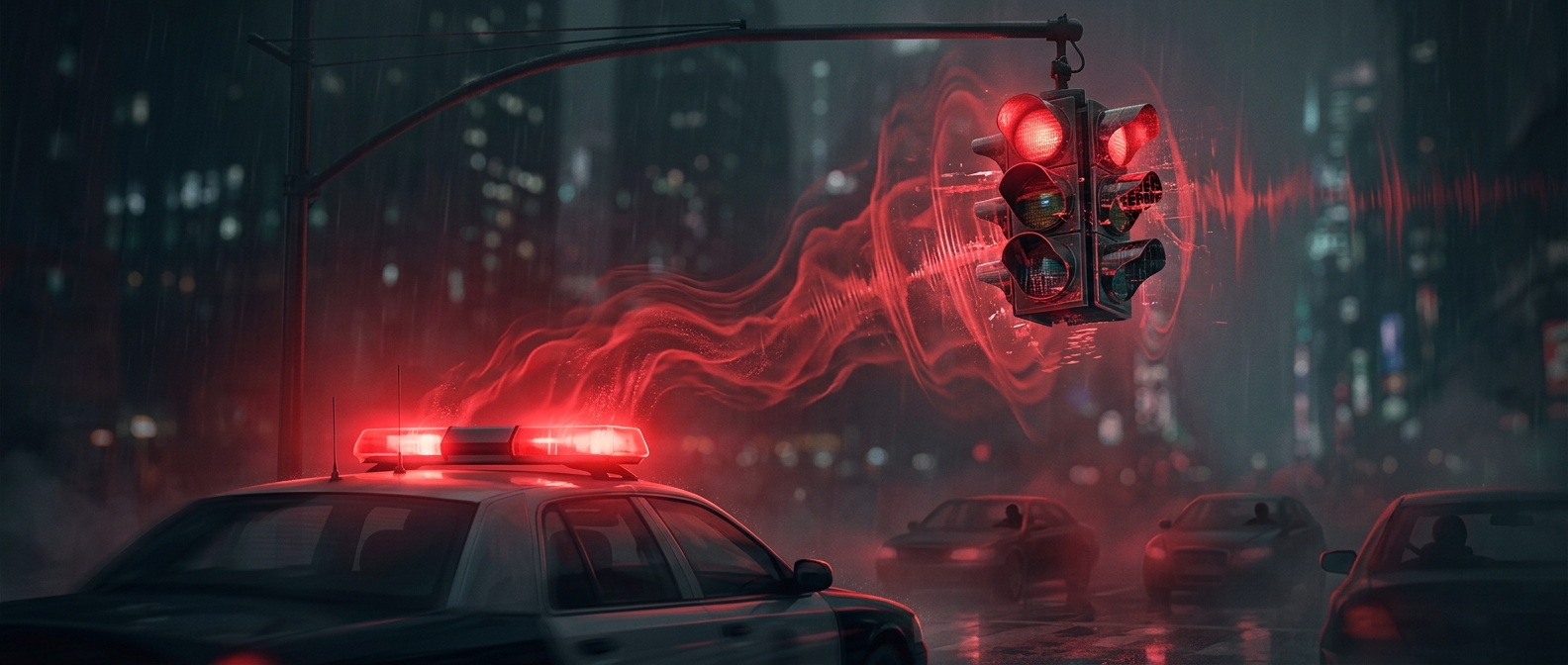
Many traffic signals can recognize a special signal from an approaching emergency vehicle. A device on the vehicle sends coded infrared pulses—light beyond the range of human vision—to a detector near the intersection. The code helps the system distinguish an authorized request from ordinary light or other interference.
When the detector recognizes the signal, it passes the request to the intersection’s controller, the equipment that runs the traffic lights. The request does not mean “change to green this instant.” It asks the controller to give the emergency vehicle priority.
The controller makes room safely
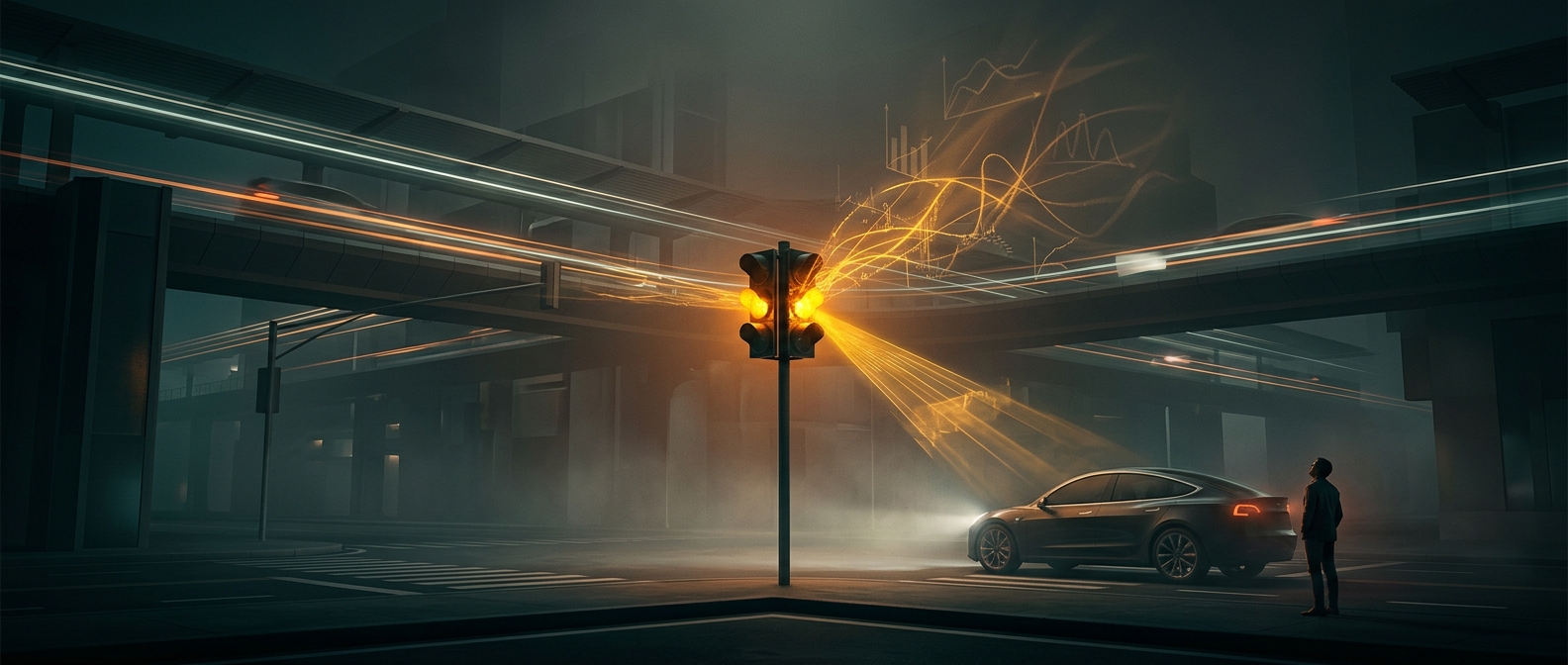
The controller first has to account for traffic already moving through the intersection. It ends the current green using the signal’s normal change sequence, including a yellow light and, where programmed, a brief all-red interval. That clearance gives vehicles time to leave the crossing before the emergency vehicle’s direction receives a green.
Meanwhile, traffic approaching from conflicting directions is held at red. This is the key tradeoff: the system can shorten the emergency vehicle’s wait, but it cannot simply erase the risk created by cross traffic or vehicles already in the intersection. Drivers still need to watch for people and cars that may not stop promptly.
Priority is temporary, not a free route
As the vehicle passes, the request ends and the signal returns to its ordinary timing or responds to another active request. The exact equipment and sequence vary by location, and the system’s reach depends on detectors being able to receive the vehicle’s signal.
The result is less like a citywide wave of green than a carefully timed handoff at each equipped intersection: one approach gets priority, while the others are stopped long enough for the crossing to clear.