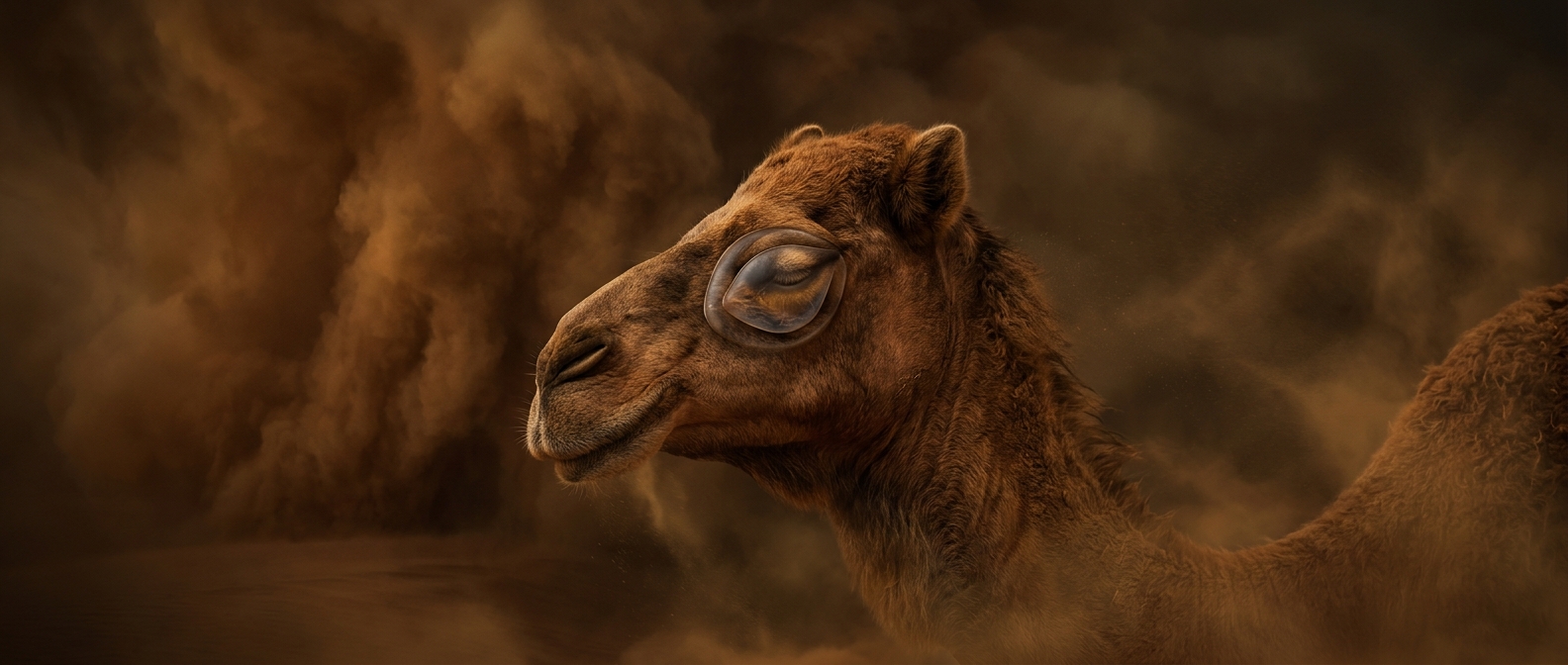
Why desert routes favored camels
A horse can travel fast, but speed is only useful if the animal can keep going. In hot, dry country, a horse generally needs more frequent access to water and suitable feed. A caravan crossing long stretches between wells could not count on either. Camels made those gaps more manageable, so they became the practical choice for moving people and cargo across many desert routes—not a universal replacement for horses everywhere.
Their advantage is partly physiological. A camel can allow its body temperature to rise during the heat of the day and fall again at night. That reduces the need to cool itself by sweating, which would spend precious water. It is a way of coping with the desert’s daily temperature swing, not immunity to heat: camels still need water, rest, and care.
A different kind of working animal
Desert transport also rewards steady progress over long distances, not just bursts of speed. Camels can carry substantial loads while traveling at a pace suited to journeys where stopping to water an animal may be difficult. Their familiar hump helps support that endurance by holding stored fat that can be used as energy when food is scarce; it is not a reservoir of drinking water.
That changed what a journey could carry and how it could be planned. A trader could organize a load-bearing caravan around stretches between reliable water sources rather than requiring the frequent stops a less drought-adapted animal might need. The key advantage was not that a camel could ignore the desert, but that it could make the desert’s long intervals between necessities more workable.