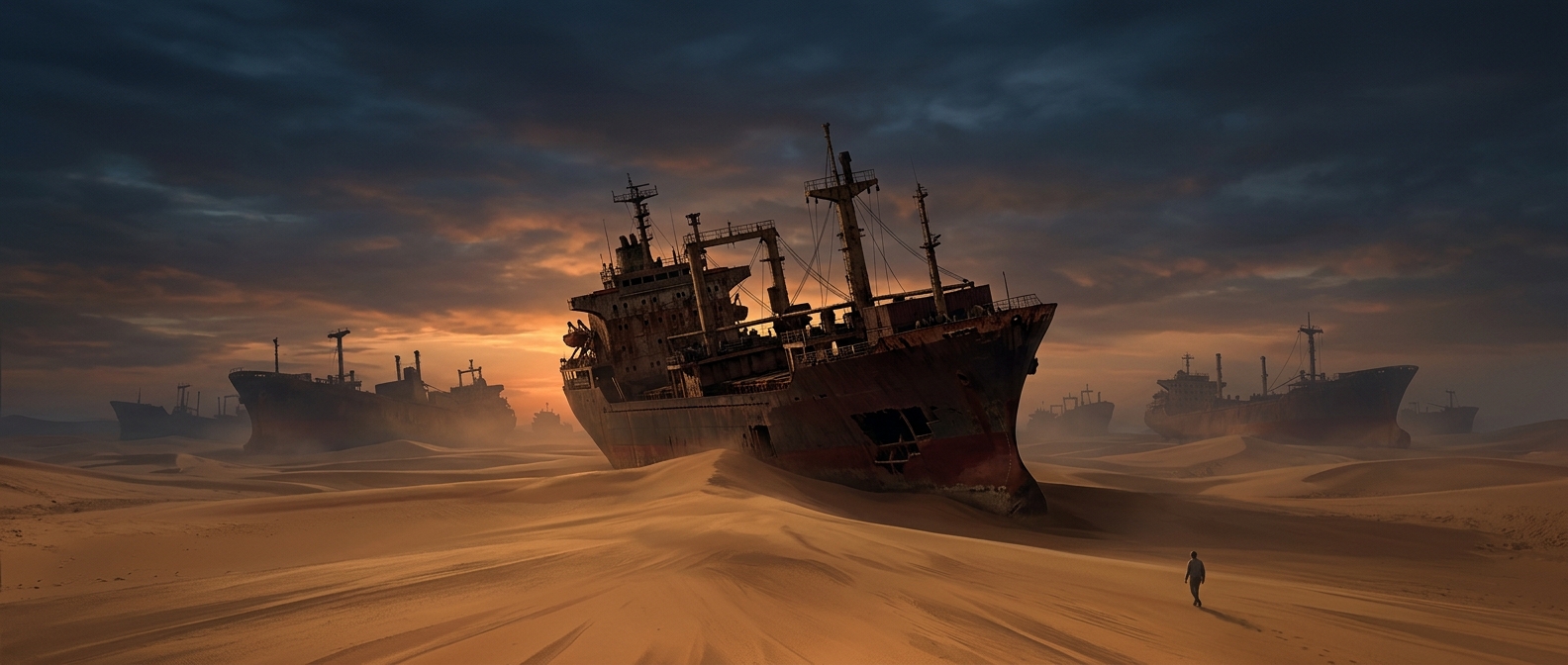
How irrigation moved the shoreline
The Aral Sea had no outlet to the ocean. Its level depended on a balance: river water flowing in had to make up for water lost to evaporation in the dry climate. Large irrigation diversions from the Amu Darya and Syr Darya reduced that inflow. As the balance tipped, the sea’s level fell and its shoreline retreated, sometimes far beyond the places built to serve it.
A harbor cannot follow the water
A fishing port depends on more than boats: channels, docks, and access to open water all have to remain connected. When the water pulled back, harbors that had once supported working fleets were left inland. A vessel could no longer reach the sea merely by being repaired or launched; the waterway itself was gone. The boats became stranded evidence of a transport network whose geography had changed beneath it.
The exposed seabed also turned a familiar coastal landscape into dry ground. For communities organized around fishing and shipping, the retreat meant that the old harbor could no longer function as a harbor at all. The boats were not simply left behind by a departing fleet—the sea that made them useful had withdrawn from their doorstep.