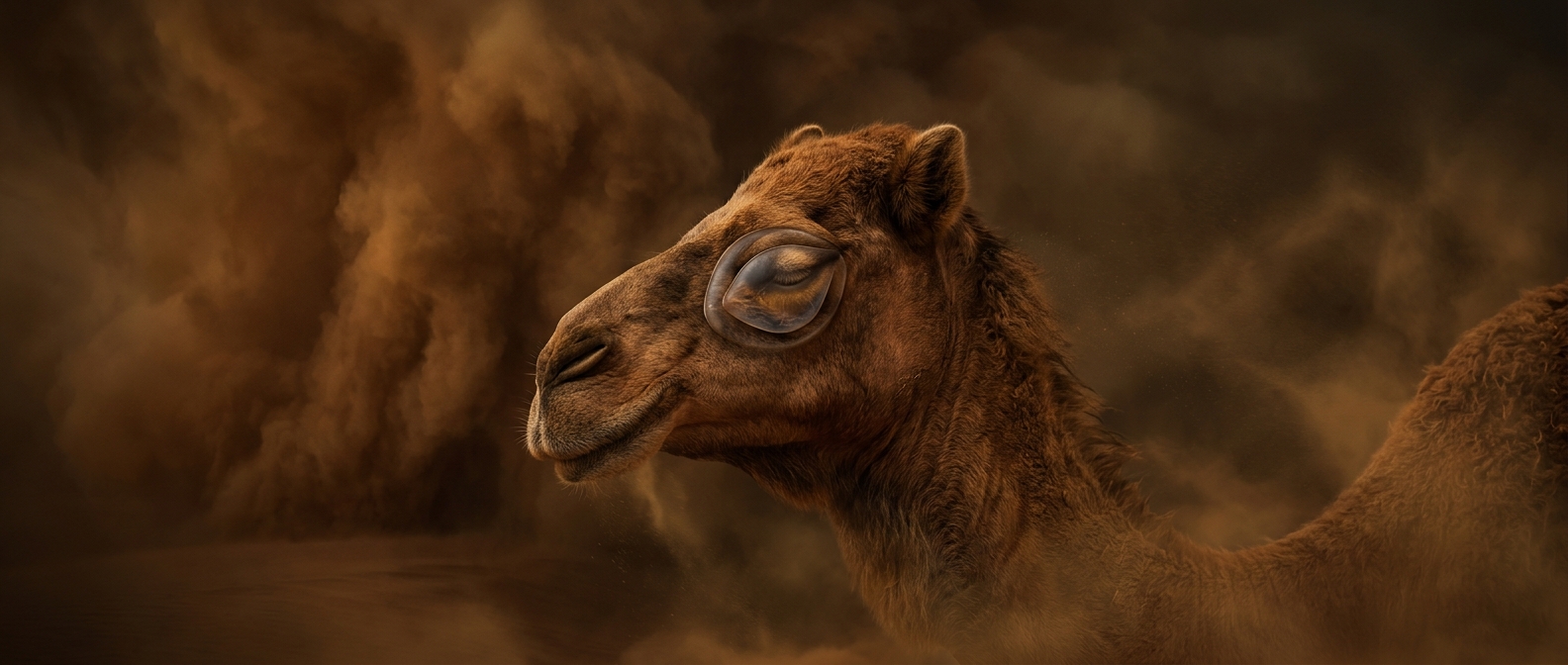
How a Camel Sees Through Blowing Sand
A camel’s third eyelid is a thin, translucent membrane tucked inside the ordinary eyelids. When wind drives grit toward the eye, it can slide across the surface like a clear screen, shielding the sensitive cornea—the transparent front of the eye—while still letting light through. The camel does not have to close its main eyelids completely to protect its vision.
A Shield That Moves With the Eye
The membrane helps sweep away dust and spreads moisture over the eye, limiting irritation as the animal faces dry, abrasive air. Long lashes add another layer of defense: they catch some particles before they reach the eye. The two adaptations work together, but neither makes the eye invulnerable; they reduce exposure while allowing the camel to keep its surroundings in view.
That matters in open desert terrain, where a camel may need to keep moving and orient itself even when wind-blown sand makes a full, unobstructed view difficult. Instead of relying on removable eyewear, it carries a protective screen that can move across the eye as conditions demand.