A camel’s water reserve is managed, not stored
The hump is an energy depot: its fat can be broken down to fuel muscles when food is scarce, with water produced as a small by-product. But that is not enough to explain how a camel can travel through heat and then drink heavily when water becomes available. The key is how its body limits water loss and copes with the water balance shifting sharply in either direction.
Camels can let their body temperature rise during the day and fall at night, reducing the need to cool themselves by sweating. Their kidneys reclaim water from the blood, while the digestive tract leaves waste unusually dry. Even the nose helps: as air moves in and out, its tissues recover some moisture that would otherwise be exhaled.
Blood built for swings
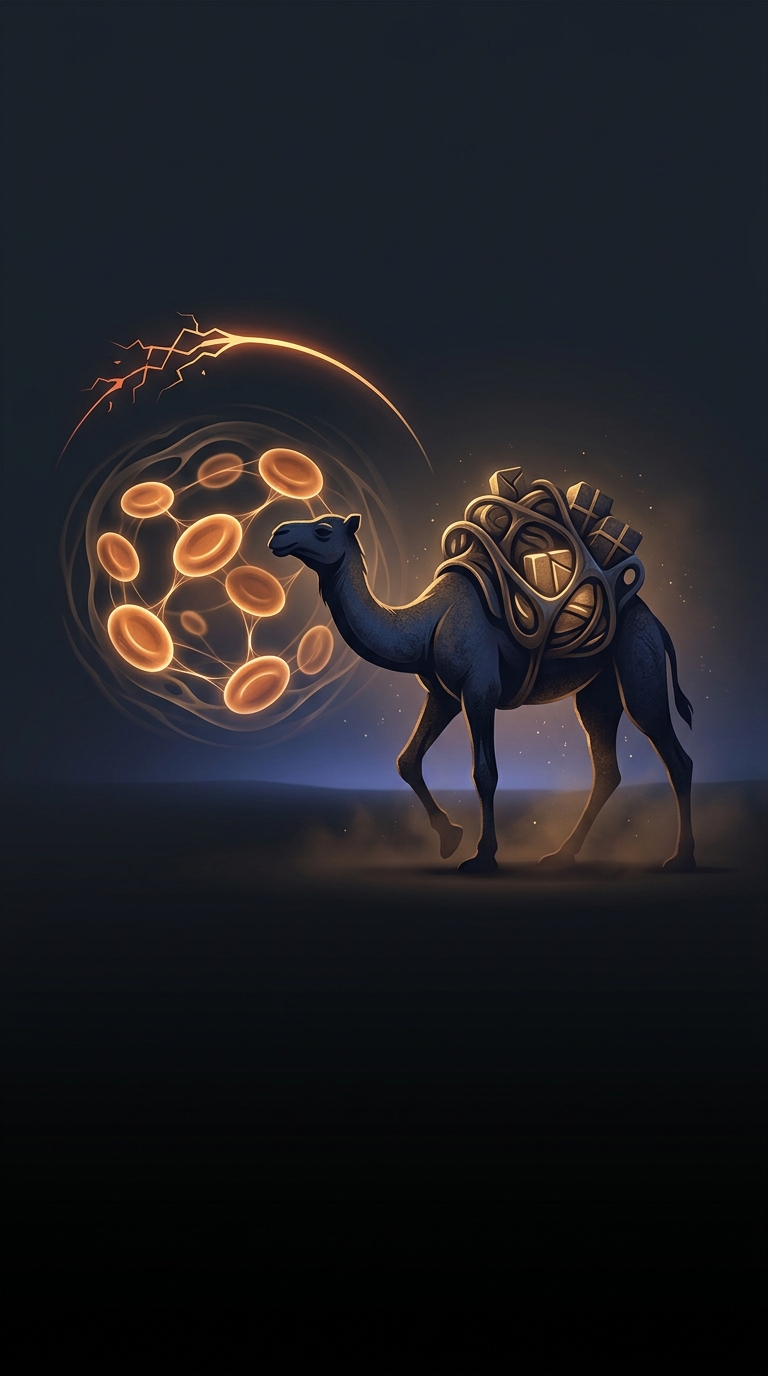
Dehydration makes blood more concentrated and can shrink ordinary red blood cells. A camel’s oval red blood cells remain flexible under that stress, then tolerate the rapid change in concentration when the animal drinks a large amount. That resilience helps keep circulation working through a severe dry spell and a quick refill.
This is a transport advantage, not a hidden water tank. By losing water slowly and keeping blood cells functional as conditions change, a camel can carry its own weight—and a load—across stretches where stopping for water is not an option. The hump helps pay the energy bill; the rest of the body makes each drink count.