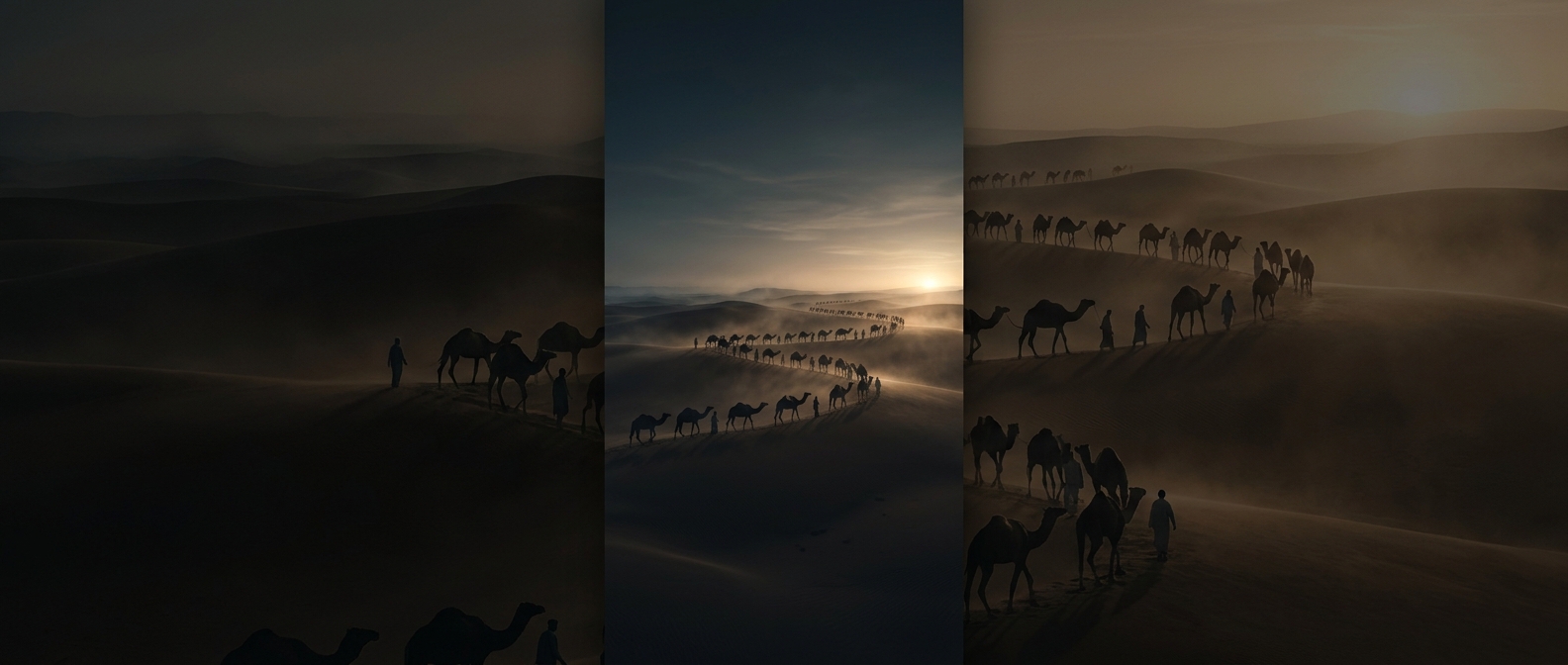
Why a Desert Caravan Became a Long, Narrow Line
A caravan’s route was shaped less by the open sand than by the places where water could be found. Wells and oases were widely separated, so travelers had to move from one reliable water stop to the next rather than choose any direction across the desert. Approaches to those stops—and the firmer ground or usable passes along the way—could funnel animals onto the same track.
That made the route a bottleneck. Camels behind the leaders followed the path already beaten into the sand, instead of spreading out across unfamiliar ground. The more animals and cargo a caravan carried, the farther back the line reached, even when the path itself stayed narrow.
Water Set the Pace
The line also reflected a careful balance between carrying supplies and reaching the next stop. Water had to support people and animals through the journey, but every extra load added weight for the camels to carry. A caravan could not simply detour toward a tempting shortcut if it led away from known water or reliable ground.
So the long procession was not just a striking shape on the dunes. It showed how a desert journey depended on a chain of usable stopping places: lose the route to the next water source, and the whole line’s progress could be at risk.