How a Dog Team Turns Effort Into Forward Motion
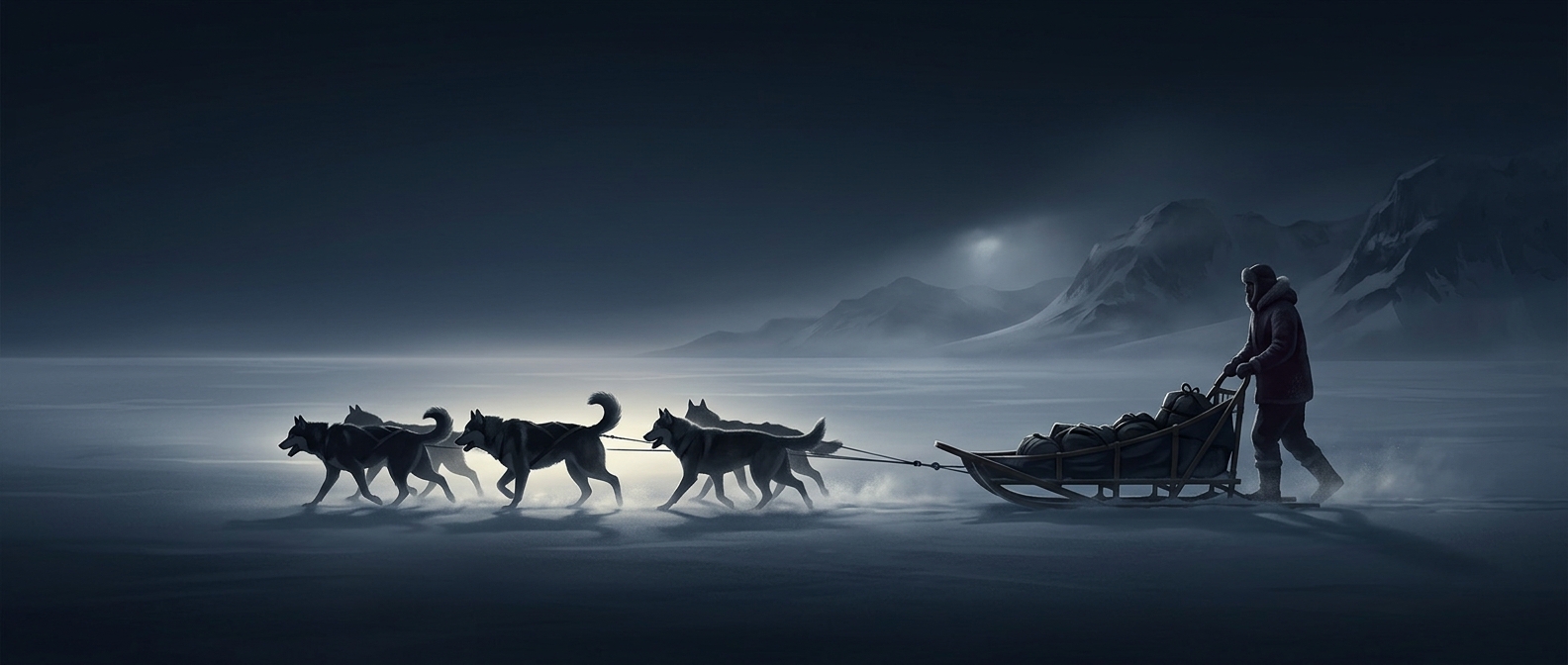
A sled does not move simply because dogs pull hard. The team must overcome static friction—the resistance that keeps a resting sled from starting—and then keep it moving against drag from the snow, the load, and any uphill slope. Once the sled is gliding, its runners usually face less resistance than wheels would on deep, uneven snow, where wheels can sink or become trapped.
The harnesses and towline make the dogs’ efforts work together. Each dog’s pull travels through the line to the sled, so a mismatch in pace can create slack, tangles, or wasted effort. A steady team is often more useful than one that surges: consistent tension helps the sled keep its momentum and makes the load easier to manage.
The Human Still Controls the Transport
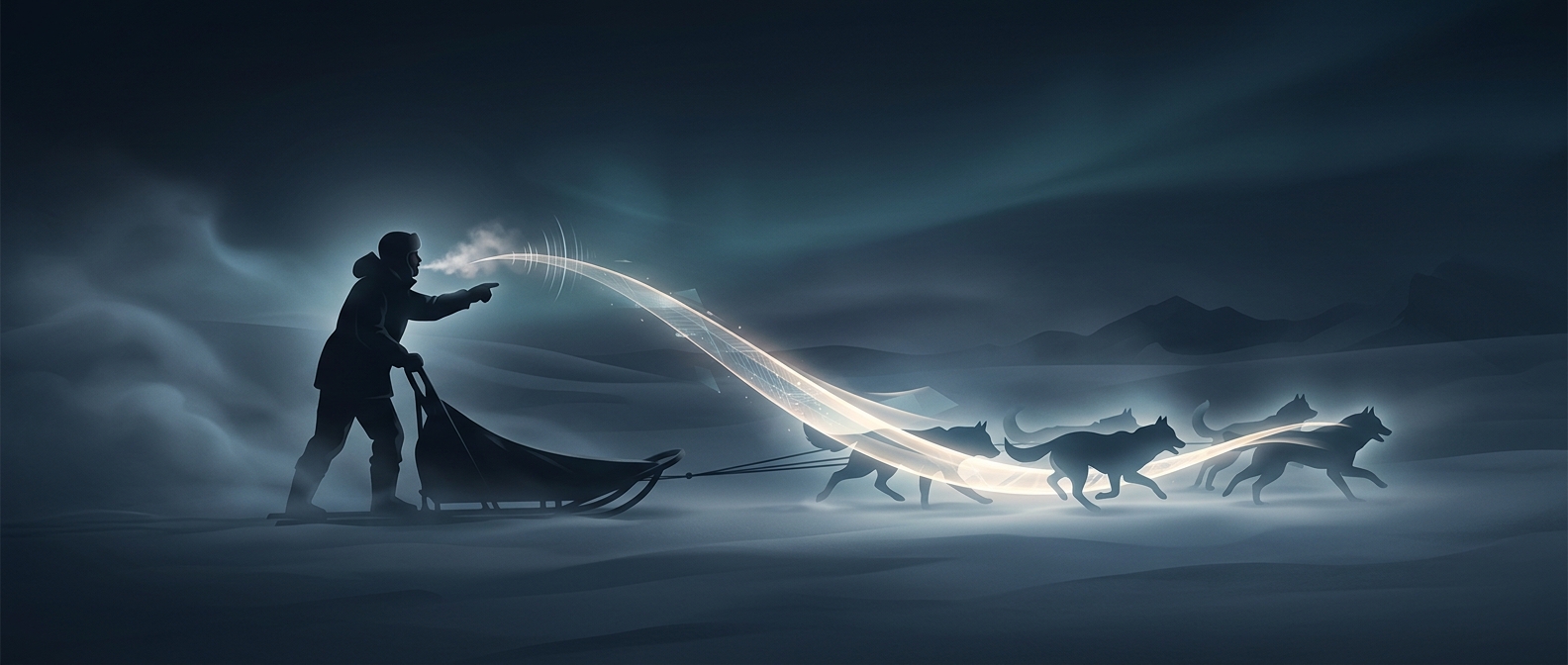
The musher—the person driving the sled—guides the team by voice and manages speed with a brake that presses into the snow. The brake does not propel the sled; it adds resistance when the team must slow, stop, or descend a slope. Steering depends on the dogs responding to commands and on the musher shifting the sled’s direction, rather than on a wheel turning in the usual way.
That division of labor matters in changing terrain. Dogs supply the sustained pull, while the musher judges whether the sled can safely follow the trail and how much speed the snow will allow. The same surface that helps runners glide can become a hazard if the sled gathers too much momentum.
A Transport System Built Around Snow
A dog sled is effective where snow makes ordinary travel difficult, but its performance depends on conditions. Soft snow can increase drag; a heavy load or steep climb demands more effort; and hard, slick surfaces can make control harder. The system works because animal power, a low-friction runner surface, and human handling are matched to the landscape—not because any one part can do the job alone.