The ceiling is one side of the circuit
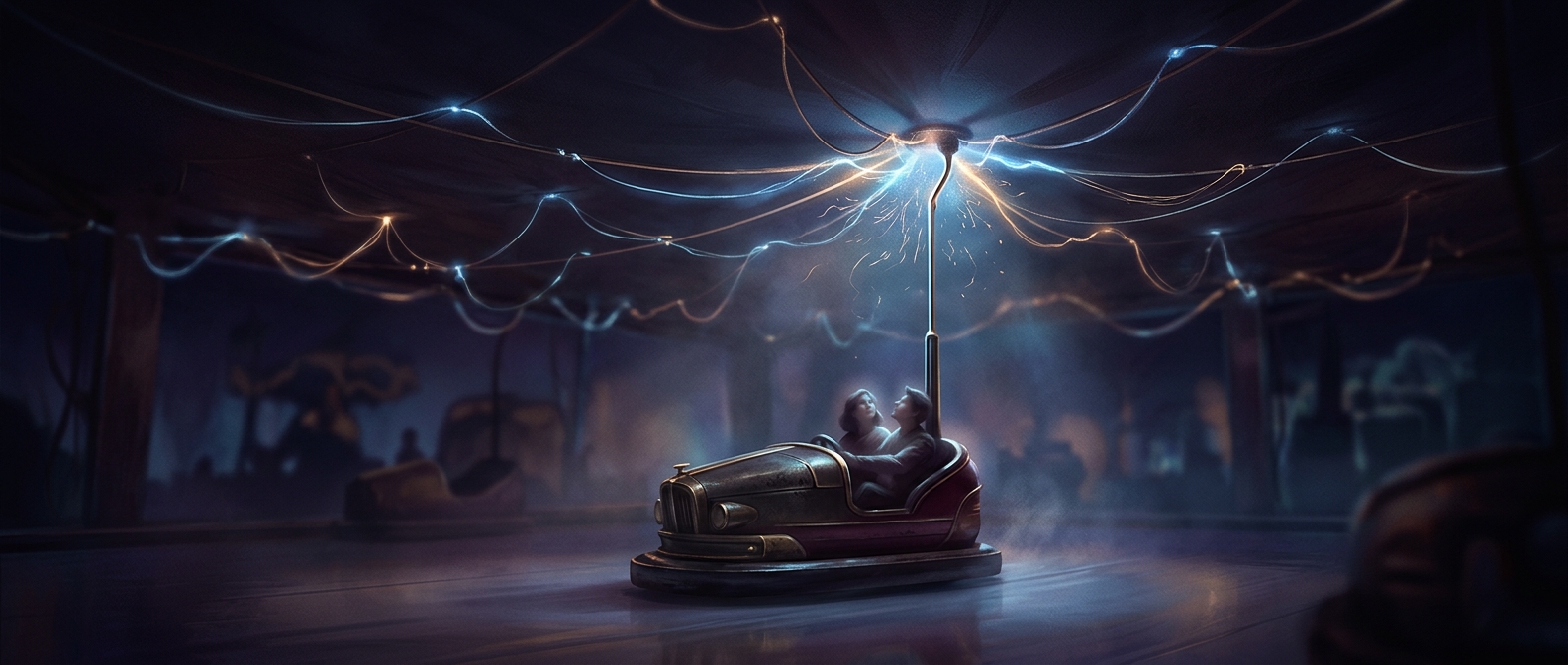
In a traditional bumper-car arena, the overhead surface is not just a roof: it is an electrically live grid. A long pole attached to each car reaches up to it, ending in a contact that slides along the grid as the car turns. Electricity travels down the pole to the car’s motor, which drives the wheels.
But electricity needs a complete path, not just a way in. In this setup, the arena floor is divided into conductive sections that provide the return path. Current passes through the motor and back through the car’s contact with the floor, completing the circuit. The ceiling and floor therefore act like opposite sides of a giant power connection.
Why the pole keeps reaching upward
The pole is hinged and spring-loaded, so it can tilt as the car moves while pressing its contact against the overhead grid. That pressure helps keep the electrical connection even when the car bumps, spins, or travels beneath a different part of the ceiling. Without it, a momentary gap would interrupt power and stop the motor.
This arrangement lets many cars draw power while roaming freely, without individual batteries that would need recharging between rides. The visible pole is doing more than keeping the car connected: together with the conductive floor, it turns the whole arena into part of each car’s electrical circuit.