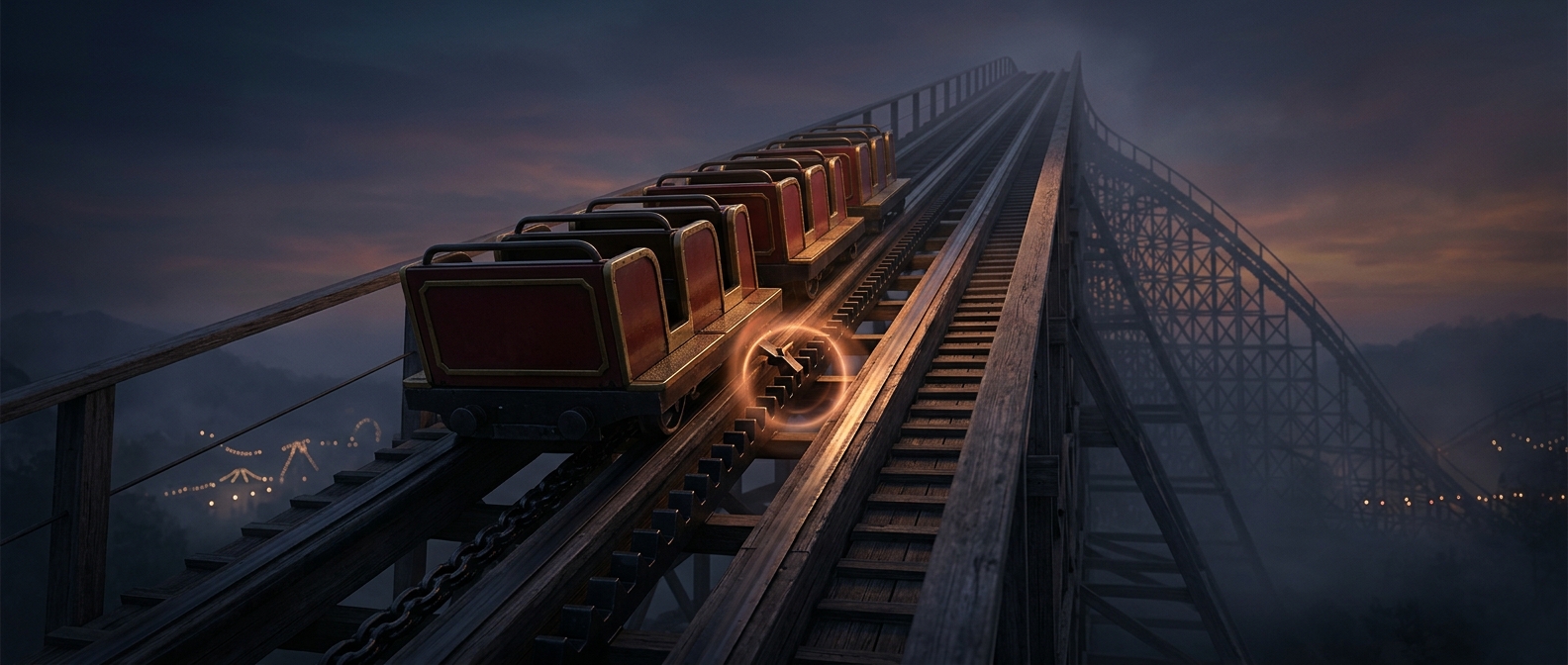
Why the lift hill clacks
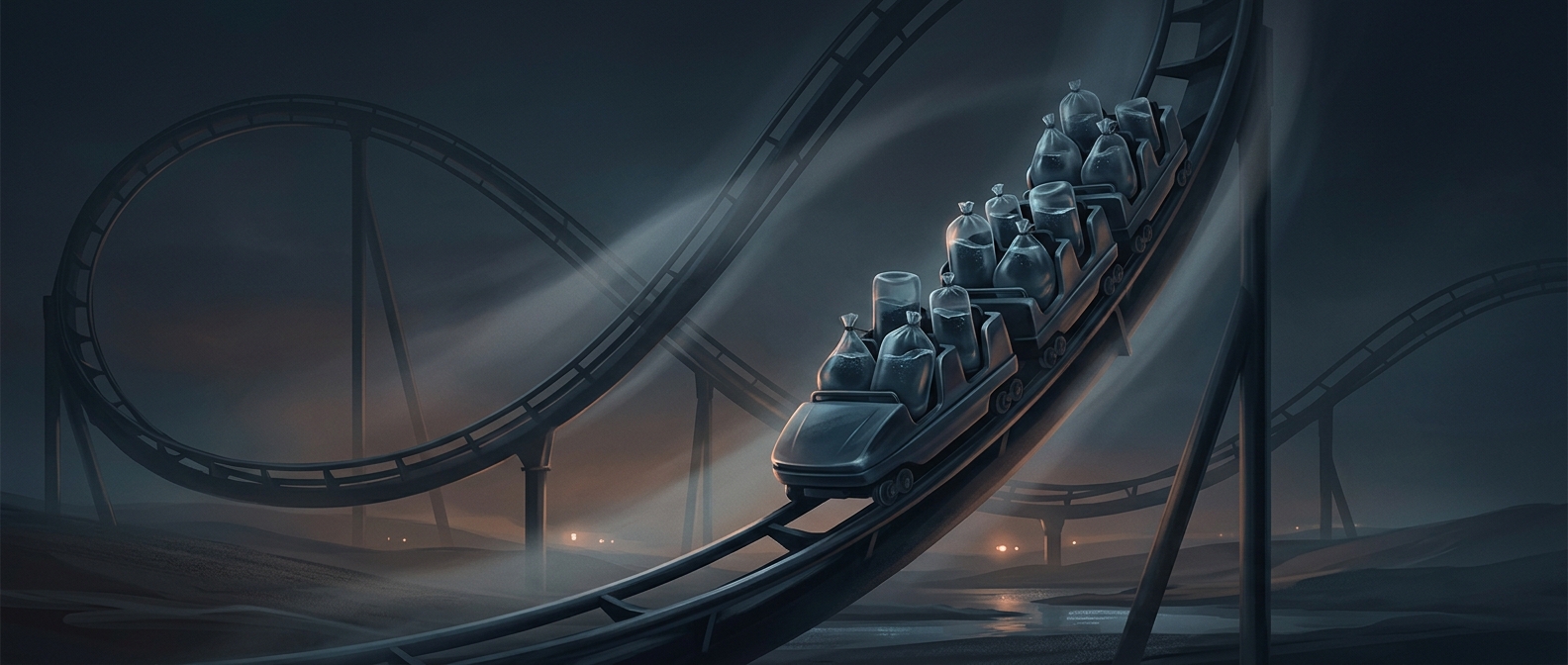
A coaster train usually climbs its first hill by hooking onto a moving chain. The chain pulls the train uphill, but the train’s weight is always tugging it back down. Alongside the lift, a toothed strip works with a spring-loaded catch attached to the train. As the train rises, the catch rides over each tooth and drops into place with a clack.
That catch is a one-way mechanical lock: it can move forward over the teeth, but a backward roll makes it meet a tooth face-on. If the lift chain stops pulling, the train may slip back only as far as the next catch point, where the catch holds it.
A backup that works one tooth at a time
The repeated sound is not the chain announcing that it is about to fail. It is the catch engaging normally as the train advances. The teeth are spaced closely enough that a catch can stop a backward-moving train before it travels far down the hill.
The clacking is especially noticeable on a lift hill because the train is moving slowly and the mechanism engages again and again. Once the train reaches the crest, it no longer needs the lift to carry it onward: gravity takes over, and the lift-hill catch is no longer doing the same job. The noise is the audible trace of a simple safeguard resetting at every tooth.