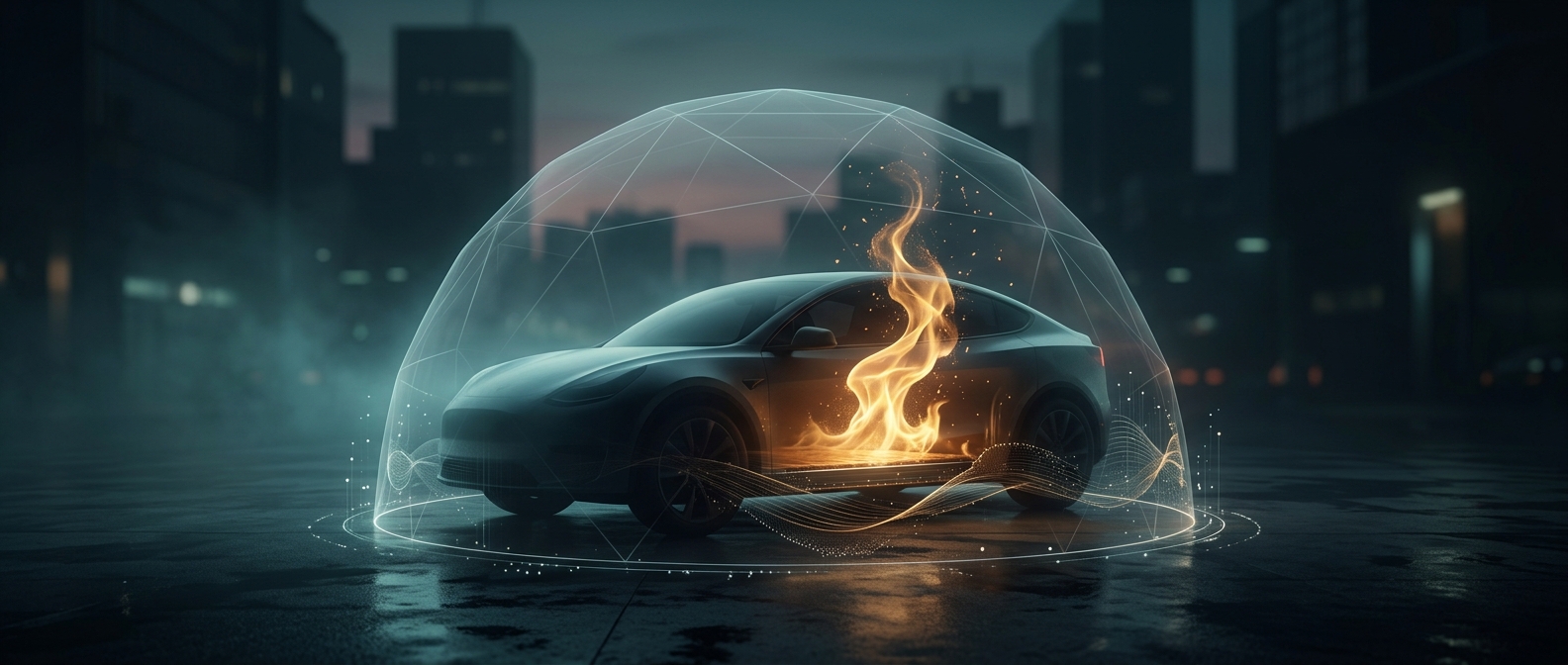
Why an EV battery fire behaves differently
A gasoline car stores fuel as a liquid in a tank and sends it through lines to the engine. An electric car instead stores energy in a large battery pack, usually made of many individual cells. That difference changes both where a fire can begin and how it can develop.
Gasoline fires often need a leak or spill that lets fuel reach an ignition source. Electric cars avoid that particular pathway: there is no gasoline tank or fuel line, so some common opportunities for a vehicle fire are absent. But the battery introduces a different risk, especially after a severe crash or other damage.
How heat can spread through a battery pack
A battery cell can overheat if it is damaged or develops an internal fault. In thermal runaway, the cell’s temperature rises uncontrollably, producing more heat and potentially igniting its contents. That heat can then damage neighboring cells, setting off a chain reaction within the pack.
The pack’s many cells hold substantial stored energy, so a fire can continue even after the initial ignition. It may also reignite if heat or damage remains inside the battery. This is why responders may need to keep cooling a damaged pack and monitor it rather than assume the fire is over once visible flames subside.
Less often does not mean less serious
The distinction is about frequency and fire behavior, not a simple ranking of which vehicle is safer in every crash. An EV can be less likely to catch fire while still presenting a difficult, persistent blaze when its battery is involved. The practical twist is that the energy source that moves the car is also a tightly packed store of energy—and, once a cell fails, that energy can help the fire keep going.